
Livraison le jour même ou le lendemain

Qualité garantie

Débloquez vos offres de bienvenue: Livraison GRATUITE | Jusqu'à -80 % | 30 jours d'essai gratuits à JoyPlus
Téléchargez l'application
Choosing colouring pencils and acrylic markers is not simply a matter of counting the number of shades in a set. A generous palette can prove impractical if the pencils break easily, the markers dry out quickly or the nib does not suit the way you draw.
To avoid a disappointing purchase, several criteria are worth comparing: the type of coloured core, the nib shape, compatible surfaces, storage and usage precautions. Here is a simple way to distinguish sets intended for colouring, schoolwork, illustration or creative hobbies.
A set of 48 or 72 pencils may seem automatically more comprehensive than a collection of 12 or 24 shades. However, the number of colours says nothing about how easy it is to create gradients, blend pigments or work on details. For school use or occasional colouring, 24 well-chosen shades may be more than enough. For portraits, landscapes or detailed illustrations, it is primarily the composition of the palette that makes the difference.
A fine nib makes it easier to outline and fill small areas. A medium-sized round nib allows you to cover larger areas more quickly, while a chisel nib is well suited to broad strokes. Brush-tip markers offer a variable line width depending on the pressure applied, but require a more precise technique.
Before ordering colouring pens, check the nib diameter and shape. A marker presented as versatile will not necessarily replace a fine-tip pen for detailed work.
Acrylic markers, acrylic paint pens and multi-surface markers may be designed for paper, wood, glass, ceramics, metal or even fabric. However, this compatibility must be confirmed in the product details. How well the ink holds also varies according to the surface preparation, its porosity and the handling the item will be subjected to.
When decorating an object, test the product first on a discreet area. Also avoid applying these inks to surfaces that come into contact with food, unless the manufacturer explicitly permits it.
Colouring pencils with a soft core generally deposit more material. They are well suited to blending, hatching and layering. Pencils with a firmer core, on the other hand, provide precise control for outlines and details.
Faber-Castell Polychromos pencils feature a 3.8 mm oil-based core, described as break-resistant and suitable for layering. Their finish differs from that of watercolour pencils, which are used dry before being worked with a damp brush. The right choice therefore depends on the technique you plan to use, not just the level stated on the packaging.
The shape of the barrel has a direct impact on comfort, especially during long sessions. Ergonomic pencils with a triangular barrel, such as the Colour Grip, feature a soft grip zone that helps you position your fingers more comfortably. A hexagonal barrel prevents the pencil from rolling across the table and offers a familiar grip.
For a child, student or anyone who colours for several hours at a time, compare:
A cardboard box is suitable for home or school use. A metal tin, however, offers better protection for the tips when travelling. Wooden cases may be useful in a studio, provided they are kept in a dry place.
With markers, always replace the cap after use. Acrylic models that need priming generally require you to shake the barrel, then press the nib onto a sheet of test paper to get the ink flowing. Depending on the manufacturer’s recommendations, some markers should be stored flat, while others need to remain horizontal to maintain an even flow.
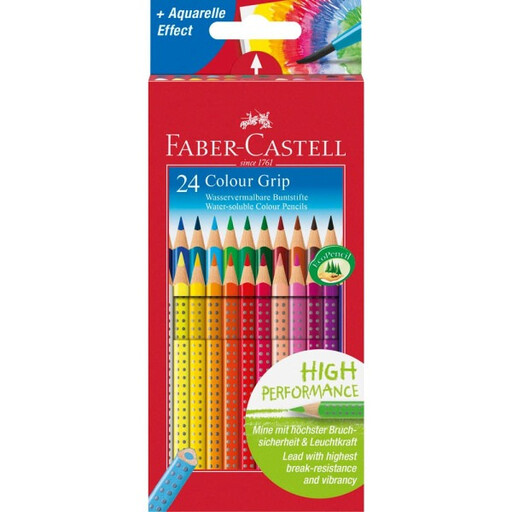
Why this choice suits this profile : With 24 shades and a triangular barrel featuring a soft grip zone, this set is suitable for first colouring projects, homework and everyday creative activities.
The palette remains easy to understand, while the ergonomic barrel prevents beginners from ending up with a set that is too bulky or uncomfortable.
24 shades, a lead described as break-resistant and a reusable cardboard box.
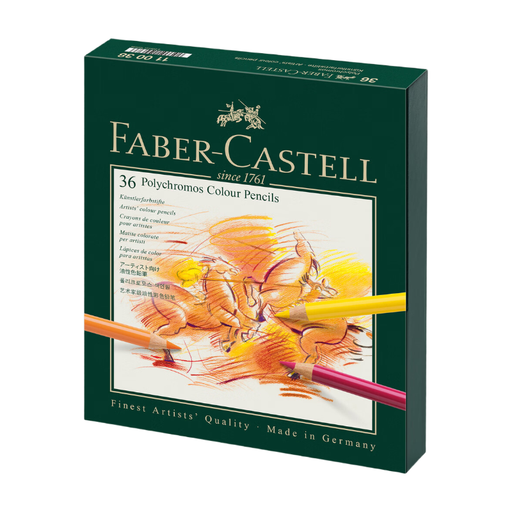
Why this choice suits this profile : This set of 36 oil-based pencils is designed for detailed illustrations, portraits and projects that require several layers of colour.
The product details specify the oil-based core, its 3.8 mm diameter and the bonding process described as break-resistant.
Pigments described as lightfast, plus a well-organised Atelierbox for both studio use and transport.
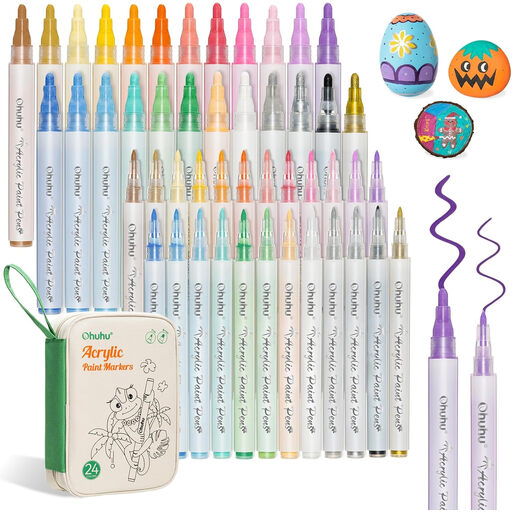
Why this choice suits this profile : Creators decorating wood, ceramics, glass, fabric or stones have two nib formats in one set.
The 0.7 mm fine tips and reversible round or chisel nib mean you do not need to buy several sets to switch from precision work to filling.
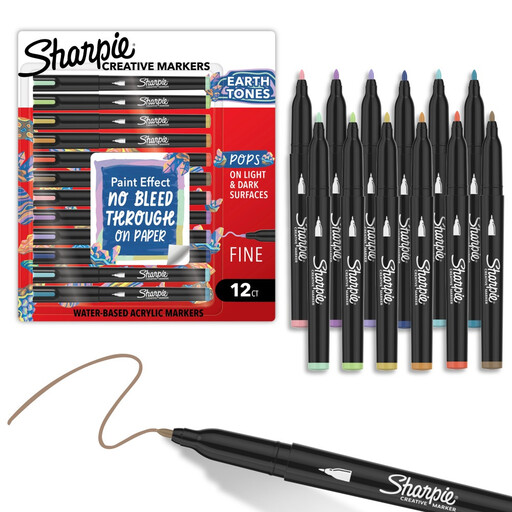
Why this choice suits this profile : Fans of adult colouring, customisation and intricate drawing can rely on fine tips and a compact palette of 12 colours.
The fine tip is clearly specified and the product details list the intended surfaces, making it easier to choose for intricate projects.
Water-based ink described as smudge-resistant, 12 assorted shades and suitable for use on metal, wood, ceramics, glass or canvas.
We have brought together a complete, real-time selection of products that meet these demanding criteria and European safety regulations.
Watercolour pencils can be used dry like traditional pencils, then moistened with a brush to diffuse the pigment. Traditional pencils are generally designed for dry application. Before buying, check for the words “water-soluble” in the product details.
It depends on how often they are used, how they are stored and whether the cap is closed properly. Replace it immediately after each use and follow the storage instructions, which often recommend keeping markers flat or horizontal. A nib that dries out may also make application uneven.
Pencils and markers have tips, caps or small parts. Product details generally advise against use by children under 3 years old and recommend adult supervision. For young children, choose age-appropriate supplies and follow the warnings printed on the packaging.