
Livraison le jour même ou le lendemain

Qualité garantie

Débloquez vos offres de bienvenue: Livraison GRATUITE | Jusqu'à -80 % | 30 jours d'essai gratuits à JoyPlus
Téléchargez l'application
Between brightly coloured sets, tips marketed as indestructible and inks promised to wash out easily, choosing the right colouring felt-tip pens can quickly become a headache. An appealing set is not necessarily suited to its intended use: children’s colouring, note-taking, detailed drawing, lettering or marking a particular surface.
Before placing your order, three common mistakes are worth avoiding:
The tip directly affects precision, filling speed and line style.
For versatile use, look at the tip’s shape, width and stated durability rather than relying solely on the product’s commercial name.
Water-based inks are common in colouring markers, school stationery and pens intended for bullet journals. They are generally suitable for paper and may be easier to clean, depending on their formulation.
However, ‘water-based’ does not mean ‘will not bleed through the paper’. For a notebook or diary, always test the colour on a sheet with a similar paper weight. Thin paper absorbs ink easily, particularly when filling large areas.
Marking objects follows a different set of requirements. Alcohol-based permanent markers are designed to leave a water-resistant mark after drying on a range of surfaces, including plastic, glass, metal, cardboard and paper. They can permanently stain textiles and must never be used on skin.
Even a well-chosen felt-tip pen will quickly become less comfortable to use if its cap does not close properly or its tip is left exposed. To extend its lifespan:
Caps and certain small parts may present a choking hazard. Felt-tip pens are not suitable for children under 3 years of age unless specifically stated otherwise. For younger children, adult supervision is still recommended, including when using washable felt-tip pens.
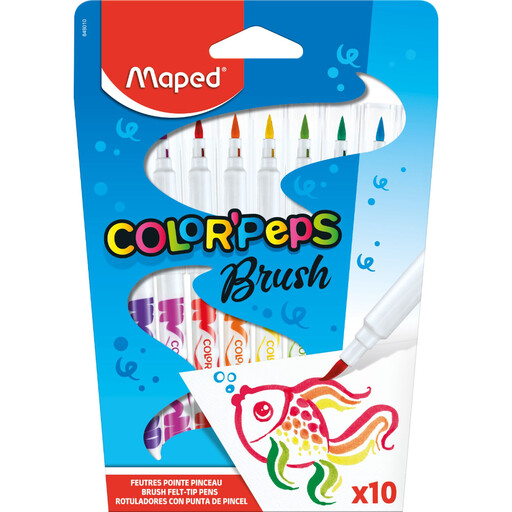
Why this choice suits this user profile : This set of 10 colours is an easy way to get started with drawing, calligraphy or colouring without investing in a large palette. Its flexible brush tip allows you to create two types of line, depending on the pressure applied.
The product details state that the water-based ink washes off skin and most fabrics. Nevertheless, it is best to treat stains promptly and test the tip on the chosen surface.
2.8 mm brush tip, ergonomic grip area and 10 assorted shades.
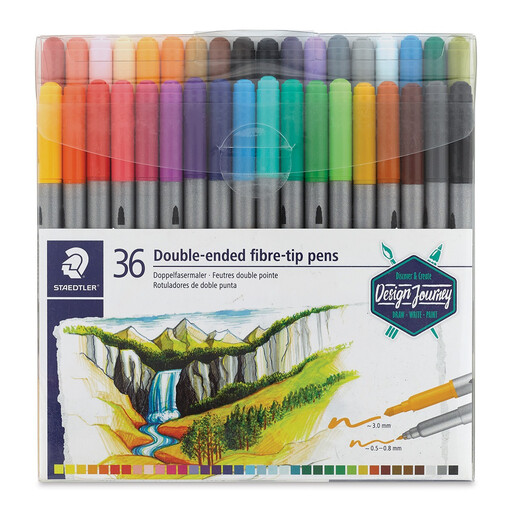
Why this choice suits this user profile : With its 36 colours, this palette is ideal for projects requiring a wider range of shades: illustrations, lettering, creative journals or decorative work.
The two tips are clearly differentiated: one is fine for outlines, while the other is broad for filling large areas. The choice is therefore based on a genuine difference in use, not simply on the number of shades.
36 colours, a fine tip and a broad tip on each pen, water-based ink and pigments stated to be non-toxic.
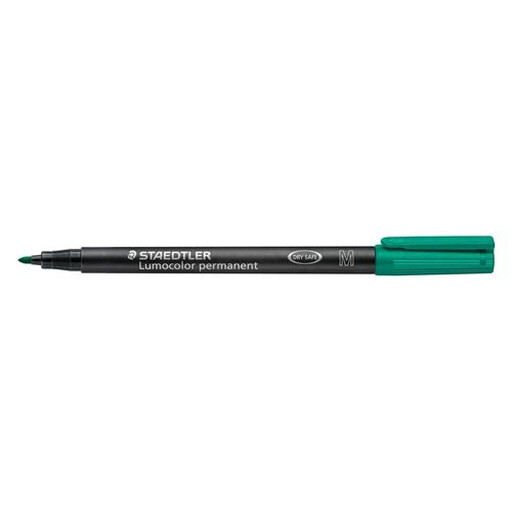
Why this choice suits this user profile : This pack is suitable for regular marking in a workshop, office, classroom or storage area, whenever writing needs to remain legible on several surfaces.
The product details specify that this is an alcohol-based permanent ink that is water-resistant once dry. This sets it apart from coloured pens designed for paper and washing out.
Fine 1 mm tip, stated quick-drying performance and compatibility with plastic, metal, glass, cardboard and paper.
We have put together a complete selection, updated in real time, of products that meet these exacting criteria and European safety regulations.
Choose children’s felt-tip pens that are easy to hold, with a tip that withstands pressure and ink stated to wash off skin and most textiles. Check the recommended age and keep caps out of reach of children under 3 years of age.
It depends on the ink formulation, how often the pens are used and how well the caps close. Some models feature anti-drying technology, but the best habit is still to recap each pen after use. Storing them horizontally at a moderate temperature also helps maintain a consistent ink flow.
For a bullet journal, a medium tip is suitable for headings, lists and colour coding. For lettering, it is best to choose brush-tip pens or double-ended pens with a fine end. Always test the ink on a page at the back of the notebook to check its transparency and the risk of bleed-through.