
Livraison le jour même ou le lendemain

Qualité garantie

Débloquez vos offres de bienvenue: Livraison GRATUITE | Jusqu'à -80 % | 30 jours d'essai gratuits à JoyPlus
Téléchargez l'application
Choosing coloured pencils isn’t just about counting the shades on the box. Between children’s models, watercolour pencils, pastel pencils and artist-grade ranges, the grip, the lead composition and the storage can completely transform your experience.
Some marketing claims, however, are worth taking with a pinch of salt. A very extensive palette isn’t necessarily pleasant to use, and a high price doesn’t guarantee it will meet your needs. This selection helps you compare the criteria that really matter before you make a purchase.
A set of 72 coloured pencils offers a wide choice, but it can quickly become cumbersome for a child or a student who simply needs something for schoolwork. Conversely, a 12-colour set may show its limitations for portraits, landscapes or highly detailed colouring.
The number of pencils should therefore match your intended use:
A round barrel can roll off the table and may be less practical for young children. Triangular coloured pencils generally offer a more stable grip. Some models also have grooves that help position your fingers.
For a child in nursery or primary school, also remember to check the lead diameter. A thicker lead usually withstands drops better and allows you to fill large areas quickly. A fine lead, on the other hand, is better suited to details.
Watercolour pencils can be used dry or with a damp brush. However, they require paper that is sufficiently water-resistant to avoid buckling and tearing. If your aim is simply to colour in notebooks or do a few quick sketches, standard pencils will often be more practical.
Standard pencils are suitable for drawing, colouring and layering. Oil-based leads, such as those in the Polychromos artist ranges, are particularly well suited to layering, blending and detail work. To compare models on a solid basis, look at the pigmentation, break resistance and lightfastness when this information is provided by the manufacturer.
Watercolour pencils allow you to add water to achieve a wash effect. Pastel pencils, such as the STABILO CarbOthello, deposit a dry, powdery material that can be blended with your finger or a blending stump. They therefore require more care when storing, as their material can transfer onto the paper.
A triangular shape helps keep the pencil in your hand without it rolling away. Thick models are often easier for small hands to grip. The STABILO Trio, for example, features a 4.2 mm lead and a triangular barrel. The STABILO Woody 3-in-1 has an XXL 10 mm lead, with a texture designed to produce several effects: pencil, wax and watercolour.
For long drawing sessions, comfort is a personal matter. A pencil that feels pleasant to hold reduces the need to change your grip and allows you to control the pressure on the lead more effectively.
A metal box protects the pencils better during travel and keeps them neatly organised. Lighter, a cardboard case slips easily into a school bag, but withstands repeated knocks less well. Wooden cases are more suited to a fixed studio or a polished presentation.
After each use, store the pencils in their box, away from humidity and direct light. Use a sharpener compatible with the lead diameter. With watercolour pencils, allow the brush and any traces of water to dry before closing the case.
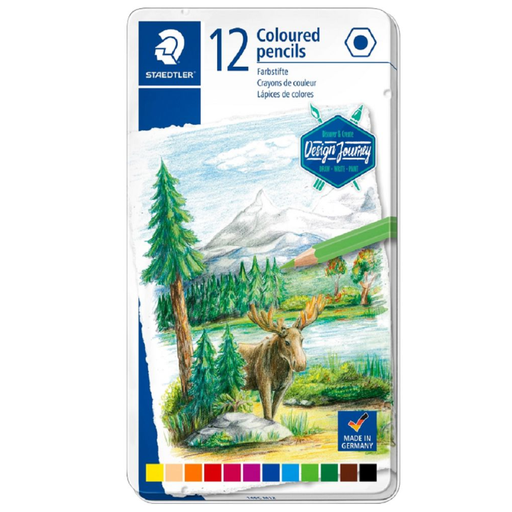
Why this choice suits this profile: This set of 12 pencils is ideal for first drawings, homework and everyday colouring. Its size stores easily in a school bag or pencil case.
The limited number of shades stops you paying for a large palette before you know whether you’ll use the activity regularly.
Hexagonal barrel, soft lead described as easy to blend and wood from certified forests.
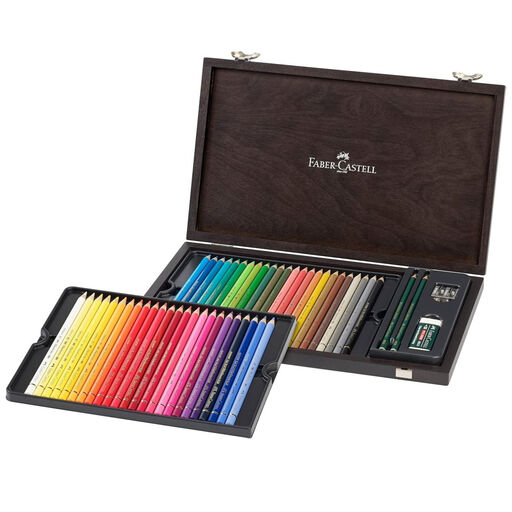
Why this choice suits this profile: With its 48 colours and wooden case, this selection targets illustrators and artists who work regularly in a studio.
The organised case limits losses and protects the pencils, unlike a large palette left loose.
Oil-based 3.8 mm leads, acid-free pigments described as lightfast and SV bonding process.
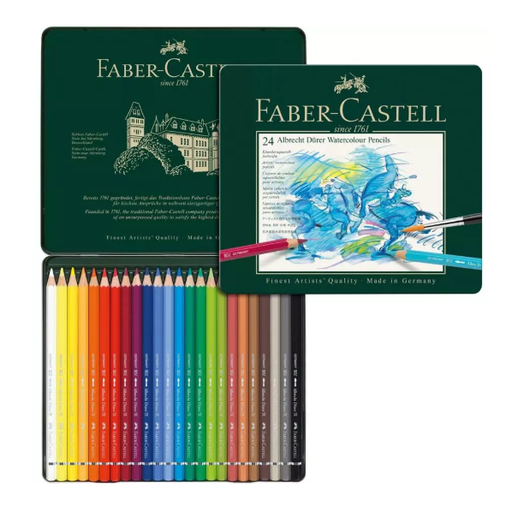
Why this choice suits this profile: This set of 24 watercolour pencils is suitable for those who switch between dry sketching, washes and colour exercises.
The case clearly states it can be used dry or with water: there’s no risk of confusing it with a box of standard pencils.
24 water-soluble pigments, metal box and the ability to create wash effects with a damp brush.
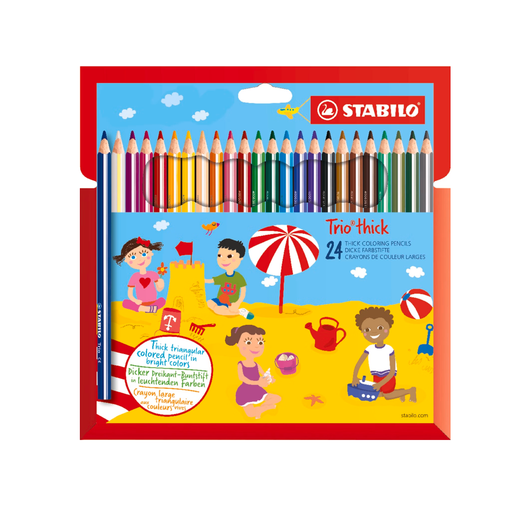
Why this choice suits this profile: Its thick triangular barrel and 24-pencil packaging are ideal for frequent activities at home, in class or at the activity centre.
The 4.2 mm lead and wide shape are well suited to drops and the sometimes still uncertain grip of young users.
Triangular shape, thick lead described as break-resistant and certified wood from sustainably managed forests.
We have compiled a complete, real-time updated list of products that fully meet these strict selection criteria and European safety regulations.
A set of 12 colours is enough to learn the basics and complete school projects. A box of 24 colours offers more shades for colouring and early blending. Sets of 72 colours are aimed more at regular users who already know how to make the most of an extensive palette.
Standard pencils remain dry and are worked by varying pressure, layering or blending shades. Watercolour pencils can first be used dry, then activated with water and a brush. This technique requires suitable paper and careful cleaning of your equipment.
Store them in a closed box in a dry place, and avoid large temperature fluctuations. Sharpen them gradually with a suitable tool rather than applying excessive pressure. Pencils and their small parts are not suitable for children under 3 years old; for younger children, adult supervision is essential.