
Livraison le jour même ou le lendemain

Qualité garantie

Débloquez vos offres de bienvenue: Livraison GRATUITE | Jusqu'à -80 % | 30 jours d'essai gratuits à JoyPlus
Téléchargez l'application
Buying coloured pencils seems straightforward… until you start comparing the number of shades, the shape of the barrel, the strength of the lead and the type of packaging. A palette of 72 colours isn’t necessarily the best choice for a schoolchild, while a set of 12 pencils can quickly show its limitations for detailed illustration.
To avoid a poor purchase, start by working out the technique you’ll be using, the age of the person who’ll be using them, and how often the pencils will be carried around. Here are the main factors to consider before choosing coloured pencils for a child, an assortment for artists, or a versatile set.
A large set naturally catches the eye, but not every shade will be useful day to day. For school or everyday colouring, a palette of 12 to 24 colours is usually sufficient. For portraits, landscapes or illustration, a larger assortment makes blending easier and allows you to work on nuances with greater precision.
Also look at the types of colours on offer. Pastel, metallic or neon pencils serve specific purposes and don’t necessarily replace a well-balanced classic palette.
A very fine lead is great for drawing details, but it can break more easily if you press hard. Conversely, a thick lead covers large areas quickly and is often better suited to young children. The triangular shape stabilises your grip, while the hexagonal barrel stops the pencil from rolling off the table.
So the term “ergonomic” deserves to be matched against concrete features: lead diameter, grip grooves, barrel shape and suitability for right-handed or left-handed users.
A cardboard wallet is light and compact, but it offers less protection for the tips during repeated trips. A metal box or a roll makes storage easier, without necessarily guaranteeing a better drawing experience. Check the quality of the closure, the space available and how easily the pencils can be put back in place.
Traditional coloured pencils are suitable for colouring, sketching and layering work. Oil-bound leads, like those in professional Polychromos pencils, are particularly well suited to layering and dry blending.
Watercolour pencils contain pigments that are soluble in water. By running a damp brush over the strokes, you can spread them and create a wash effect. Remember to let the paper dry completely before putting it away, especially if the pencils are stored in a metal box.
A lead of 2.9 to 4.2 mm generally offers a good balance between precision and robustness, depending on the model. With their 10 mm lead, STABILO Woody 3-in-1 pencils are designed to cover surfaces quickly and withstand use suitable for children.
Durability also depends on the quality of the bond between the lead and the wood. Even a lead advertised as strong can break after a drop or if you use an unsuitable sharpener.
Ergonomic coloured pencils can come in several shapes:
For a left-handed child, check the exact product version. The STABILO EASYcolors model shown below is specifically designed for left-handed users.
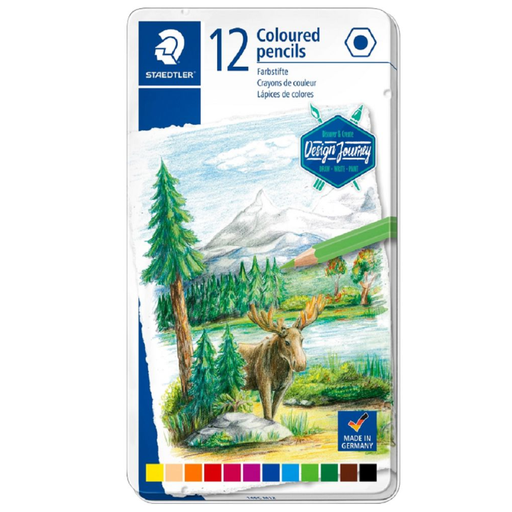
Why this choice suits this profile: A set of 12 colours is enough for first drawings, homework and occasional colouring, without accumulating shades that will just sit at the bottom of the box. The hexagonal barrel offers a simple, precise grip for pupils and beginners alike.
The number of shades is easy to manage and the cardboard box keeps things compact. The soft lead is suitable for simple blending and gradients.
12 assorted colours, hexagonal barrel, wood from certified forests and a soft lead advertised as easy to blend.
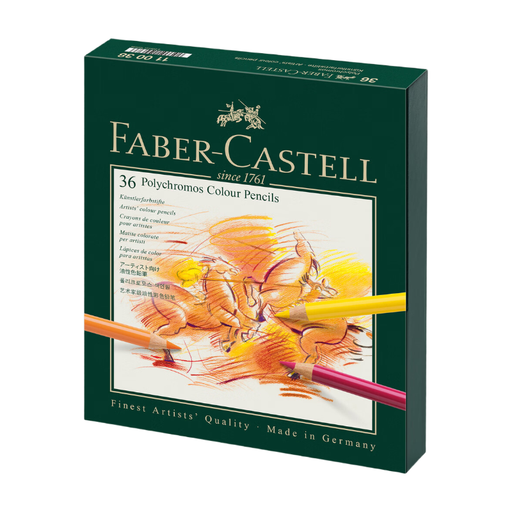
Why this choice suits this profile: Illustrators and fine art enthusiasts who work in layers get 36 shades, a 3.8 mm oil-based lead and a well-organised Atelierbox.
The specification mentions an SV-bonded lead and a water-resistant formula. A coherent set for working with precision and layering dry.
36 colours, pigments advertised as lightfast, 3.8 mm oil-based lead and organised storage.
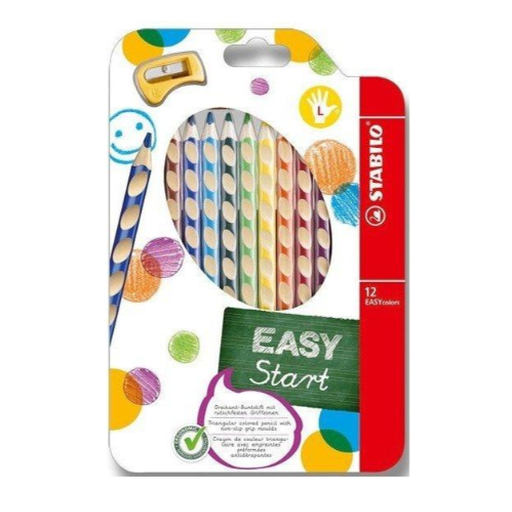
Why this choice suits this profile: This model is aimed at left-handed children and early colouring activities. Its wide triangular barrel, grooves and 4.2 mm core make gripping and filling large areas easier.
The left-handed version is clearly identified and the metal box protects the pencils, whether in a school bag or at home.
12 colours, triangular shape, guide grooves, 4.2 mm lead and pencil sharpener included.
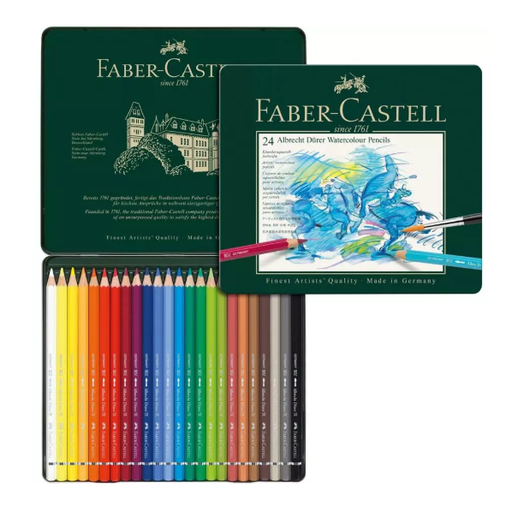
Why this choice suits this profile: Beginner artists, students and regular users who switch between dry drawing and watercolour effects benefit from a palette of 24 colours in an easy-to-carry metal box.
The specification clearly distinguishes between dry and wet techniques: it’s not just a larger palette, but water-soluble pigments designed for varied uses.
We’ve put together a comprehensive selection, updated in real time, of products that meet these demanding criteria as well as European safety standards.
A set of 12 colours is generally suitable for colouring, school and first drawings. A box of 24 colours offers more shades without becoming too bulky. Sets of 36 colours or more are aimed more at people who want to work on gradients, portraits or detailed illustrations.
Standard pencils are used dry. Watercolour pencils can be activated with a damp brush to spread the pigment and create washes. However, they require paper suitable for water and careful storage once the work is dry.
The triangular shape offers a stable grip and stops the pencil from rolling. It’s often recommended for children, but some adults also appreciate it during long sessions. Above all, check the width of the barrel and whether there are any grooves: ergonomics can vary noticeably from one model to another.