
Livraison le jour même ou le lendemain

Qualité garantie

Débloquez vos offres de bienvenue: Livraison GRATUITE | Jusqu'à -80 % | 30 jours d'essai gratuits à JoyPlus
Téléchargez l'application
Choosing coloured pencils and colouring materials isn’t just about counting the shades on the box. A very comprehensive set can turn out to be impractical for a toddler, while a product marketed as versatile may sometimes require extra accessories or simply won’t suit the surface you want to decorate.
Parents, teachers, activity leaders, budding artists and adult colouring enthusiasts all have good reason to check a few concrete criteria before placing an order.
A set of 48 washable wax crayons offers a generous palette, but it won’t replace watercolour pencils, colouring pens or acrylic markers. Start by deciding which technique interests you:
A slim pencil can be difficult for a small hand to grip. Conversely, a jumbo model or one with a very thick lead takes up more space in a pencil case and allows less precision. The shape of the barrel, the lead diameter and whether a suitable sharpener is included are all worth a look before you buy.
Washable ink or wax makes cleaning easier, but the result depends on the fabric, drying time and the surface involved. Test on an inconspicuous area and always recap pens after use. For glass paint or an acrylic marker, also check whether the surface is porous, fragile or intended for food contact.
For toddlers, check the recommended age, warnings and the presence of accessories such as a sharpener or caps. Several sets shown here are not suitable for children under 3 years old. The Maped set, for example, is recommended from 1 year, but its use must remain under direct adult supervision.
The “non-toxic” label does not mean the product can be put in the mouth. Pencils, waxes and inks are designed for drawing, not for ingestion.
A lead of 4 to 4.2 mm offers a good balance between strength and precision. With their 10 mm lead, jumbo pencils quickly cover large areas and suit movements that are still developing. Professional pencils with a lead of 3.3 to 3.8 mm are better suited to detailed work, layering and colour blending.
Don’t forget the sharpener: a standard model isn’t always compatible with jumbo pencils or large-diameter leads.
For regular artistic use, it’s better to look for precise information about lightfastness, lead composition and recommended surface than to settle for a vague promise of “superior quality”.
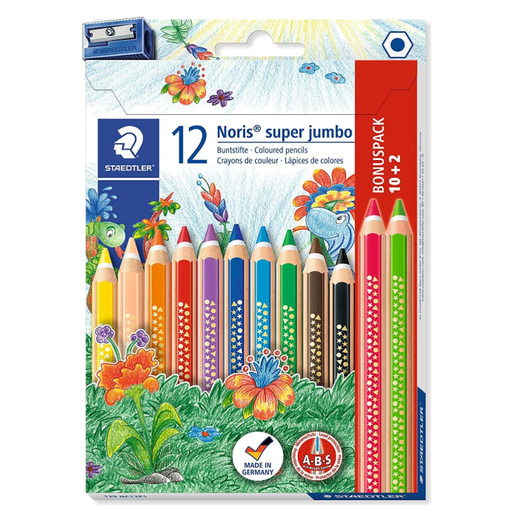
Why this choice suits this profile: With its 12 colours, thick lead and included sharpener, this set provides a simple foundation for home, school or early creative activities.
The super jumbo format reduces the risk of breaking the lead when pressing hard and saves you from having to buy a separate sharpener straight away.
Thick barrel, reportedly strong lead, 12 shades and sharpener included.
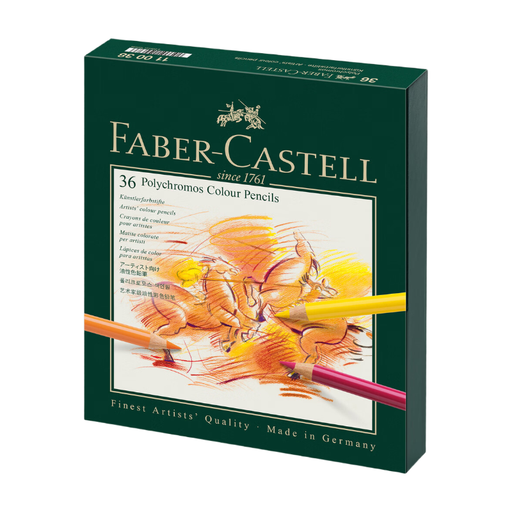
Why this choice suits this profile: This box of 36 pencils is aimed at illustrators, adult colouring enthusiasts and anyone looking for oil-based colour layering.
The description details the oil-based composition, the 3.8 mm diameter, the storage tin and the lead bonding process – far more informative than a simple claim about the number of colours.
36 colours, 3.8 mm lead, storage tin and reportedly lightfast pigments.
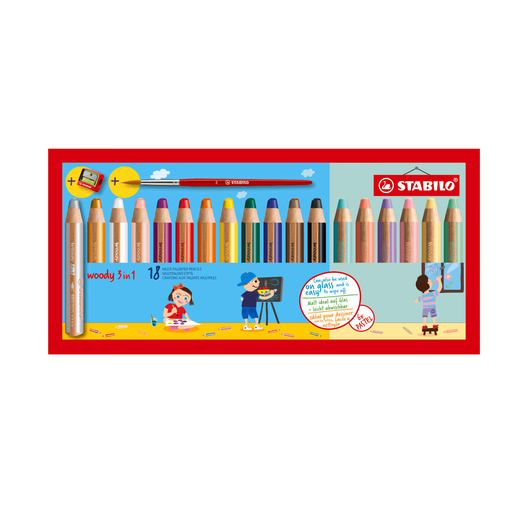
Why this choice suits this profile: Teachers, activity leaders and families moving from paper to card or smooth surfaces have here a tool that works as a pencil, wax crayon and watercolour all in one.
Its versatility applies to clearly identified surfaces, and marks left on smooth surfaces can be wiped away with a damp cloth.
18 colours, including 6 pastels, XXL 10 mm lead, brush and sharpener included.
We’ve put together a comprehensive, real-time updated selection of products that meet these demanding criteria and European safety standards.
A children’s colouring set can be complemented with thick paper, a washable apron and an easy-to-clean surface. For a craft activity kit intended for several children, choose colouring pens with secure caps and store them in separate boxes.
Adults may want to add watercolour brush pens for working on gradients, or acrylic markers for wood, ceramic and glass. Testing on an inconspicuous area is still advisable, as adhesion and cleaning vary depending on the surface.
They can be used by children old enough to handle a brush and follow instructions. For younger ones, choose thick pencils and check the recommended age on the packaging. The presence of water also requires appropriate supervision.
Store pencils in their box, protect the leads from moisture and use a sharpener suited to their diameter. Recap pens immediately after use. Watercolour brush pens generally keep better when stored according to the manufacturer’s recommendations.
A set of 12 colours is enough to learn about blending and colour everyday drawings. Move up to 24 or 36 shades if you want more variety or plan to work on detailed illustrations. The number of colours should remain consistent with the user’s age, the technique being used and the storage space available.