
Livraison le jour même ou le lendemain

Qualité garantie

Débloquez vos offres de bienvenue: Livraison GRATUITE | Jusqu'à -80 % | 30 jours d'essai gratuits à JoyPlus
Téléchargez l'application
Choosing a set of coloured pencils and drawing pens may seem simple. Yet with huge colour palettes, promises of “intense” colours and multifunction formats, it is easy to come away with art supplies that are not suited to your needs. A child, an art student, a bullet journal enthusiast and a beginner illustrator will not expect the same things from their stationery.
Before comparing colouring sets for children and adults, it is worth reviewing the most common pitfalls.
A set of 100 pens is not necessarily more useful than an assortment of 18 or 24 colours. If all the tips are identical, the set may be suitable for traditional colouring, but it will quickly show its limitations when it comes to details, gradients or lettering.
Conversely, dual-tip markers or brush pens offer more ways to use your supplies without accumulating lots of individual pens. So, look at the shape of the tips first, rather than focusing only on the number of shades.
Water-based inks can bleed through some thin papers, particularly printer paper and pages from inexpensive notebooks. Watercolour effects generally require thicker, more absorbent paper. With watercolour pencils, using a suitable surface makes brush application easier and helps minimise warping.
Before ordering, check the recommended surface: drawing paper, card, watercolour paper or a smooth surface, depending on the product and the technique you plan to use.
Poorly stored pencils or pens quickly lose their tips, get mixed up or dry out faster. A metal tin protects pencils when you are on the move, while a rigid case or reusable box keeps pens neatly organised every day.
To help them last longer, replace the caps after every session and follow the manufacturer's storage recommendations. Some models feature anti-drying technology, but this does not eliminate the need for a little basic care.
A 1 mm bullet tip is suitable for outlines, colouring and filling medium-sized areas. A fine 0.4 mm tip offers greater precision for details and annotations. A brush tip, meanwhile, allows you to vary the line thickness according to the pressure applied.
For lettering, flexible illustrations and wash effects, choose brush pens. To create crisp outlines and draw small patterns, a fine-tip pen or dual-tip marker will be more suitable.
Professional coloured pencils often use leads designed for blending, layering and detailed work. Break-resistant leads reduce interruptions, particularly when sharpening or when more pressure needs to be applied.
The shape of the barrel also affects comfort. Ergonomic triangular pencils are less likely to roll across the table and make it easier to position your fingers. Thicker pencils, such as some models designed for young children, allow you to cover large areas quickly.
Odourless, water-based ink is more comfortable during long sessions. However, its compatibility with the paper and technique being used remains the key consideration. Information about water resistance, blendability or colour permanence should be viewed as product specifications, not as a guarantee that applies to every surface.
For children, check the recommended age, whether there are any small parts and the compliance information, particularly the EN 71 standard when it is mentioned. Sharpened pencils and pen caps should be kept out of reach of very young children.
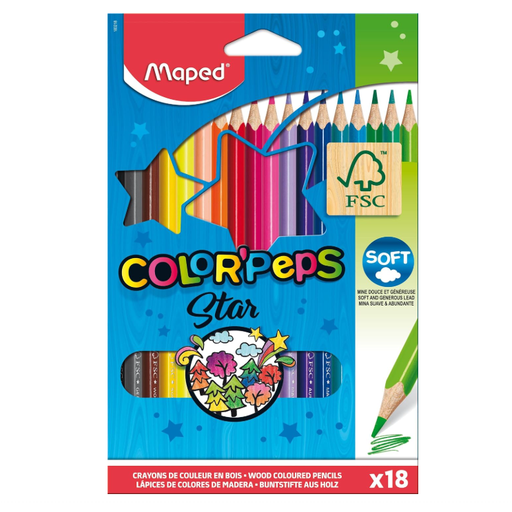
Why this choice suits this profile: This assortment of 18 colours is suitable for first drawings, homework and creative activities at home. Its compact format is easy to carry and practical for everyday use.
The triangular shape and 2.9 mm lead help address grip and frequent breakage issues. The number of colours is easy for beginners to manage, without accumulating unused shades.
Triangular barrel, FSC-certified wood and cardboard case for storage. The product is presented as complying with the safety requirements applicable to the relevant items.
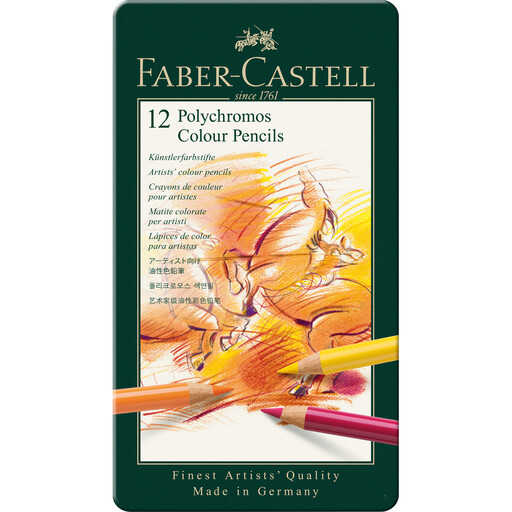
Why this choice suits this profile: This compact set is aimed at fans of detailed drawing, students and anyone who prefers to build up shades gradually through layering.
The 12 shades do not claim to replace a large palette; instead, they focus on control, blending and precision. The metal tin protects the tips during transport.
Oil-based lead, advertised rich pigmentation, break resistance and metal tin. The format is particularly well suited to detailed illustrations and gradients.
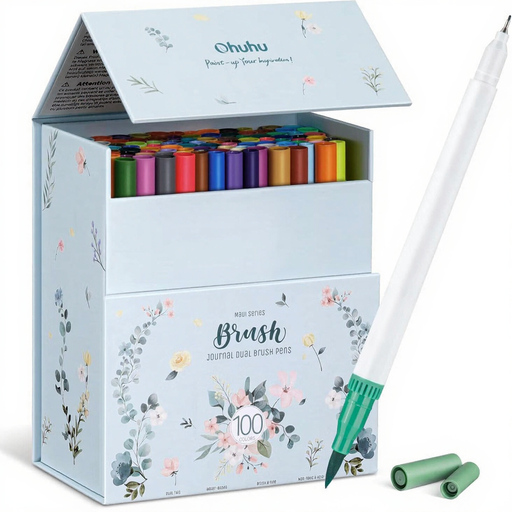
Why this choice suits this profile: The combination of a fine 0.4 mm tip and a 1 to 6 mm brush tip is suitable for lettering, bullet journalling, illustrations and projects requiring a wide range of shades.
The two tips mean you do not need to buy detail pens and brush pens separately. The colour chart helps you identify shades and avoid unpleasant surprises in the finished drawing.
100 numbered colours, water-based ink, five replacement tips and a white storage case. Blending effects require sufficiently thick paper.
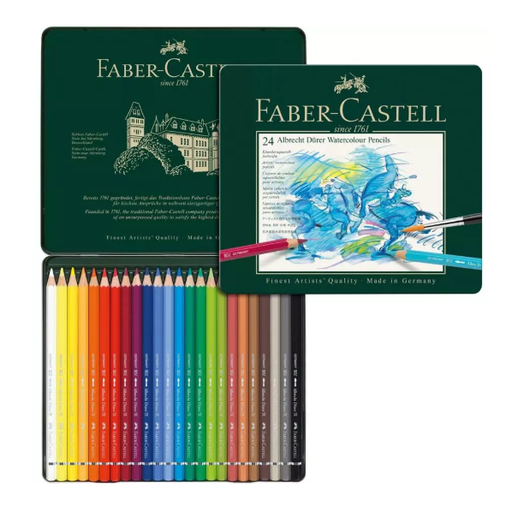
Why this choice suits this profile: This set lets you switch from dry colouring to water washes. It is suitable for pupils, watercolour enthusiasts and anyone wanting to experiment with several techniques.
The product information specifies dry and wet use, making its watercolour function clear. You should still choose suitable paper and allow the pencils to dry before putting them away.
24 water-soluble colours, advertised acid-free pigments and a metal tin. The brush is not included, so you will need to purchase this accessory separately.
We have put together a complete, real-time updated list of products that fully meet these strict selection criteria and European safety regulations.
A set of 12 to 24 colours is enough to learn the basics, complete schoolwork and experiment with blending. A palette of 48 colours or more becomes useful for detailed illustrations, regular colouring and more subtle gradients.
It depends entirely on the thickness and absorbency of the surface. On thin paper, the ink may show through or bleed through the sheet. For washes and blending, choose thick drawing paper or watercolour paper, then test it on a separate sheet first.
Replace the caps immediately, avoid leaving the pens near a heat source and use the appropriate tip without applying excessive pressure. A case or closed box also makes storage easier and reduces the risk of losing pens or causing them to dry out prematurely.