
Livraison le jour même ou le lendemain

Qualité garantie

Débloquez vos offres de bienvenue: Livraison GRATUITE | Jusqu'à -80 % | 30 jours d'essai gratuits à JoyPlus
Téléchargez l'application
Choosing coloured pencils and drawing markers is not simply a matter of counting the number of shades in a box. The tip shape, ink composition, compatible surfaces and ease of storage all have a direct impact on the result, as well as on how long your materials will last.
A student, an adult who enjoys colouring or a creative hobby enthusiast will have different expectations from someone looking to personalise glass, wood or pebbles. Here are the criteria to consider before buying, along with a selection suited to several different profiles.
A box of 48 or 72 pencils may seem particularly appealing, but it will not necessarily suit the way you plan to use it. For school sketches or occasional colouring, 12 to 24 colours may be more than enough. Portraits, gradients and detailed illustrations, on the other hand, require a wider range of shades, along with a lead that can withstand layering.
Remember to distinguish between watercolour pencils, wax-based pencils and oil-based pencils. Their finish, handling and required accessories are not the same.
A fine tip is ideal for outlines and small details, while a medium-width round tip allows you to fill larger areas more quickly. Dual-tip markers offer greater versatility, but they require careful storage and the cap must be replaced properly after every use.
For adult colouring, a brush tip can create narrower or broader strokes depending on the pressure applied. However, it requires slightly more control than a standard fine tip.
A pen designed for paper cannot be used in the same way as an acrylic marker. For glass, ceramics, metal, wood or canvas, look for the term multi-surface marker and check the manufacturer’s recommendations. Even when an ink is described as water-resistant or durable, it is always best to test it on an inconspicuous area first.
Non-porous surfaces may also require good ventilation during use, as well as suitable cleaning.
Lightfastness, the ability to layer colours and drying time are essential details for creations intended to be kept.
A fine tip of around 0.7 mm makes precise lines easier. A 3 to 4 mm round tip is better suited to filling areas and creating clearly visible lines. Chisel-tip models can produce broad or sharper strokes depending on their orientation.
For versatile use, markers with reversible tips are a practical solution. However, check that changing the tip is straightforward and that both formats offer the same colour palette.
The shape of the barrel has a direct effect on comfort during long sessions. Triangular pencils with a grip area, such as several Faber-Castell models, can make them easier to hold and give you better control over your strokes. A break-resistant lead helps to minimise interruptions, but it does not remove the need to use a suitable pencil sharpener.
For children, check the recommended age, whether any small parts are present and the stated standards, particularly EN71 where indicated. Drawing products should not be put in the mouth, and young children should use them under supervision.
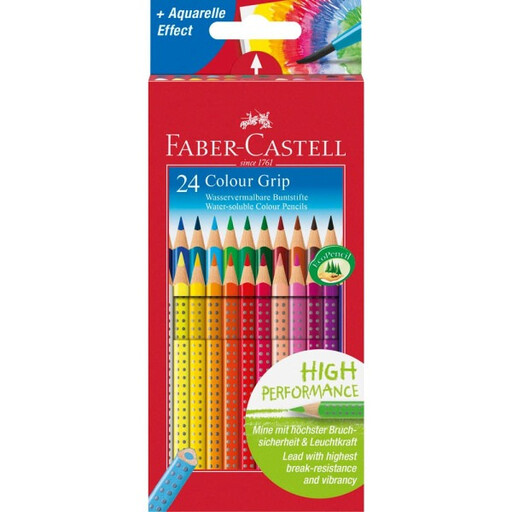
Why this choice suits this profile : An assortment of 24 colours is ideal for first drawings, homework and colouring at home, without the need for lots of accessories.
The palette is easy to get to grips with, while the triangular shape and grip area help beginners avoid ending up with a set that is too complicated.
24 shades, lead advertised as break-resistant, reusable cardboard box and triangular barrel.
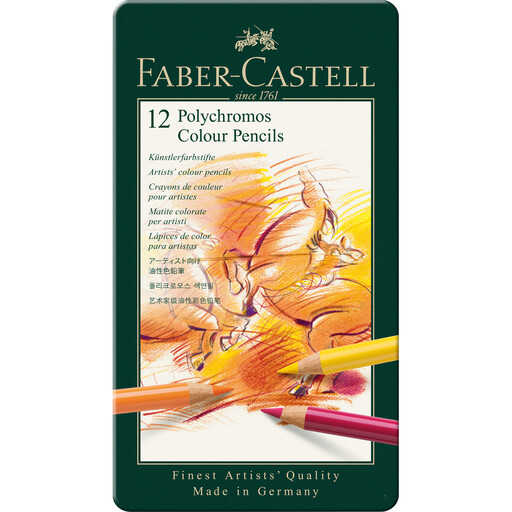
Why this choice suits this profile : This compact format is suitable for illustrators, students and adults who want to work on details, layering and blending.
The product details mention an oil-based, break-resistant lead rather than relying solely on a promise based on the number of colours.
12 colours, pigments advertised as lightfast, 3.8 mm lead and metal tin.
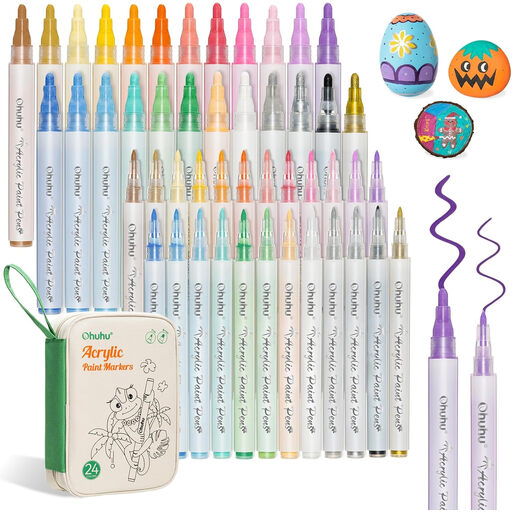
Why this choice suits this profile : DIY enthusiasts can move from paper to wood, glass, fabric or ceramics, depending on the surfaces specified by the manufacturer.
The two tip formats are clearly specified : a 0.7 mm fine tip and a reversible tip, with a round or chisel tip.
24 coordinated colours, 48 markers in total, water-based ink and tips in several widths.
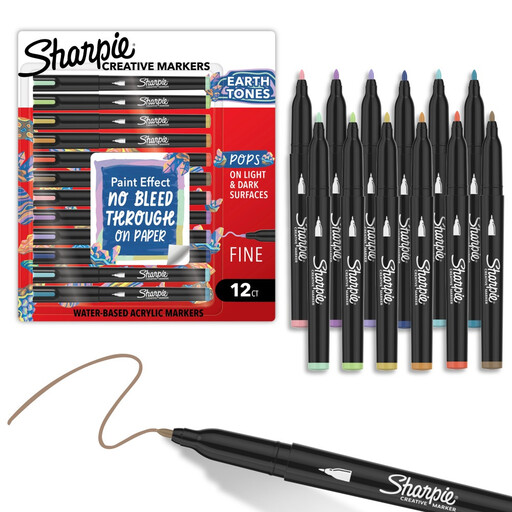
Why this choice suits this profile : The fine tip is ideal for intricate patterns, outlines and small areas in adult colouring books.
The product details specify water-based ink, a fine tip and use on light or dark surfaces. However, testing it beforehand is still recommended.
12 assorted colours, fine tip, advertised layering without blending and recommended horizontal storage.
We have brought together an up-to-date selection of products suited to different colouring and creative needs.
Replace each cap immediately after use. For acrylic markers, follow the storage instructions : some models should be stored horizontally, while others need to be shaken and primed on a sheet of paper before first use.
When using pencils, use a suitable sharpener to avoid weakening the lead. Keep them in their box or case, away from moisture and sunlight. For a project created on a delicate surface, always test the product beforehand and avoid objects intended for contact with food unless the manufacturer explicitly states that they are suitable.
Yes. They can be used dry like conventional pencils, then activated with a damp brush. The result depends on the paper, the amount of water and the pressure applied. Paper that is too thin may buckle.
Storage life depends on how often it is used, storage conditions and how securely the cap is closed. Some models should be stored horizontally. Clean the tip if necessary, and avoid heat and direct exposure to sunlight.
Not necessarily. A set of 12 or 24 pencils is enough to develop your technique before investing in a larger palette. Professional pencils become worthwhile when you want to work on blending, improve precision, benefit from greater lightfastness or create artwork intended to be kept.