
Livraison le jour même ou le lendemain

Qualité garantie

Débloquez vos offres de bienvenue: Livraison GRATUITE | Jusqu'à -80 % | 30 jours d'essai gratuits à JoyPlus
Téléchargez l'application
Buying coloured pencils seems straightforward enough… until the lead snaps, some shades look too similar, or the shape makes your hand ache after a long session. Parents, school pupils, students, colouring enthusiasts and artists obviously don’t all have the same needs. A set of 12 pencils can be perfectly fine for school, while a watercolour set or a more comprehensive palette will be better suited to illustration.
Before comparing brands and prices, it’s worth keeping three common pitfalls in mind.
The shape of the pencil body also plays a role. A round pencil can roll off the table, whereas a hexagonal one stays put better. Triangular pencils, sometimes with non-slip zones, make it easier for younger children to grip.
A standard lead is perfectly fine for precise drawing and detail work. Jumbo or super jumbo formats, with a lead of 4 to 4.2 mm depending on the model, cover large areas more quickly and generally withstand sustained pressure better. They are particularly suitable for children, posters and colouring large sections, but they do need a compatible sharpener.
For everyday use, look out for mentions of break-resistant lead or reinforced lead. This doesn’t mean it’s unbreakable, but this design can reduce interruptions and waste when sharpening.
Ergonomic coloured pencils with a triangular body help fingers adopt a more stable position. Thick models are easier for small hands to hold, while a hexagonal body offers good control for illustration and precision work.
Some models are specifically designed for right-handed or left-handed users. This detail is worth checking before you buy, especially for children who are learning to colour or write.
Standard pencils are suitable for drawing, colouring, notebooks and schoolwork. Softer leads deposit more colour and make blending easier, but they also wear down more quickly. Oil-based pencils are often favoured for layering and detail, while watercolour pencils allow you to turn a line into a wash using a damp brush.
With metallic effects, the choice of paper — white or black — can dramatically change the result. Metallic coloured pencils are especially good for highlights, lettering, cards and small decorative details.
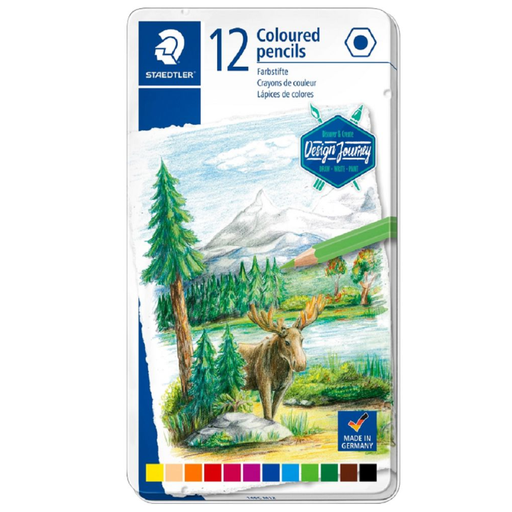
Why this choice suits this profile: This set of 12 colours is ideal for homework, everyday colouring and first drawings, without overcomplicating things. The hexagonal body offers a familiar grip for pupils and beginners alike.
With its 12 shades, this palette stops you paying for colours that will just sit at the bottom of the box, while still letting you practise layering and blending.
Soft lead that’s easy to blend, wood from certified forests according to the product description, cardboard box.
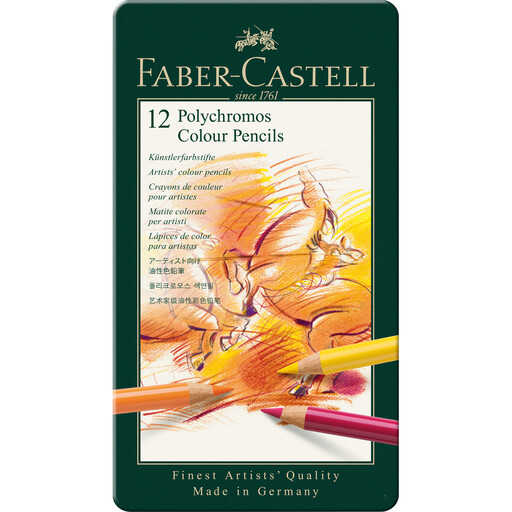
Why this choice suits this profile: This set is aimed at those looking for genuine artist coloured pencils, especially for portraits, illustrations and layering shades.
Its oil-based, break-resistant lead, designed for colour layering, makes it a working tool rather than just a decorative palette.
12 pigmented colours, metal tin and lightfastness rating in the product description.
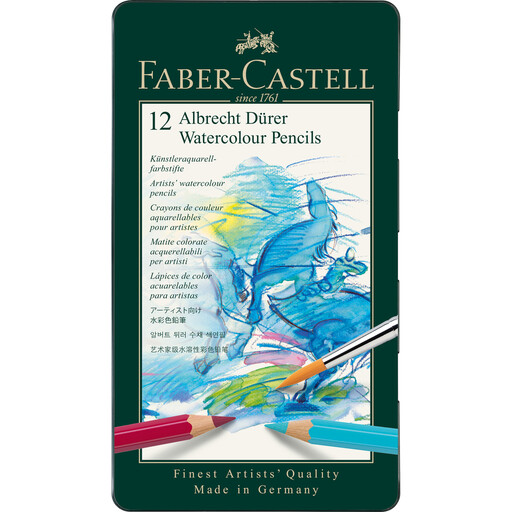
Why this choice suits this profile: Illustrators, art students and mixed-media enthusiasts can switch from a dry line to a wash effect with just a damp brush.
The watercolour function comes with a practical guide: colour on suitable paper, then activate the pigments with water.
12 shades, water-soluble pigments and a metal tin that’s handy for storage and travel.
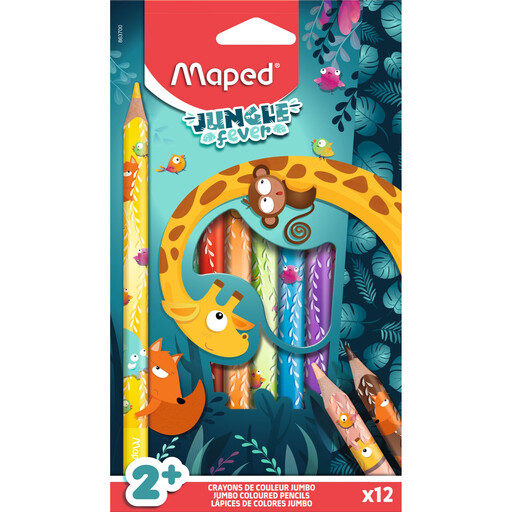
Why this choice suits this profile: The jumbo triangular format is designed for early creative activities and children from the age recommended by the manufacturer.
The wood-free body reduces the risk of splinters, while the 5 mm lead is designed to better withstand heavy use.
12 colours, triangular shape and wood-free resin design. Always observe the minimum age and supervision instructions stated on the packaging.
We’ve put together a comprehensive, real-time selection of products that meet these demanding criteria and European safety standards.
A set of 12 coloured pencils is enough for first drawings, school activities and everyday colouring. It lets you get to grips with blending without complicating storage. A larger set becomes worthwhile when you’re after precise shades or regularly working on illustrations.
They can be used dry like standard pencils, but adding water requires a brush and supervision appropriate to the child’s age. Always check the manufacturer’s instructions and use equipment designed for the intended purpose.
It all depends on how often you use them, the pressure applied, the lead diameter and the quality of the sharpener. Storing them in a dry place, sharpening gradually and having a break-resistant lead can limit wear and help you keep a consistent point for longer.