
Livraison le jour même ou le lendemain

Qualité garantie

Débloquez vos offres de bienvenue: Livraison GRATUITE | Jusqu'à -80 % | 30 jours d'essai gratuits à JoyPlus
Téléchargez l'application
A box of coloured pencils might seem simple to choose… until the leads snap, all the shades start to look the same, or the set ends up at the back of a drawer because it doesn’t suit the way you draw. Pencils for children, ergonomic models, watercolour pencils or professional-grade sets: the differences lie as much in the composition of the leads as in the packaging.
Before buying a set of coloured pencils, start by defining how you’ll use them. This will help you avoid three common mistakes:
Standard coloured pencils work well for colouring, drawing and hatching. Their finish depends on the binder used, the hardness of the lead and the paper you choose.
Oil-based pencils are particularly popular for layering and smooth transitions. The Faber-Castell Polychromos, for example, feature a 3.8 mm lead that is said to be break-resistant and designed for working in successive layers.
Watercolour pencils are used dry first, then with a damp brush to spread the pigments. This lets you move from a precise line to a wash effect, without having to buy separate standard pencils and watercolour pans.
Pastel pencils offer a dry, powdery texture. They are ideal for blending, smudging and effects similar to charcoal. On the downside, they often require textured paper and the application of a fixative to limit smudging.
A thicker lead generally withstands pressure better, but it doesn’t replace proper use. For children, the 4.2 mm leads on certain STABILO models offer plenty of material for quickly filling in large areas.
For illustration and precision work, check instead:
Woodless pencils, such as some Maped Color’Peps Infinity models, avoid shavings and don’t need a standard sharpener. They focus on practicality, but their shape and feel are different from traditional wooden pencils.
A triangular shape helps stabilise your grip and stops the pencil from rolling off the table. Ergonomic coloured pencils are especially useful for long sessions, children and anyone who colours regularly.
For on-the-go use, compare the different types of storage:
For coloured pencils intended for children, check the recommended age, any warnings about small parts and the presence of conformity information on the packaging. Sharpened pencils should not be put in the mouth. Children under 3 must be supervised in line with the manufacturer’s instructions.
The following models cover several uses: learning, advanced drawing, watercolour and heavy use.
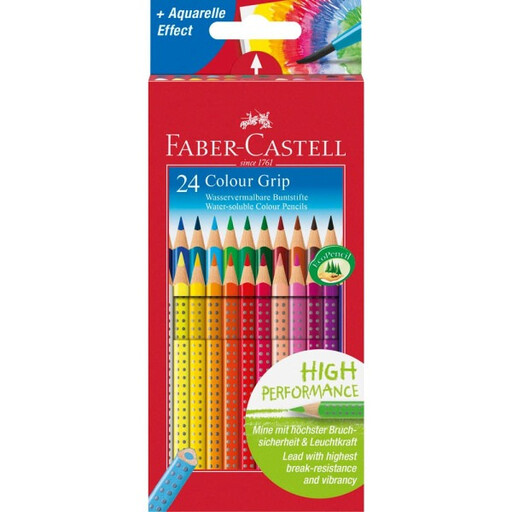
Why this choice suits this profile: A selection of 24 colours is enough for homework, colouring and early drawings, without piling up shades you’ll never use. The triangular shape and non-slip zone make it easier to hold.
The set doesn’t rely on a huge range of shades and stays in a format that’s easy to slip into a school bag.
24 colours, break-resistant lead, triangular shape and reusable cardboard box.
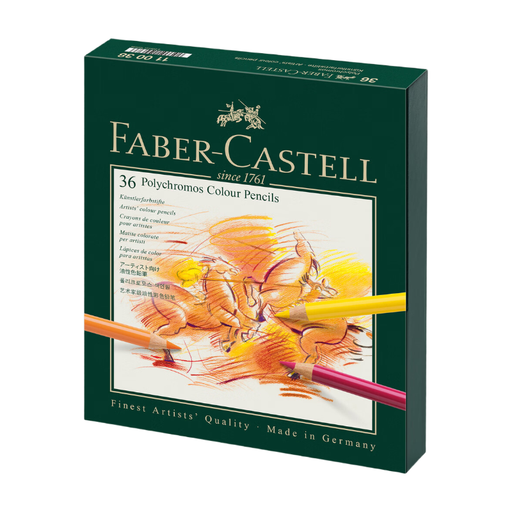
Why this choice suits this profile: Illustrators and art students will appreciate the 3.8 mm oil-based lead, which lends itself to layering, as well as the well-organised studio box.
The palette of 36 shades is easier to master than an overwhelming assortment, while the box limits losses and mixing.
3.8 mm oil-based lead, lightfast pigments and SV bonding said to strengthen break resistance.
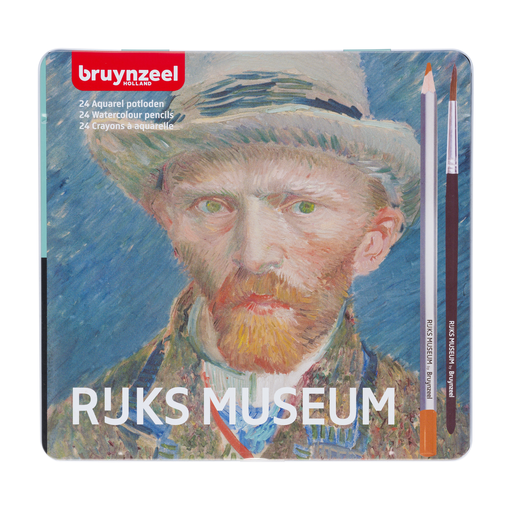
Why this choice suits this profile: This set is ideal for those who enjoy drawing on the go and for anyone who switches between dry sketching and watercolour effects. Its illustrated metal box protects the materials during travel.
The included brush lets you try the wet technique without immediately investing in extra equipment.
24 watercolour pencils, a brush and a compact metal box for drawing dry or working with water.
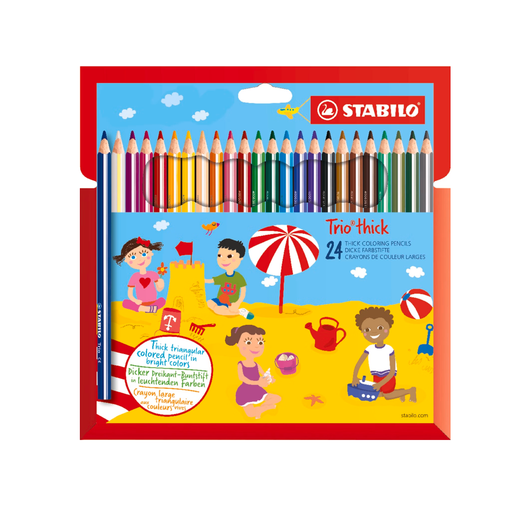
Why this choice suits this profile: Their thick triangular body and 4.2 mm lead are designed for small hands, large areas and repeated colouring sessions, both at school and at home.
The thick format makes them easy to grip and the strong lead is suitable for frequent use, with supervision according to age.
24 triangular pencils, 4.2 mm lead and certified wood from sustainably managed forests, according to the product sheet.
We’ve selected a full range, updated in real time, with products that meet these selection criteria and European safety requirements.
A set of 12 to 24 coloured pencils is enough to learn blending, gradients and shading. Boxes of 36 to 72 colours become useful for portraits, landscapes or illustrations that require a more nuanced palette.
They offer a different approach. Used dry, they behave like standard pencils. With a damp brush, they produce diffused effects and washes. The result depends on the paper, the amount of water and the pressure applied. Paper designed for wet techniques helps prevent buckling.
Sharpen the pencils gradually with a well-sharpened sharpener, avoid dropping them and store them in their box after each session. Keep the set in a dry place, away from sunlight and strong humidity changes. For pastel pencils, you can apply a fixative to finished works, following the manufacturer’s recommendations.