
Livraison le jour même ou le lendemain

Qualité garantie

Débloquez vos offres de bienvenue: Livraison GRATUITE | Jusqu'à -80 % | 30 jours d'essai gratuits à JoyPlus
Téléchargez l'application
Choosing a set of coloured pencils isn’t just about counting shades and comparing prices. The type of lead, its durability, the ergonomics of the pencils and even the size of the box all directly affect comfort, longevity and the final result on paper. A set that looks very appealing in a photo can turn out to be impractical in everyday use, especially for children, art students or adult colouring enthusiasts.
A set of 72 shades isn’t necessarily better than a box of 24 pencils. For everyday drawing and colouring, a balanced palette — primary and secondary colours, browns, greys and light shades — is often more than enough. Artists who work with gradients, portraits or detailed illustrations, however, will benefit from choosing a wider range.
The nature of the lead also deserves your attention. Standard pencils are suitable for dry colouring, while watercolour pencils can be activated with a damp brush. Pastel pencils, metallic or fluorescent ones, on the other hand, cater to more specific needs.
A fine lead offers greater precision, but it wears down more quickly when you need to cover large areas. Break-resistant coloured pencils are particularly valuable in the classroom, a shared studio, or for users who press down hard on the paper.
The diameter of the pencil matters just as much. The Bruynzeel Mega set, for example, features leads of 4 mm. You’ll therefore need a sharpener compatible with thick pencils, or even a jumbo pencil sharpener. A standard model won’t work with this size.
Phrases like “intense pigments”, “professional quality” or “long-lasting colour” should always be taken in context. The result also depends on the paper, the pressure applied, the number of layers and the technique you use.
To compare sets on a solid basis, focus instead on the concrete details: number of pencils, type of lead, diameter, shape of the barrel, type of case, water use and safety precautions.
Faber-Castell watercolour pencils come in metal tins of 12, 24 or 48 pieces, depending on the reference. They are used dry first, then can be activated with water on sufficiently thick paper.
A metal tin protects the tips and keeps the pencils neatly organised. It’s particularly practical for students, teachers and anyone who regularly transports their materials. Triangular barrels, found on some Colour Grip or Black Edition ranges, can also offer a more stable grip during long drawing sessions.
For a child, check the recommended age and remember the essential precautions: pencils should not be put in the mouth and small parts must be kept out of reach of children under 3 years old. If the manufacturer mentions a safety standard applicable to art supplies, refer to the packaging and the product information.
Before ordering a set, roughly measure the diameter of the barrel and the lead. Standard-sized pencils can be sharpened with a regular sharpener. Sizes of 3.3 mm, 4 mm and jumbo pencils sometimes require a model with a wider opening.
An electric sharpener with a double opening, compatible with diameters from 6 to 12 mm, may suit some thick drawing or colouring pencils. However, check the type of batteries required and the exact compatibility with your pencils before placing an order.
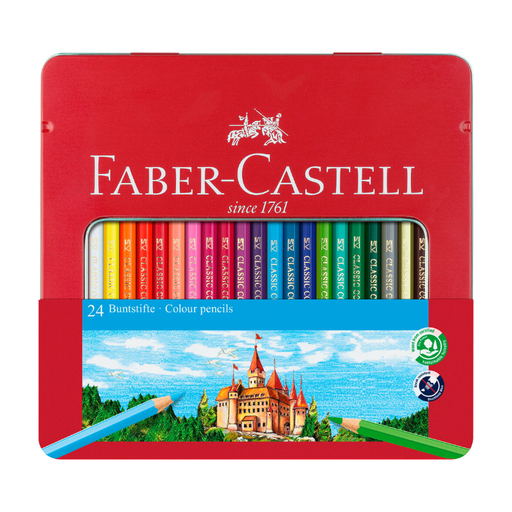
Why this choice suits this profile: A palette of 24 colours in a metal tin is perfect for first drawings, creative activities and colouring at home or on the go.
The set avoids paying for an oversized palette before you even know your needs. With its hexagonal barrel, it won’t roll off the desk.
24 shades, metal tin with viewing window, leads claimed to be break-resistant and easy to layer.
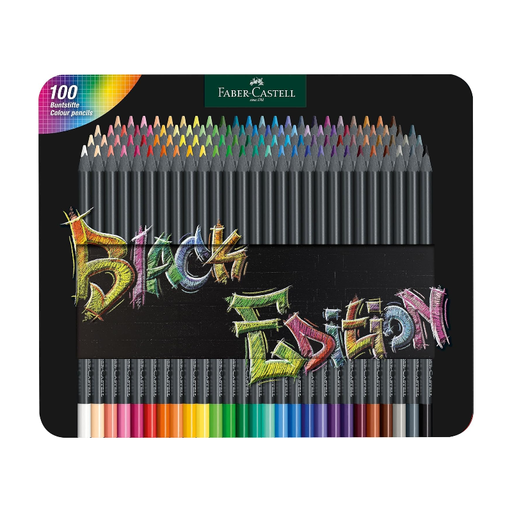
Why this choice suits this profile: With its very extensive palette, this set is aimed at illustrators, colourists and enthusiasts who regularly work with shades and blends.
The large number of shades reduces the need for blending to achieve close variations, while remaining easy to store in its tin.
100 pencils, 3.3 mm lead claimed to be break-resistant, triangular shape and pre-sharpened pencils according to the supplied information.
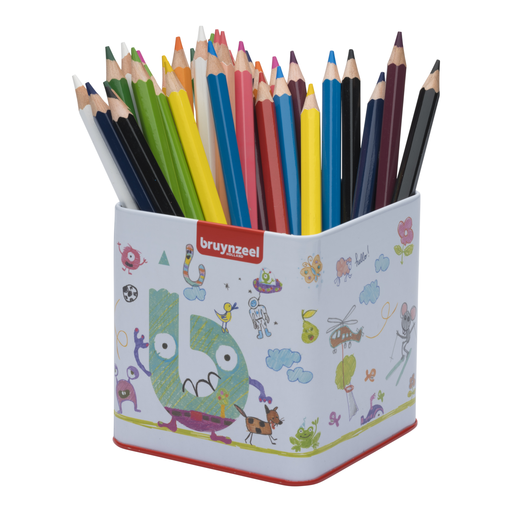
Why this choice suits this profile: Its thick format is designed for large areas of colour, posters, group projects and users who press down hard on the pencil.
Its 4 mm lead is designed to minimise interruptions from breakage. However, you must use a suitable jumbo sharpener.
48 colours, extra-thick 4 mm lead, metal tin and format suited to large areas as well as intensive projects.
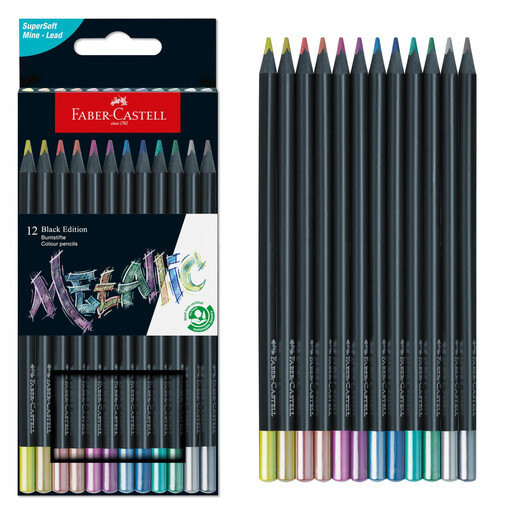
Why this choice suits this profile: Creators of cards, notebooks, lettering or illustrations on coloured paper can rely on this dedicated metallic palette.
This isn’t a general-purpose set sold as versatile: its 12 shades are clearly aimed at metallic effects and working on dark paper.
12 metallic colours, triangular shape, “Supersoft” lead and break resistance claimed by the manufacturer.
We’ve put together a comprehensive, real-time updated selection of products that meet these demanding criteria, while complying with European safety regulations.
A set of 12 to 24 pencils is generally enough to learn how to create blends, gradients and contrasts. A box of 48 colours or more becomes interesting if you want to minimise blending or work on detailed illustrations.
They can be used dry with a suitable sharpener. To achieve a watercolour effect, you’ll need a fine brush and paper thick enough to handle moisture. Start with very little water so you don’t soak the sheet. Once used, store the pencils dry in their metal tin.
Keep the pencils in their case, away from moisture and heat. Avoid dropping them and use a sharpener suited to the lead diameter. For pastel pencils, an appropriate fixative can limit smudging. Always follow the manufacturer’s instructions and the precautions stated on the packaging.