
Livraison le jour même ou le lendemain

Qualité garantie

Débloquez vos offres de bienvenue: Livraison GRATUITE | Jusqu'à -80 % | 30 jours d'essai gratuits à JoyPlus
Téléchargez l'application
With pastel highlighters, fineliner pens, acrylic markers and brush-tip pens, it can quickly become difficult to compare the different options. A very colourful set won't necessarily be the best choice for taking notes, drawing or keeping a bullet journal. The shape of the tip, the type of ink and the surface you're using often matter more than the number of shades listed on the box.
Here are the criteria to consider before buying coloured felt-tip pens and highlighters, along with a selection suited to different needs.
A set of 40 or 100 shades might look particularly appealing, but you won't necessarily use them all for taking notes or creating your projects. For a student, a palette of 4 to 8 colours is usually enough to organise their coursework. For drawing, colouring or lettering, a wider range makes it easier to create gradients and colour combinations.
Also check that the colours are genuinely different. Some palettes include lots of very similar shades, while others focus mainly on fluorescent or pastel colours.
A chisel tip allows you to make both fine lines and broader strokes, making it practical for annotating documents. However, it doesn't replace a fine tip when you need to draw detailed diagrams. Fineliner pens of 0.3 or 0.4 mm are better suited for margins, tables and precise outlines.
For lettering, a flexible brush tip lets you vary the line width by adjusting the pressure. However, it requires paper that is smooth enough to prevent the fibre from wearing out too quickly.
The result depends on the paper, your writing speed and the amount of ink applied. Water-based ink can be perfectly fine for notebooks and diaries, but may bleed through thin paper. Acrylic markers, on the other hand, are designed for different surfaces and can become permanent once dry.
Before starting a project, test the pen on a page similar to your final surface. This way you can check the ink's transparency, drying time and the risk of transfer.
"Non-toxic" labels and safety information do not replace the need to follow standard precautions. Caps can pose a risk for children under 3 years old. Also check the labelling, warnings and contact details of the manufacturer or the responsible person within the European Union.
For highlighters, a chisel tip of 2 to 5 mm allows you to switch from a precise line to a wider band. The Deli and STABILO models shown below use this format.
For detailed work, a tip of 0.3 to 0.4 mm is suitable for fine annotations, diagrams and intricate patterns. Brush-tip pens offer more possibilities, with control depending on the flexibility of the fibre.
A triangular or slightly contoured barrel can improve grip during long writing sessions. A rigid case or compartmentalised pouch makes it easier to store the colours and reduces the risk of losing them.
After each use, carefully replace the cap. Water-based ink models often keep better when stored horizontally, while markers should be stored according to the manufacturer's recommendations. Heat and direct sunlight can affect the ink.
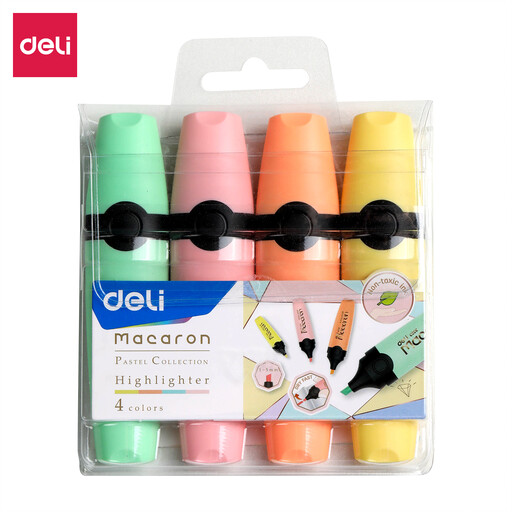
Why this choice suits this profile: This set of four pastel highlighters covers the everyday needs of school pupils, students and anyone who wants to start with a small palette for their coursework, documents or diary.
The small format stops you from buying lots of shades that would end up sitting unused in a drawer. The chisel tip offers two line widths, from 1 to 5 mm depending on the contact area.
Water-based ink, a fibre tip and four pastel colours in a compact format for everyday highlighting.
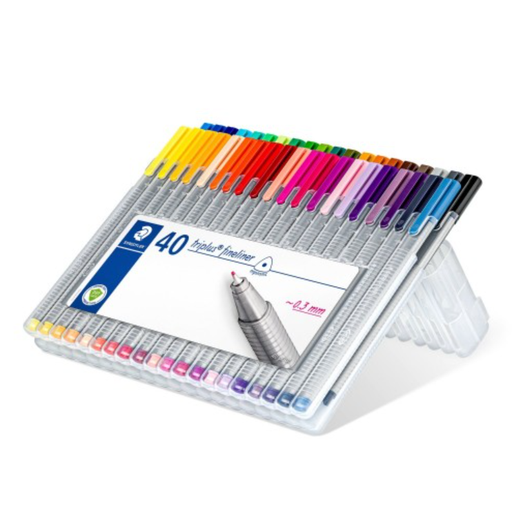
Why this choice suits this profile: Users who value precision and comfort get a palette of 40 colours and a fine 0.3 mm tip.
The very fine tip reduces the risk of drawing lines that are too thick in tables, mind maps or detailed patterns.
A triangular barrel, water-based ink and a storage case with 40 slots.
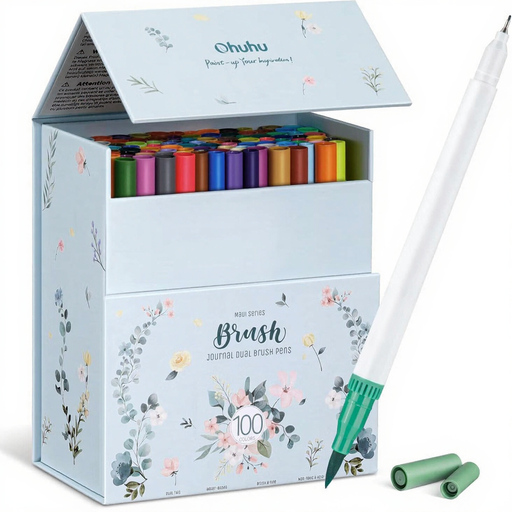
Why this choice suits this profile: Enthusiasts of drawing, colouring, calligraphy and regular creative hobbies benefit from two tips per pen and an extensive palette.
The dual-tip system means you don't need lots of different tools: a 0.4 mm fineliner tip handles the details, while the brush tip (1 to 6 mm) is ideal for broad strokes and gradients.
100 numbered colours, a colour chart, five replacement tips and water-based ink.
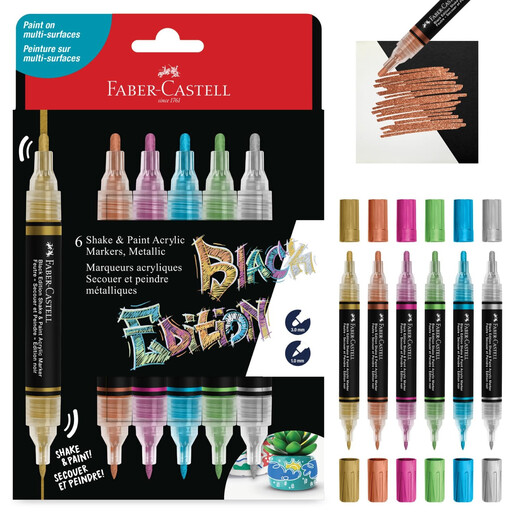
Why this choice suits this profile: People who personalise glass, wood, metal, stone or plastic get an opaque acrylic ink and two round tips.
This isn't just a writing pen: it's clearly designed for use on multiple surfaces. A preliminary test is still recommended to check adhesion.
Six metallic colours, 3 mm and 1 mm tips, and an opaque acrylic ink that is claimed to be water-resistant once dry.
We've put together a comprehensive, real-time updated selection of products that meet these demanding criteria and European safety regulations.
For a bullet journal, fineliner pens of 0.3 or 0.4 mm are suitable for frames, calendars and fine writing. Pastel highlighters can be used to organise information. However, test the ink on a page of your notebook to check it doesn't bleed through the paper.
Replace the cap after each use and store the pens in their case. For dual-tip models, make sure both caps are on properly. Horizontal storage is often recommended, but the instructions for each individual product should take priority.
A set of 4 to 8 colours is usually enough for annotating and taking notes. For drawing, colouring, lettering or creative hobbies, 20 colours or more offer a more interesting range of shades. The right choice really depends on how often you use them and the type of surface you're working on.