
Livraison le jour même ou le lendemain

Qualité garantie

Débloquez vos offres de bienvenue: Livraison GRATUITE | Jusqu'à -80 % | 30 jours d'essai gratuits à JoyPlus
Téléchargez l'application
Colour pens and highlighters belong in school pencil cases, at the office, for journaling and for creative hobbies. But an attractive assortment does not necessarily guarantee an enjoyable everyday experience. A nib that catches, ink that bleeds through the pages or shades that are too similar can quickly turn a practical purchase into unnecessary expense.
Before filling your pencil case, focus on three criteria: the type of ink, the nib width and the intended use. Here are the most common pitfalls, along with a selection of models suited to different needs.
Highly saturated colours are enjoyable for decorating a page, but can strain your eyes when taking notes or rereading a document. Pastel highlighters generally offer softer contrast, while darker inks are better suited to headings and annotations that need to stand out.
To create a genuinely effective colour-coding system, also make sure the shades are easy to distinguish. Blue, red, green and black remain reliable choices for both lecture notes and professional documents.
Ink that works well on printer paper may bleed through a thin notebook page. Gel pens, in particular, produce intense, smooth colour, but their drying time varies depending on the formulation. Left-handed users and people who write quickly should therefore choose quick-drying ink to reduce smudging on their hands.
For textbooks and exercise books, look for wording indicating a low risk of show-through. Even so, test the pen on a less visible page: the result also depends on the thickness and finish of the paper.
A set of brush pens will not replace extra-fine pens. Likewise, a chisel-tip highlighter is not necessarily suitable for the details of a drawing. By choosing your writing instruments according to the activity you have planned, you can avoid duplicates and get more from each model.
The nib has a direct impact on writing comfort and precision:
Extra-fine pens, such as the M&G model with a 0.38 mm nib, are particularly well suited to compact annotations. At the other end of the scale, a 0.7 mm multicolour ballpoint pen lets you switch shades quickly without needing multiple pen barrels.
Gel ink generally provides smooth writing and rich colours. Ballpoint ink dries quickly and is practical for everyday tasks. Erasable pens use heat-sensitive ink: they are useful for exercises, diaries and drafts, but are not suitable for documents that need to remain permanent or for thermal paper.
For creative projects, colouring pens and metallic-ink pens require a few additional checks: opacity, compatibility with dark paper and drying time. The manufacturer’s information describes the product’s characteristics, but does not constitute a guarantee for every type of surface.
A soft or textured grip can make long writing sessions considerably more comfortable. A retractable mechanism means there is no cap to lose and protects the nib during transport. To maintain a consistent flow of ink, store your pens according to the recommendations in their product information, replace the caps and avoid high temperatures.
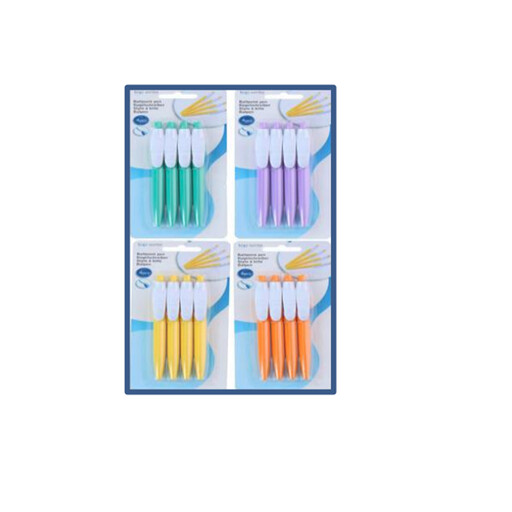
Why this choice suits this user profile : This set of four multicoloured ballpoint pens is suitable for children and beginners who want to write, draw or colour in their homework with a simple assortment.
The compact format means you do not have to buy a large assortment before discovering the user’s preferences.
Four assorted colours, a barrel designed for a comfortable grip and use at home or in the classroom.
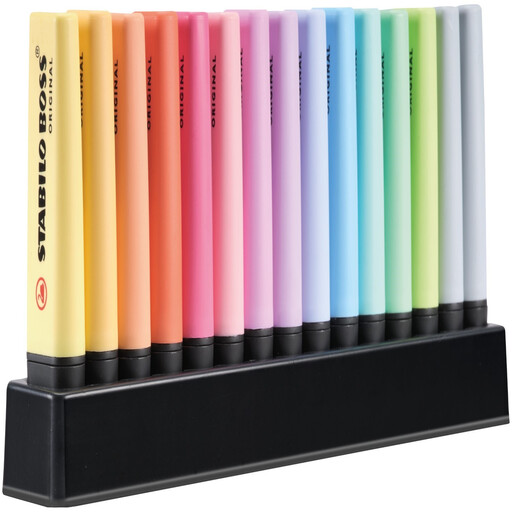
Why this choice suits this user profile : Its pastel palette and chisel tip meet the needs of anyone who enjoys presenting their notes, diaries and journaling pages with care.
The two stated widths, 2 mm and 5 mm, mean you do not need two types of marker for underlining and framing.
15 pieces, 14 stated pastel shades, water-based ink and a chisel tip.
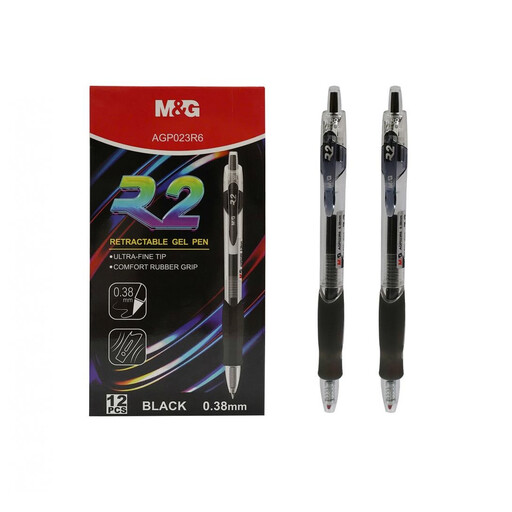
Why this choice suits this user profile : Its ultra-fine nib is aimed at students, professionals and anyone who takes dense notes and wants a precise black line.
The 0.38 mm width prevents lines from becoming too thick when space is limited in a diary or notebook.
12 retractable pens, a soft grip and black gel ink described as quick-drying.
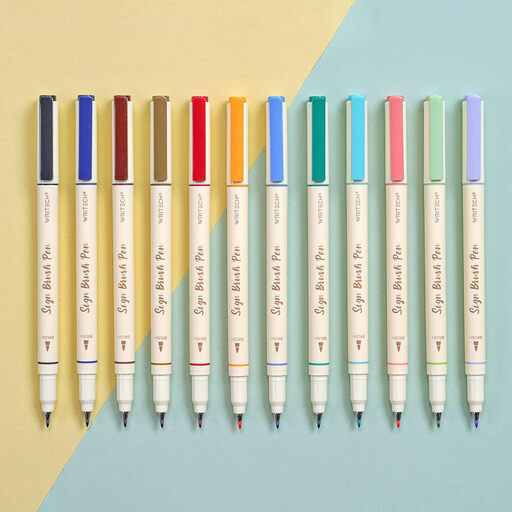
Why this choice suits this user profile : Its flexible brush tip is suitable for lettering, calligraphy, light drawings and bullet journal pages.
The flexible tip lets you vary the line according to the pressure applied, without having to find a different marker for each width.
12 pastel shades, water-based ink and a fibre tip described as suitable for blending with water.
We have put together a complete, real-time updated selection of products that meet these demanding selection criteria and European safety standards.
A 0.5 to 0.7 mm gel model offers a good balance between readability and comfort. For small line spacing, 0.38 mm extra-fine pens are more suitable. A retractable model is also practical in a pencil case or on a shared desk.
No. Their heat-sensitive ink is designed to make mistakes disappear through friction. Heat or cold can also alter its appearance. Keep them for drafts, homework and diaries, and choose permanent ink for forms, signatures and documents that need to be kept.
Replace its cap immediately after use and store it somewhere at room temperature, away from sunlight. During long revision sessions, a chisel tip and an adequate ink reservoir can also help reduce repeated strokes over the same line.