
Livraison le jour même ou le lendemain

Qualité garantie

Débloquez vos offres de bienvenue: Livraison GRATUITE | Jusqu'à -80 % | 30 jours d'essai gratuits à JoyPlus
Téléchargez l'application
Choosing colored pencils seems simple… until you are faced with dozens of sets. Number of shades, intense pigments, break-resistant cores, watercolor effects, or ergonomic handling: each feature addresses a different need.
To avoid buying the wrong set, start by considering how it will be used: schoolwork, regular coloring, detailed illustration, watercolor techniques, or creative activities with children.
A set of 72 coloring pencils may seem more appealing than a box of 12 watercolor pencils. However, a generous palette cannot replace a water-soluble core, good break resistance, or a comfortable shape to hold.
For a child, a thoughtfully designed smaller set will often be more practical. For an illustrator, a broad range makes gradients easier and allows for more precise shades. The number of pencils should therefore be considered alongside the technique used and how frequently you plan to draw.
Watercolor pencils can be used dry and then blended with a damp brush. However, the result depends heavily on the paper: a sheet of standard office paper may buckle or deteriorate quickly.
For washes, choose thicker paper designed for watercolor. Also check whether the set includes a brush. Some sets contain only the pencils, requiring you to purchase additional accessories.
A soft core generally lays down a more opaque color, but it wears down faster and is less resistant to impact. A firmer core is preferable for outlines, details, and school exercises.
The shape of the pencil also matters. Ergonomic pencils, whether triangular or equipped with a non-slip grip zone, provide a more comfortable hold during longer sessions. By contrast, a chunky wax pencil or an XXL-core model is easier for small hands to hold, but less precise for detailed work.
Here are the main categories to distinguish:
Examine each feature separately. A water-soluble product is not automatically designed for intensive use or for working on very thin paper.
A colored pencil set containing 12 to 24 shades is generally suitable for school, everyday drawing, or getting started. A box of 36 to 72 colors provides greater freedom for portraits, landscapes, and detailed illustrations.
Also check what the box actually contains:
A well-equipped set can eliminate the need for additional purchases, provided the included accessories genuinely match your needs.
For children, children’s pencils should be thick enough and easy to grip. According to their product specifications, STABILO Woody models feature a short barrel and a 10 mm XXL core. They are designed for small hands, but are not suitable for children under 3 because they contain small parts and pointed tips.
For students, parents, and artists, focus instead on break resistance, ease of sharpening, and storage solutions. References to wood sourced from certified forests, found on several Faber-Castell, STABILO, and STAEDTLER products, provide information about the declared origin of the material. They do not replace consulting the full technical specifications.
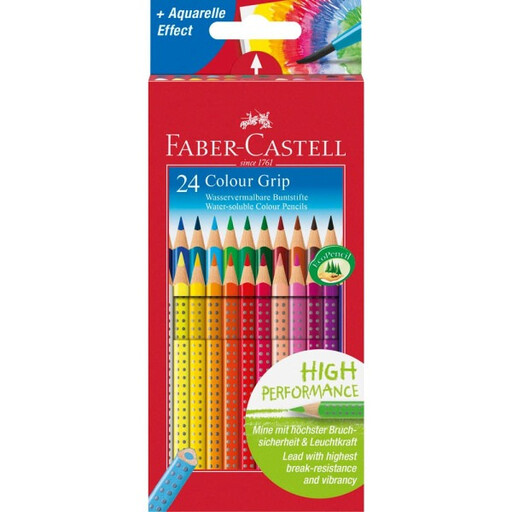
Why this model is a good fit: With 24 colors, this set works equally well for homework, coloring at home, and first creative projects.
The triangular shape and flexible grip zone make the pencil more comfortable to hold. The cores are advertised as break-resistant, helping prevent interruptions during coloring.
24 shades, triangular barrel with grip zone, and reusable cardboard box.
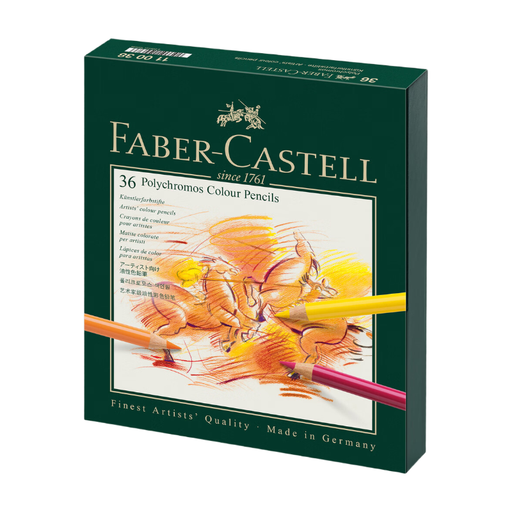
Why this model is a good fit: Illustrators, graphic arts students, and detailed-drawing enthusiasts benefit from an oil-based core that is ideal for layering and blending colors.
The product details mention a 3.8 mm oil-based core, reinforced construction for improved break resistance, and acid-free pigments advertised as lightfast.
Creamy application, effortless layering, water resistance, and a studio case for storage.
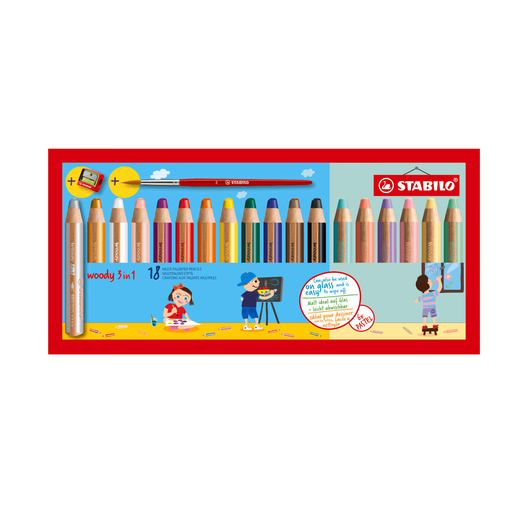
Why this model is a good fit: Children can draw on paper, cardboard, and certain smooth surfaces, then explore dilution effects with the included brush.
The 10 mm XXL core and short barrel are advertised as easy to grip. On non-porous surfaces, marks can be wiped away with a damp cloth.
18 colors, including 6 pastels, 3-in-1 functionality, sharpener and brush included. Not recommended for children under 3.
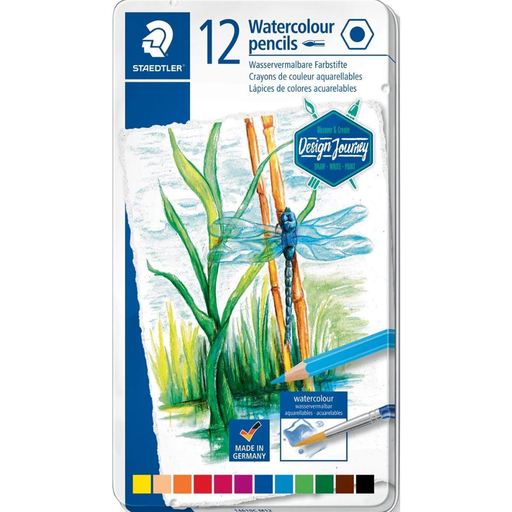
Why this model is a good fit: Compact and easy to slip into a student’s bag, it is equally suited to workshops, sketching at home, and drawing on the go.
The metal tin protects the pencils during transport. The product details specify that the cores are water-soluble and can be used dry or with a damp brush.
12 shades, hexagonal barrel, core advertised as break-resistant, and a portable metal tin.
To complete your setup, add the following as needed:
Faber-Castell, STABILO, and STAEDTLER pencils are designed for different uses. Compare the core composition, diameter, packaging, and included accessories rather than focusing solely on the brand name.
We have put together a comprehensive, regularly updated selection of products that meet these buying criteria and the safety requirements applicable in France.
A set of 12 to 24 colors is enough for school, coloring, and first drawings. For portraits, landscapes, or richly blended illustrations, 36 colors or more reduce the need for mixing.
Yes. At a minimum, you will need a brush and paper that can withstand moisture. Some sets, such as STABILO Woody products and certain Faber-Castell kits, already include a brush. Allow the pencils to dry before putting them back in a metal tin.
Sharpen the pencils gradually with a suitable sharpener, avoid dropping them, and store them away from moisture and heat. Close the box after each use. For dry pastels, storing them flat and ensuring good ventilation helps reduce breakage and limits dust inhalation.