
Livraison le jour même ou le lendemain

Qualité garantie

Débloquez vos offres de bienvenue: Livraison GRATUITE | Jusqu'à -80 % | 30 jours d'essai gratuits à JoyPlus
Téléchargez l'application
The dreaded back-to-school list is here, and the rush for school supplies has begun. Among the essentials, colored pencils seem like a simple purchase. Think again! The wrong choice can lead to a guaranteed meltdown: leads that break at the first drop, dull, lackluster colors, and a discouraged child. To avoid turning coloring time into a nightmare, here are the common pitfalls to watch out for before you fill that school bag.
To make the right choice, three key points should be inspected to ensure comfort, durability, and safety.
The grip is crucial, especially for small hands learning to draw and write.
Triangular pencils?: This is the most recommended shape. It helps children position their fingers instinctively and, as a significant bonus, prevents the pencil from rolling and ending up on the floor. An excellent option for kindergarten and early elementary school.Ergonomic pencils go even further with grip zones or non-slip materials to guide finger placement.A sturdy colored pencil is the combination of a strong lead and a barrel that holds up.
wooden colored pencils from sustainably managed forests (look for the FSC label). Quality wood sharpens cleanly without splintering and better protects the lead.For a child's colored pencil, safety is non-negotiable. Check that the products bear the CE mark, which certifies their compliance with European toy safety regulations. This guarantees they do not contain harmful substances—an essential point, given that young children tend to chew on everything. A pack of colored pencils from a recognized brand like Maped or Stabilo generally offers this peace of mind.
Here are a few options that meet specific needs, taking into account durability and ergonomic criteria.
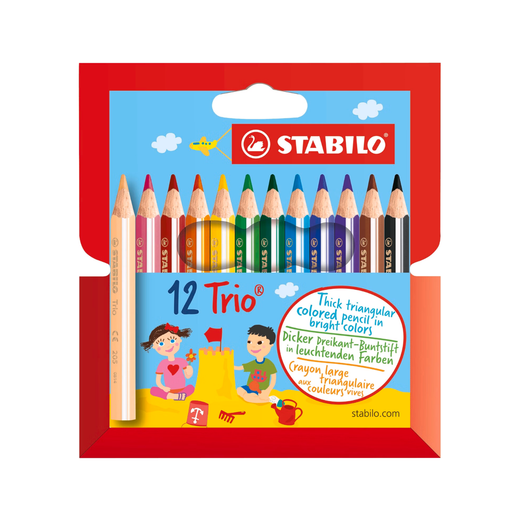
Why it's a great choice : Specially designed for toddlers, this short, chunky pencil makes it easy to grip and control movements. Its triangular shape guides finger positioning, making it an excellent introductory tool for kindergarten.
Its XXL 4.2 mm lead is designed to withstand the sometimes... energetic pressure from toddlers. Say goodbye to broken leads! Its triangular "Jumbo" shape checks all the boxes for good ergonomics.
The barrel is made from 100% certified wood from sustainably managed forests.
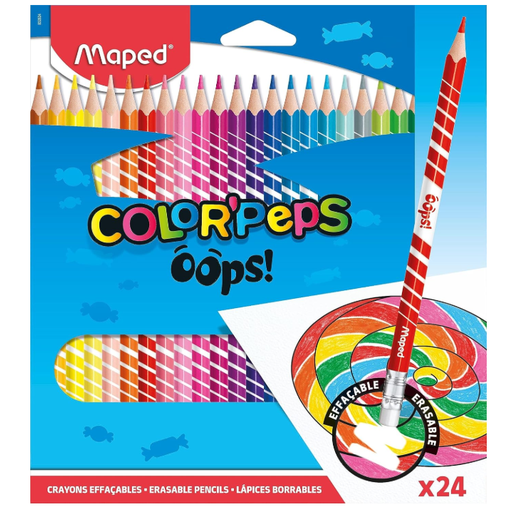
Why it's a great choice : For schoolwork that requires precision, being able to erase is a game-changer. These pencils allow you to correct a line that goes outside the box or a color mistake, which is ideal for geography maps or science diagrams.
Its resin lead is designed to last and withstand the intensive use of the school day. The triangular shape ensures an excellent grip, avoiding the pitfall of poor ergonomics.
Each pencil has its own built-in eraser. No more digging through the pencil case, which promotes a child's independence.
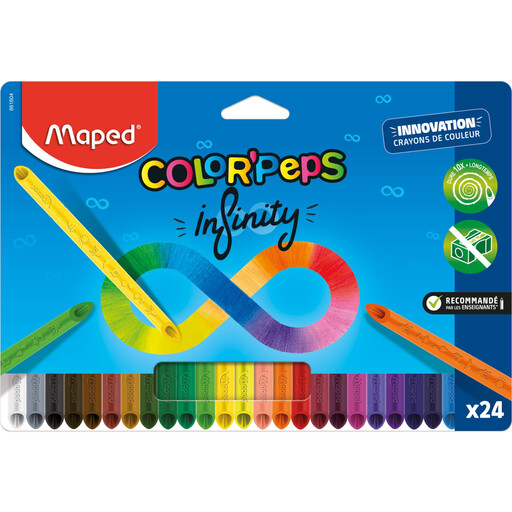
Why it's a great choice : Perfect for budding artists who go through their pencils quickly, or for parents looking for a more sustainable, zero-waste solution. This pencil is 100% lead, which massively extends its lifespan.
It ends the problem of breakage during sharpening because it self-sharpens while coloring and never needs to be sharpened. Its 100% lead design makes it infinitely more durable than a classic pencil.
Zero wood waste and record-breaking longevity. According to Maped, it lasts 10 times longer than a standard pencil.
These three options cover the most common needs for back-to-school. Of course, the world of drawing is much broader. For more seasoned artists or specific projects, other, more technical tools may be necessary.
For illustration, sketching, or technical drawing, we have selected a range of products that meet professional-level criteria.
Not necessarily. For a child in kindergarten, a pack of colored pencils with 12 colors is more than enough to discover the basic shades. It's in elementary school, or for a child already passionate about drawing, that a box of 18, 24, or 36 colors becomes useful for exploring more nuances.
"Jumbo" sized pencils are ideal up to age 4-5 to help develop fine motor skills. Around age 5-6 (when starting elementary school), a child has better control of their movements and can switch to standard-sized pencils. A triangular model is still a good idea to continue guiding their finger placement.