
Livraison le jour même ou le lendemain

Qualité garantie

Débloquez vos offres de bienvenue: Livraison GRATUITE | Jusqu'à -80 % | 30 jours d'essai gratuits à JoyPlus
Téléchargez l'application
For a car enthusiast, a collectible model car is far more than a simple toy. It's a work of art in miniature, a tribute to engineering and design, a piece of history you can hold in the palm of your hand. But navigating the jungle of models, scales, and finishes to find that perfect gem can quickly become a challenge.
This guide is here to provide clear benchmarks and help you select the collectible model car that will exceed your expectations, whether you're expanding your display case or searching for the perfect gift for a car aficionado.
Before you begin, there are a few essential criteria to consider. These factors will determine the quality, value, and ultimately, the enjoyment you get from your scale model.
Scale is the size ratio between the miniature and the actual vehicle. This choice is crucial, as it dictates both the potential level of detail and the space your collection will require.
The perceived quality of a miniature primarily comes down to its materials. The term die-cast (injected metal) is a hallmark of durability and realism for the bodywork, giving it a satisfying weight in hand. Plastic is used for interior details, windows, and accessories.
Examine the finish closely: is the paint perfectly smooth and even? Are the logos crisp and accurate? Are details like the headlights, rims, or grille finely executed? This is what separates a simple toy from a true collector's piece.
For a sports car replica or any other legendary vehicle, an official license from the manufacturer (Ferrari, Ford, Lamborghini, etc.) is the best guarantee of authenticity. It ensures that the proportions, body colours, and the finest details of the scale model have been approved by the brand itself. A licensed Ferrari model, for example, will be an exact copy of the original, right down to its most subtle curves.
To move from theory to practice, here are a few models that perfectly illustrate the richness of today's market.
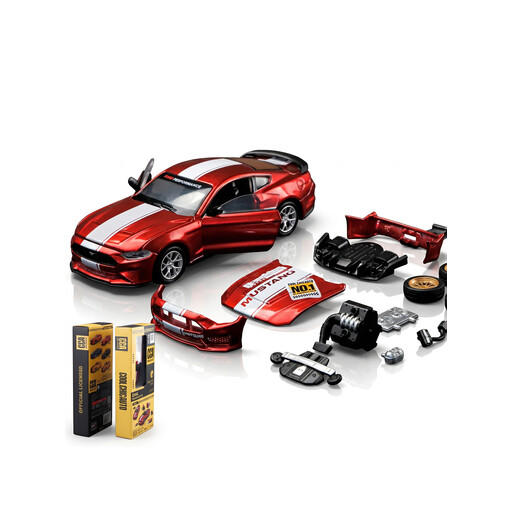
Why this model stands out?: At a 1:42 scale, this assembly kit combines the joy of collecting with the pleasure of building. It's an interactive and rewarding approach that results in a detailed replica.
Highlights?:
Who is it for?? Ideal for those who enjoy a hands-on project and for younger enthusiasts (ages 14 and up) looking for a fun introduction to collecting.

Why this model stands out?: This 1:36 replica of the Lamborghini Revuelto captures all the aggression and modernity of the Italian supercar in a compact form. Its matte blue finish is particularly striking.
Highlights?:
Who is it for?? For fans of modern supercars and collectors seeking a compact model without compromising on iconic details like the scissor doors.
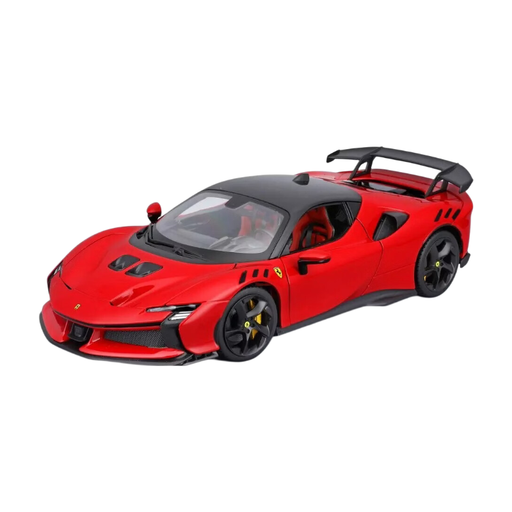
Why this model stands out?: From Bburago, a benchmark in the industry, this 1/18 Ferrari model is a true centrepiece. The level of detail is exceptional, paying vibrant tribute to one of the most extreme cars from the Prancing Horse brand.
Highlights?:
Who is it for?? For discerning collectors and Ferrari tifosi who want a large-scale, ultra-detailed, and perfectly faithful sports car replica.
Our selection is, of course, just a starting point. Every collector is unique, with their own favourite brands, eras, and vehicle types. To find the model that speaks to your passion, from classic sports cars to modern sedans, feel free to browse our complete catalogue.
Discover Our Entire Collection of Model Cars
There's no single answer; it all depends on your priorities. The 1/18 scale is the star for detail and visual impact. The 1/43 scale is the king of compromise, ideal for building a rich, themed collection without taking over your living room. The 1/24 scale, meanwhile, sits right in between.
To keep your models looking their best, protect them from their two worst enemies: dust and direct sunlight (which can fade the paint). For dusting, a soft-bristled brush or a can of compressed air will work wonders. The ideal solution is a display case, which both protects and showcases them beautifully.
The term “?die-cast?” (or die-casting) refers to a process where a molten metal alloy (often Zamak, a zinc-based alloy) is injected under pressure into a mould. This technique allows for the creation of bodywork that is both highly detailed and durable. The weight of the metal also enhances the feeling of quality in hand, making it the benchmark material for collectible models.