
Livraison le jour même ou le lendemain

Qualité garantie

Débloquez vos offres de bienvenue: Livraison GRATUITE | Jusqu'à -80 % | 30 jours d'essai gratuits à JoyPlus
Téléchargez l'application
Finding the perfect collectible model car, whether to start your own collection or to delight an enthusiast, can be a daunting task. The market is flooded with models, but not all are created equal. As a product expert at Joybuy, my mission is to provide some clarity. Together, let's navigate the common pitfalls to ensure your purchase is a true success.
Before you begin, let's review the three main issues that too often turn a purchase into a disappointment:
To make the right choice, a few technical criteria should be examined closely. They define the quality and purpose of a scale model car.
The scale determines not only the size of the miniature but also its potential for detail and the space it will occupy on your shelves.
A miniature's composition is a key indicator of its quality. A quality metal car model is typically made of die-cast, a zinc alloy (often called Zamak) that gives it its weight and sturdiness. Plastic (ABS) is used for detail parts like dashboards, seats, or spoilers, while rubber is reserved for the tires for added realism. A good model is one that judiciously balances these materials.
The details make all the difference. Observe the quality of the paint: is it thin and even? Are the decals (sponsors, race numbers) precise and well-applied, especially on a Bburago Ferrari F1 car? Features like opening doors or functional steering add considerable value, whether for display or for creating an F1 diorama.
To help you visualize these criteria, here are a few models suited for different types of collectors and enthusiasts.
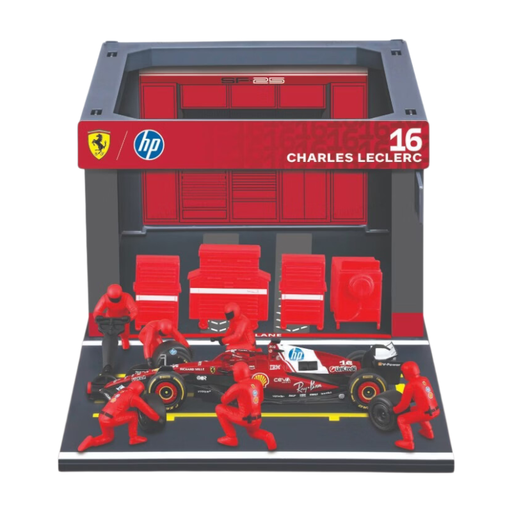
Why it's a great choice: More than just a car, this is a complete scene. It's perfect for recreating the atmosphere and tension of a pit stop in a realistic F1 diorama. The set includes the car, mechanic figurines, and paddock accessories.
This set avoids the trap of confusing a toy with a collectible. It is clearly designed for staging and display, where the value lies in the complete diorama rather than the car alone.
Complete diorama set; Official Scuderia Ferrari license; Good level of detail for 1/43 scale.
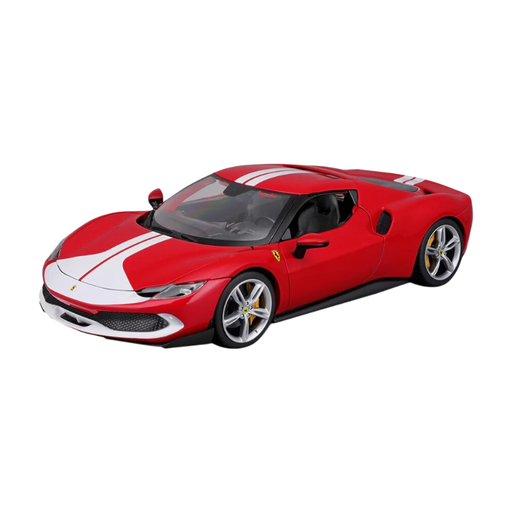
Why it's a great choice: For those seeking a showpiece, the large 1/18 scale is a must. This model offers a high level of detail, with opening parts (doors, hood) that allow you to admire the engine and interior. It's sure to satisfy even the most demanding collectors.
This model avoids the "misleading scale" trap. At this size, Bburago delivers details that matter: an accessible engine, functional steering... These are real advantages that fully justify the large format.
Large 1/18 scale; Numerous opening parts (doors, hood, trunk); Functional steering via the steering wheel.
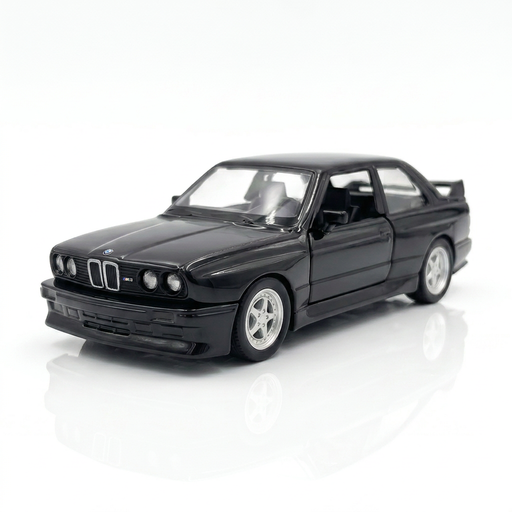
Why it's a great choice: The perfect gift for a **car enthusiast**. The 1987 BMW M3 is a true icon. Sturdy with its metal body, it includes a "pull-back" function that adds a playful touch. It's an excellent gateway into the world of collecting.
This model strikes the right balance between a collectible and a quality toy. Its metal body is durable, its opening doors are solid, and its play feature is clearly intentional. There's no ambiguity.
Iconic car model; Robust metal construction; Fun pull-back mechanism.
Discover our full selection of models that meet our quality criteria and current safety standards.
A 1/18 scale model car measures about 25 cm long. It's the ideal format for a standalone display piece, as it allows for a very high level of detail, especially on the engine and in the cockpit. The 1/43 scale, with a length of about 10 cm, is the standard for themed collections (F1, rally, endurance). It offers an excellent compromise between level of detail and footprint.
For regular maintenance, a soft-bristled brush or a dry microfiber cloth is sufficient to remove dust. For a stain, use a cloth very lightly dampened with water, then dry immediately. Avoid chemical or abrasive cleaning products, as they could damage the paint and decals. Also, avoid prolonged exposure to direct sunlight, which can fade the colors.
It depends on the model. It is imperative to always check the age recommended by the manufacturer. Models intended for collectors, often marked for ages 14 and up, have small, fragile parts (mirrors, antennas, wipers) that can break and pose a choking hazard. For younger children (from 3 years old), choose models specifically designed for play: sturdier construction, simplified shapes, and no small detachable parts. In all cases, use by a young child should be under adult supervision.