
Same-day & Next-day Delivery

Quality Guaranteed

Unlock Your Welcome Offers: FREE Delivery | Up to 80% OFF | Free 30-day JoyPlus trial
Download the APP
Boosting your vitamin intake with fresh homemade juices is an excellent way to get the most out of fruits and vegetables. But with the overwhelming number of models on the market, it can be hard to know where to start. This guide is here to shed some light with simple criteria and practical advice—free of marketing jargon—to help you find the juicer that's truly right for you.
As the Head of Product Curation at Joybuy, my mission is to guide you toward the best choices, always prioritising performance, ease of use, and durability.
Before we dive into our top picks, let's review the key points that will guide your decision.
This is the number one criterion. A cold press juicer, also known as a slow juicer, uses an auger to slowly press produce. This method, with its low rotation speed (typically between 40 and 80 RPM), generates almost no heat. The main advantage?? It provides much better preservation of vitamins, enzymes, and minerals, which are highly sensitive to heat and oxidation. The resulting juice is more uniform, stays fresh a bit longer, and the pulp comes out drier—a sign of optimal yield.
A centrifugal juicer, on the other hand, uses centrifugal force at very high speeds to shred produce and separate the juice from the pulp. It's much faster, but the heat and oxidation are more significant, which can degrade some of the precious nutrients.
For daily use, convenience is key. Keep an eye on these three aspects?:
A quiet juicer is a real luxury, especially if you prepare your juice early in the morning without wanting to wake up the whole house. Cold press juicers are inherently much quieter than centrifugal ones. Also, consider the space available on your countertop; a compact, vertical design is often easier to fit into a kitchen.
We have selected devices for you that cater to different needs, based on their performance and design.

Why it stands out?: The WOOX MX0289 is the cold press juicer that checks all the boxes for family use. Its filter-free design radically simplifies cleaning—one of the biggest deterrents to using a juicer daily. Its extra-wide 130?mm chute lets you feed in whole apples or oranges, a significant and welcome time-saver for daily routines.
Key features?:
Who is it for?? For families and anyone looking for a high-performance, practical, and easy-to-maintain cold press juicer for regular use. Its modern and compact design fits easily into any kitchen.
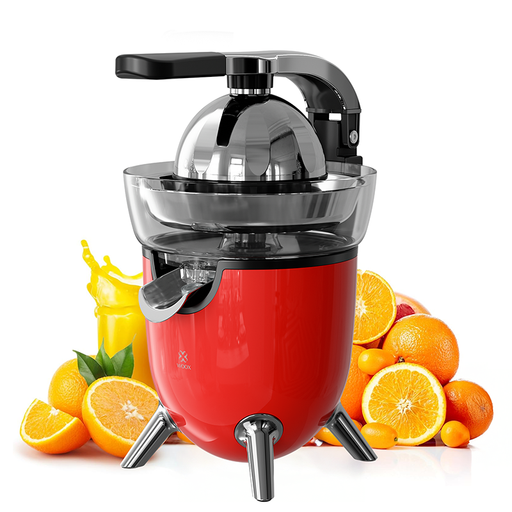
Why it stands out?: This device isn't a versatile juicer but a specialised electric citrus press. It excels at its mission: extracting juice from oranges, lemons, grapefruits, and other citrus fruits with formidable efficiency. Its 100W motor and soft-grip handle allow you to get fresh juice with zero effort.
Key features?:
Who is it for?? Those who primarily drink citrus juices and want a dedicated, fast, efficient, and very easy-to-clean appliance. Perfect for fresh morning orange juice.
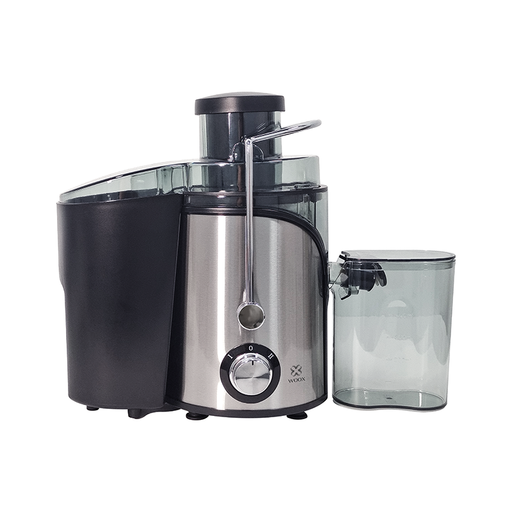
Why it stands out?: Note that this model is a centrifugal juicer, not a cold press one. Its strength is its speed. With its 600W motor, it turns fruits and vegetables into juice in seconds. Its wide 7.6 cm (3-inch) chute also minimises the need for pre-cutting.
Key features?:
Who is it for?? Users for whom speed is the number one criterion. It's a good entry point into the world of homemade juices, even if it doesn't offer the same nutritional benefits as a slow juicer.
If your needs lean toward heavy-duty or semi-professional use, look for even more robust models. For appliances designed for high yield and continuous operation, explore our dedicated category.
? Discover Our Selection of Commercial Juicers
1. What is the main difference between a cold press juicer and a centrifugal juicer?? It's all in the technology. The cold press juicer (slow juicer) slowly presses produce, thus preserving the maximum amount of fragile nutrients. The centrifugal juicer, on the other hand, relies on very high-speed rotation: it's much faster, but the heat and oxidation generated can degrade some of the vitamins.
2. Can you really put whole fruits and vegetables into a juicer?? It depends on the model. Juicers with a wide chute (typically 8 cm or more) are designed to accept small fruits like apples or peeled oranges without pre-cutting. For fibrous vegetables like celery or kale, it's always recommended to cut them into smaller pieces to avoid jamming the auger.