For a utility room or heated space, a compressor dehumidifier with a humidistat, laundry function if needed and continuous drainage can be suitable for consistently high humidity. In a cold cellar, it is better to compare models designed for low temperatures. If damp marks or mould persist, also look for a leak, water ingress or inadequate ventilation.
What are they for?
Cold or poorly ventilated cellar
For a cellar, garage or basement where the temperature may be low, check that the technology is suitable for cold conditions, that the capacity matches the space and that the drainage solution is practical. Air&Me presents its desiccant models as an option for unheated spaces.
Utility room where laundry dries slowly
In a damp utility room, suitable capacity, a humidistat, laundry mode and, where needed, continuous drainage are more useful than a small tabletop appliance. De’Longhi and Rowenta both offer models designed for this type of use.
Wardrobe or small storage space
For a cupboard, wardrobe or very small area without a power socket, a passive moisture absorber may meet a local need. In a small heated space, a thermoelectric appliance may also be considered, depending on the level of humidity.
Key selection criteria
Start by checking the room’s temperature and humidity, then choose the technology, capacity and drainage method best suited to the space.
| Priority |
What to check |
Your needs |
| Cause of the humidity |
Measure relative humidity with a hygrometer. Check the ventilation and look for signs of leaks, water ingress or rising damp. |
I want to regulate the air in a room without masking a lasting problem with the building. |
| Room temperature |
Compare the model’s minimum operating temperature range. For a compressor or Peltier appliance in a cool area, check the defrosting function. |
My cellar may stay cold: the appliance must be suitable for this temperature, not just for a heated room. |
| Water management |
Check the tank capacity, automatic shut-off and whether a hose is included. If you want continuous drainage, make sure gravity drainage is possible. |
I would rather not empty the tank frequently when humidity returns every day. |
| Extraction capacity |
Compare the L/24 h figures alongside their test conditions. Use the stated floor area or volume as a guide, not as a guarantee of results. |
I am looking for capacity that matches the size of the space, measured humidity and its actual temperature. |
| Noise and settings |
Compare the stated dB(A) levels at similar speeds where this information is available. A humidistat or automatic mode lets you set a target humidity level. |
The appliance will be used near a bedroom, study or living room: noise levels matter to me. |
Mistakes to avoid
-
Buying an appliance before identifying a leak or inadequate ventilation
A dehumidifier can temporarily reduce the humidity in the air without removing the underlying cause of a building problem. Damp marks and mould may return if that cause persists.
Measure the humidity, check the ventilation and look for signs of leaks or water ingress. If the humidity or mould returns, an appropriate professional assessment is needed.
-
Relying only on litres per day or the stated floor area
The capacity in L/24 h is measured under specific conditions and varies with the actual temperature and humidity. A high stated figure does not guarantee the same result in a cold cellar.
Before choosing, compare the actual volume, usual temperature, humidity level and test conditions for each model.
-
Installing a compressor in a cold cellar without checking the defrosting function
At low temperatures, a compressor or Peltier appliance may lose efficiency and be affected by frost. Air&Me presents its desiccant models as a solution for cold environments.
Check the cellar’s usual minimum temperature and make sure the model’s documentation covers this range.
-
Underestimating the demands of water drainage
In a consistently damp room, a small tank may need emptying frequently and cause the appliance to stop when it is full. Continuous drainage reduces this hassle only if the hose can be installed correctly.
Before buying, decide whether you will use the tank or continuous drainage, then check the supplied hose, automatic shut-off and the model’s instructions.
Brand guide
Air&Me
French brand offering desiccant and low-temperature dehumidifiers for cellars, garages and unheated spaces, as well as Peltier models for smaller areas.
- For the EVEL 7L/J, Air&Me states that it operates from 0 °C, with a hygrometer and continuous drainage.
- Check the exact model’s coverage, noise level, power supply and drainage method.
De’Longhi
Range of electric compressor dehumidifiers designed in particular for utility rooms and heated spaces requiring substantial extraction and continuous drainage.
- For the DDSX225, De’Longhi states up to 25 L/24 h at 30 °C and 80% RH, with an adjustable humidistat and continuous drainage.
- These test conditions do not indicate how the appliance will perform in a cold cellar.
Rowenta
Range designed for household comfort, living spaces and utility rooms, with models offering automatic, continuous and laundry-drying modes.
- For the Extrême Dry Compact+ DH5260F0, Rowenta states 16 L/day, a 3 L tank and a 1 m hose for continuous drainage.
- Coverage, noise and drying performance depend on the room’s temperature, humidity and layout.
Options available on Joybuy
Joybuy options for a utility room or damp space with continuous drainage, plus a passive solution for wardrobes and small storage areas.
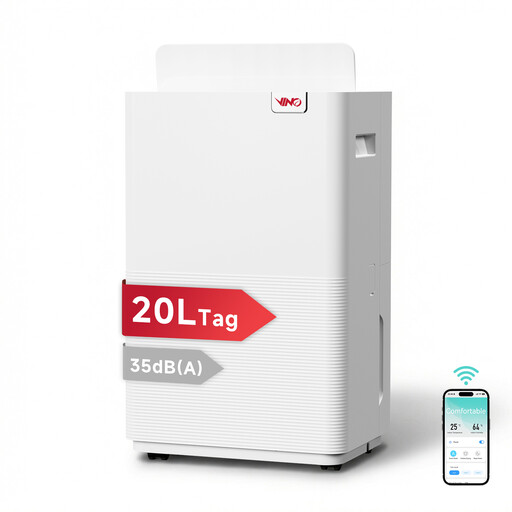 Image unavailable
VINO 20L Smart Dehumidifier WiFi
For a utility room or moderately heated space where humidity control and continuous drainage are required.
Stated extraction of up to 20 L/day at 30 °C and 80% RH, 2.5 L tank, Auto, Dry and Sleep modes, full-tank shut-off and continuous drainage.
For a consistently cold cellar, check that the performance and defrosting function suit the actual temperature, and that the hose can be routed using gravity drainage.
View on Joybuy
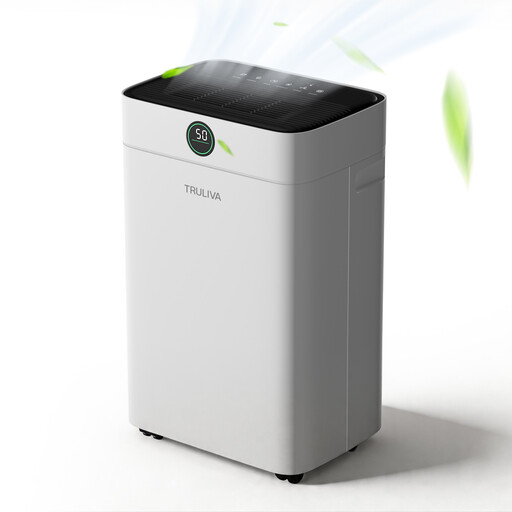 Image unavailable
TRULIVA 25L/Day with laundry drying
For a utility room or moderately heated basement, with laundry drying and continuous drainage.
Stated extraction of up to 25 L/day at 95 °F and 90% RH, 2.8 L tank, laundry mode, automatic defrosting, automatic shut-off and supplied drainage hose.
The product information indicates a risk of frost below 15 °C: check the cellar temperature and whether gravity drainage is practical.
View on Joybuy
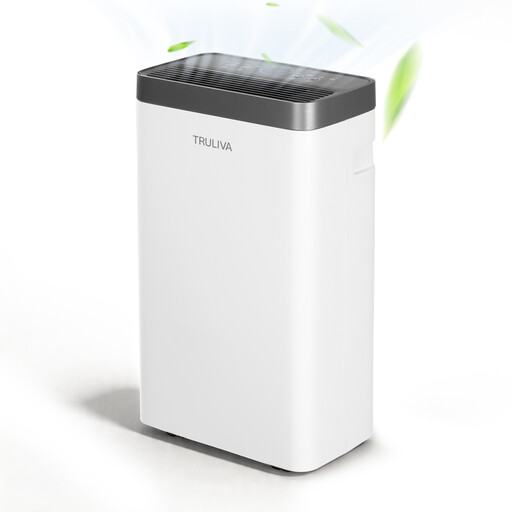 Image unavailable
TRULIVA AP10-2012EE for approximately 32 m²
For a medium-sized utility room or damp space with a humidistat and drying mode.
Stated extraction of up to 16 L/day at 95 °F and 90% RH, 40 to 60% target range, 24-hour timer, automatic defrosting, 1.35 L tank and included drainage hose.
The tank may need emptying frequently without drainage; below 15 °C, the compressor may stop temporarily during defrosting.
View on Joybuy
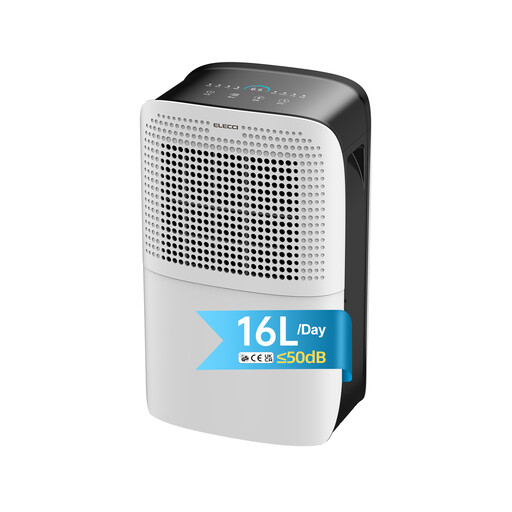 Image unavailable
ELECCI 16L/D with drainage hose
For a utility room or damp space where humidity levels vary and continuous drainage is preferred.
Stated extraction of 16 L/day at 86 °F and 90% RH, 3.1 L tank, four modes, 24-hour timer, humidity sensor, automatic defrosting and automatic shut-off.
Before installing it in a cold cellar, check the model’s temperature range and the hose length required for your drainage setup.
View on Joybuy
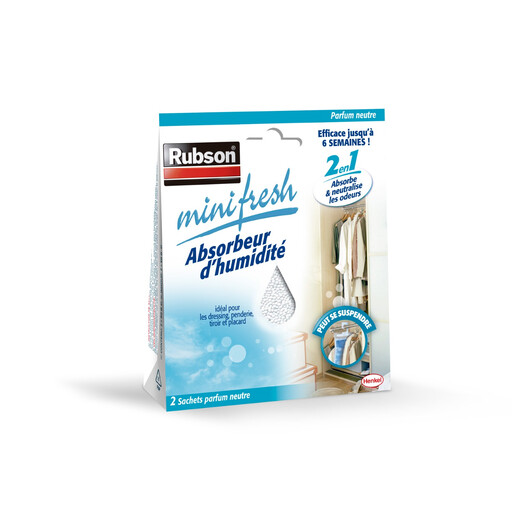 Image unavailable
Rubson Minifresh moisture absorber, 2 x 50 g
For a cupboard, dressing room, drawer or enclosed storage space without a power socket.
Can be hung up or placed on a surface, with 50 g sachets and hygroscopic beads that turn absorbed moisture into gel, for enclosed spaces measuring 1 to 2 m².
This passive solution is not suitable for a cellar, utility room or whole damp room; replace the sachets when saturated.
View on Joybuy
Frequently asked questions
Is a dehumidifier enough if the walls are mouldy or the humidity keeps returning?
Not necessarily. According to ADEME and Qualitel, inadequate ventilation, a leak, water ingress, rising damp or poor insulation may be the cause; a dehumidifier regulates the air but does not repair the building.
What humidity level should you aim for in a living space?
Qualitel generally recommends a relative humidity range of 40% to 60% in the home. Measure the level with a hygrometer in the relevant room before choosing the technology and capacity.
Why might a compressor dehumidifier be unsuitable for a cold cellar?
According to the Air&Me guide, compressor appliances require a sufficiently warm ambient temperature, around 15 °C for this technology; below this threshold, efficiency may decrease and frost may become an issue. In a cold cellar, compare desiccant models and check the exact model’s minimum operating temperature.
Does continuous drainage mean you no longer need to monitor the appliance?
No. It mainly reduces the need to empty the tank when the compatible hose is installed correctly. Check the instructions, hose routing, connection, automatic shut-off and make sure there are no leaks.


