For a guided brewing experience
If you want to make one or a few cups without measuring or tamping the coffee, consider a capsule or pod machine. Check which format it accepts before choosing your coffee: these systems aren’t interchangeable.


For a quick daily espresso, compare capsule and pod machines, checking which format each one accepts. An automatic bean-to-cup machine lets you choose your beans but needs regular maintenance; a portafilter machine is ideal if you want to measure, tamp and adjust the coffee yourself. Whichever you choose, check how much space you have and how often you’ll need to restock your coffee.
Start by thinking about how much you want to do each morning, then consider how often you make coffee.
If you want to make one or a few cups without measuring or tamping the coffee, consider a capsule or pod machine. Check which format it accepts before choosing your coffee: these systems aren’t interchangeable.
If you make coffee often and want to choose your own beans, compare automatic bean-to-cup machines. Make sure you have space for the machine, and check the instructions to find out what maintenance needs to become part of your routine.
A portafilter machine is for anyone who wants to choose the grind, measure the coffee and tamp it themselves. These steps take practice: De’Longhi notes, for example, that coffee can flow too slowly if the grind is too fine or the coffee is tamped too firmly.
Start with the coffee you want to use and how hands-on you’re happy to be. Then consider how each machine fits your space and routine.
| Factor | What to check | Think about your needs |
|---|---|---|
| Coffee type | Check exactly which capsule or pod system the machine accepts. For beans or ground coffee, check how the model is designed to brew. | I want to be able to switch coffees without buying the wrong format. Nespresso, for example, has separate Original and Vertuo systems. |
| Brewing steps | Compare one-touch brewing with manual measuring and tamping. Also check what you’ll need to do after making each coffee. | In the morning, I’d rather have a guided brewing process. Or, on the other hand, I want to adjust my espresso myself with a portafilter. |
| Ongoing purchases | Estimate how many coffees you make each week and how often you’ll need to replace your capsules, pods, beans or ground coffee. | If I make several cups a day, I want to factor in restocking, not just how the machine works. |
| Maintenance | Check the instructions for descaling and cleaning parts that come into contact with coffee, as well as the milk system, if there is one. De’Longhi says that how often its bean-to-cup machines need descaling depends in part on water hardness. | I’m happy to do more maintenance to use beans, but I want to know what tasks I’ll need to fit into my routine. |
| Space and usage | Measure the space available, including the room needed to access the water tank. Compare the tank capacity and the number of cups it can make with your needs. | My kitchen is small, or several people will be making coffee one after another. The machine’s size and how often it needs refilling matter as much as ease of use. |
| Noise levels | If noise is a deciding factor, look for a review of the specific model and consider each stage of the brewing process, especially grinding if it has a grinder. | I sometimes make coffee while other people are asleep, so I want to check how noisy the specific model is rather than rely on its machine type alone. |
With capsules or pods, each cup uses a consumable that’s compatible with the machine. If you use it every day, you’ll need to buy more regularly.
Estimate how many coffees you make each week and check which formats are available for the system you’re considering.
Nespresso Original capsules, Vertuo capsules and Senseo pods aren’t interchangeable. The format depends on the machine.
Make a note of the exact system name and check the manual or product details before stocking up.
Descaling is part of maintaining a bean-to-cup espresso machine. De’Longhi says that how often it’s needed depends in part on water hardness.
Check the manual for cleaning and descaling instructions, as well as any milk-related maintenance if the machine prepares milk drinks.
The grind, amount of coffee and tamping all affect how the coffee flows. A portafilter machine therefore requires hands-on preparation, unlike systems that use pre-measured portions.
Choose this method if you enjoy those steps. Otherwise, compare what’s involved with automatic, capsule and pod machines.
These examples help explain the different systems and brewing methods; they don’t cover every machine from each brand.
The brand offers capsule machines in its Original and Vertuo ranges.
The Original range uses Senseo soft coffee pods.
The brand offers manual portafilter machines and automatic bean-to-cup machines.
These models show three ways to make espresso at home: with an automatic grinder, a portafilter or capsules. Compare them based on the steps involved, the coffee they use and the maintenance that fits your daily routine.
 Image unavailable
This automatic bean-to-cup espresso machine is designed for regular use with whole beans. If space is limited, check its dimensions and make sure you can reach the parts that need maintenance before buying.
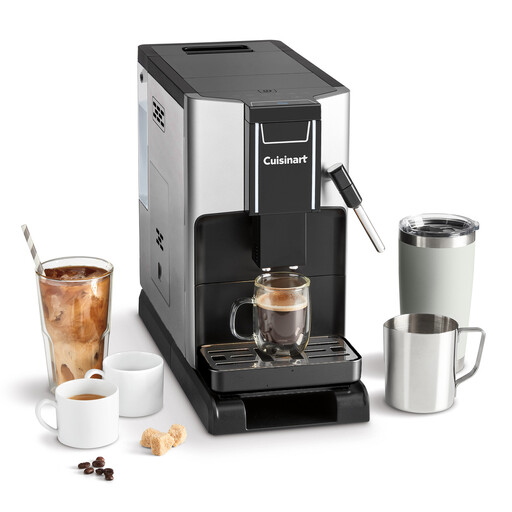 Image unavailable
For guided brewing, this fully automatic machine offers four coffee options. Check the manual to find out what cleaning you’ll need to do as part of your daily routine.
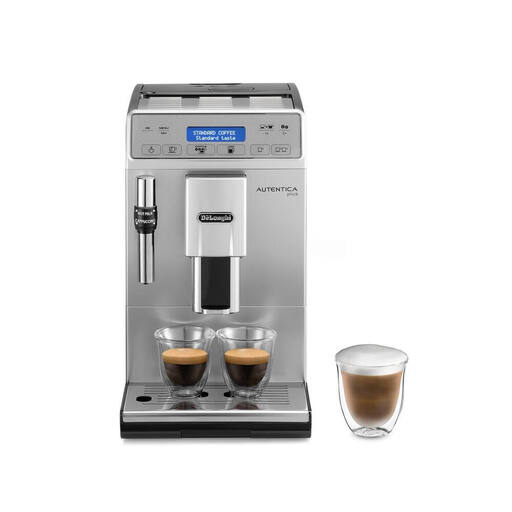 Image unavailable
This automatic bean-to-cup model is a good choice if you want to make coffee from whole beans without measuring each cup by hand. Check the manual for maintenance requirements, especially if you use the milk function.
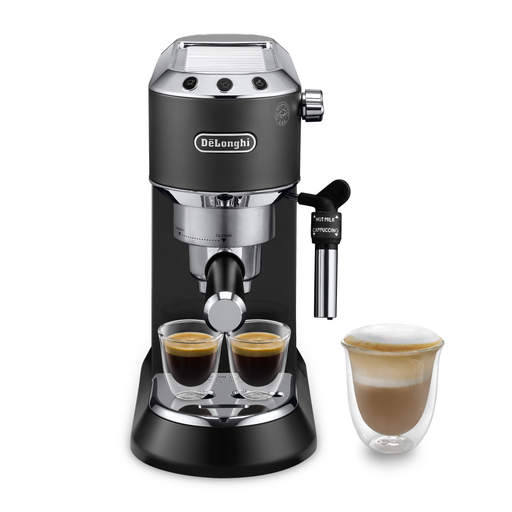 Image unavailable
This portafilter machine is a good choice if you want to control how much coffee you use and how firmly you tamp it. Check the tank capacity for this model before buying, and remember to clean it after brewing.
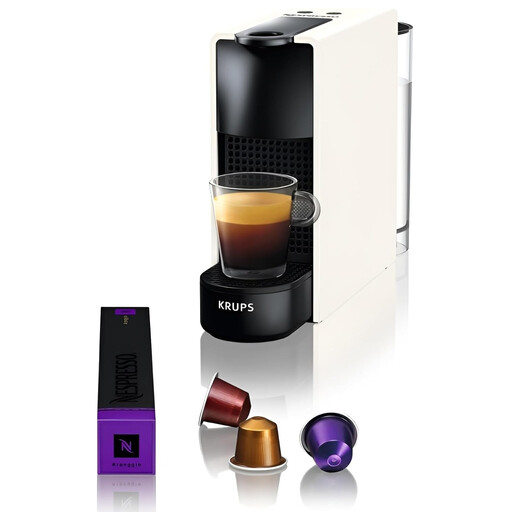 Image unavailable
This capsule machine offers a simple way to make coffee. Its tank capacity is listed as 0.6 L. Check that the capsules you buy are compatible with the Nespresso Original system.
No. Check the exact system your machine uses. Nespresso France says its Original capsules are compatible with its Original machines, while Vertuo is a separate system.
Follow your model’s instructions and alerts rather than sticking to one set schedule. De’Longhi says that how often its bean-to-cup espresso machines need descaling depends in part on water hardness.
It can be a good choice if you want to use whole beans and are happy to maintain an automatic machine. If you only make a few coffees, also compare the steps involved, the space it takes up and how often you’ll need to restock, against a capsule or pod machine.
According to ADEME, aluminium and plastic capsules should go in the recycling bin, bag or container for paper and packaging. Also check the recycling instructions on the packaging.