Canteen managers with Senseo machines
Pod format is your first consideration: check the model number of each machine and look for a compatibility statement on every pack you’re considering.


For a workplace canteen, first choose pods in a format accepted by the machines you have installed. For Senseo machines, look for an explicit compatibility statement; only order ESE pods if the machine documentation confirms that they’re suitable. Then match pack sizes to how quickly you get through them, include the coffee options your customers want, and check the waste-sorting guidance that applies at your site.
Pod format is your first consideration: check the model number of each machine and look for a compatibility statement on every pack you’re considering.
You need to choose pack sizes that suit your canteen’s consumption, without placing too many orders or storing more pods than necessary.
You want to offer a regular coffee as well as a decaffeinated option, while keeping storage and waste-sorting instructions straightforward for staff to follow on site.
Senseo and ESE are separate formats, so check each one against your machine documentation before considering pack sizes or coffee styles.
Choose these: for a Senseo machine when the product you’re buying is explicitly labelled as compatible.
Check: the term “soft pod” on its own doesn’t confirm Senseo compatibility.
Choose these: only if the machine or portafilter instructions confirm that it accepts the ESE standard.
Check: an ESE paper-filter pod isn’t automatically compatible with Senseo just because of its name.
| Consideration | What to check | Who it matters to |
|---|---|---|
| Compatibility and format | Note the machine model, then check the pack to confirm whether it accepts Senseo or ESE pods. | If the pods don’t fit the canteen machines, coffee service could be disrupted. That’s why compatibility is the top priority for around 33 % of consumers. |
| Restocking and pack size | Compare the number of pods and the net weight of each pack, then make sure you have suitable storage space. | When pods run out quickly, I look for pack sizes that help avoid frequent restocking; around 27 % of consumers put this need first. |
| Coffee styles | Check the styles available and whether there’s a decaffeinated option; review the ingredients in milk-based or flavoured varieties. | To cater for different tastes, I want a choice of coffees without adding unnecessary product lines. This variety is the top priority for around 20 % of consumers. |
| Waste sorting and on-site management | Check what the pod is made of, the collection provider’s guidance and the product’s storage instructions. | If I’m responsible for sorting and storing pods in the canteen, I need guidance that staff can follow on site; this is the top priority for around 20 % of consumers. |
These terms don’t all mean that a pod fits the same holder. An incompatible order could leave you with stock that can’t be used in the canteen machines.
Check the model number of each machine, then choose a product whose listing or packaging confirms the accepted format.
Pack sizes listed by Senseo France and retailers range from 36 to 72 pods, among others. So two packs don’t necessarily contain the same quantity to store or restock.
Compare the number of pods and the net weight, then choose a quantity that suits how quickly you get through them and the canteen’s storage space.
The pod’s composition and the collection guidance that applies at your site are two separate things to check. The fact that a pod contains paper isn’t enough to tell you which bin to use.
Check the product’s composition and ask your collection provider or local authority which guidance to follow before briefing your team.
Milk-based varieties and double pods may have different ingredients and instructions from a black coffee pod. One product may not suit everyone’s tastes.
Start with the styles people ask for in your canteen, consider a decaffeinated option and check the ingredients list for each additional variety.
Senseo’s soft pod range includes regular, mild, strong and decaffeinated coffees.
Carte Noire offers ESE paper-filter pods; retailers also list separate products as Senseo-compatible.
This own-label brand offers Senseo-compatible pods in several styles, including regular and decaffeinated options, depending on the product.
Auchan offers Senseo-compatible soft pods, with styles varying from one product to another.
E.Leclerc offers Marque Repère soft pods in a range of styles, including regular, strong, mild and decaffeinated options, depending on the product.
These products let you compare several pack sizes and pod styles intended for use with Senseo machines. Check which formats the canteen’s machines accept before ordering.
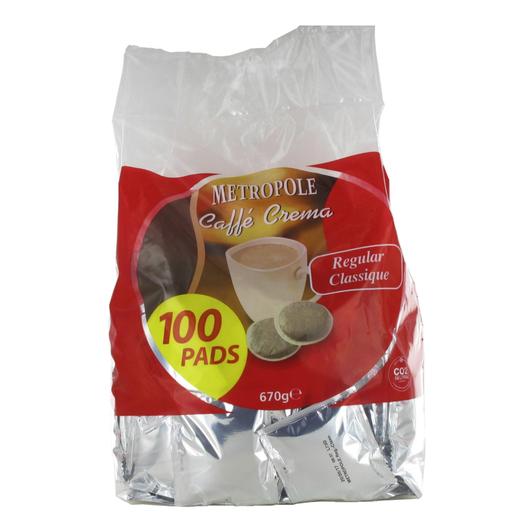 Image unavailable
A regular coffee to consider for everyday service, provided the canteen machines accept this format.
Pack of 100 pods.
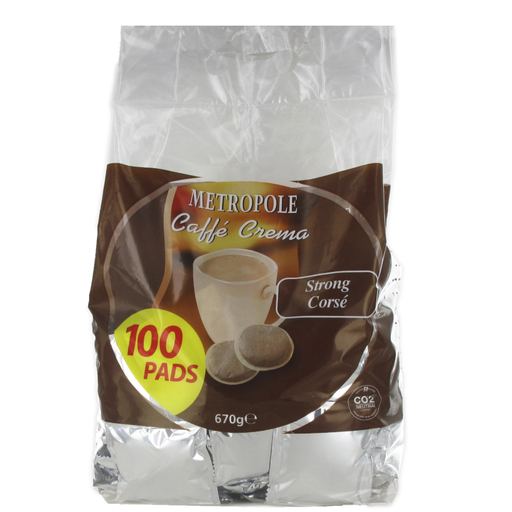 Image unavailable
A Strong coffee to consider if the canteen wants to offer an alternative to regular coffee and the machines accept this format.
Pack of 100 pods.
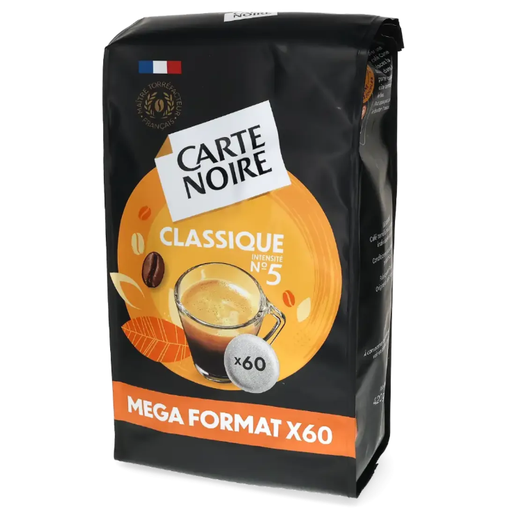 Image unavailable
A regular coffee to consider for machines that accept Senseo-compatible pods.
Pack of 60 pods; make sure you select the n°5 variant.
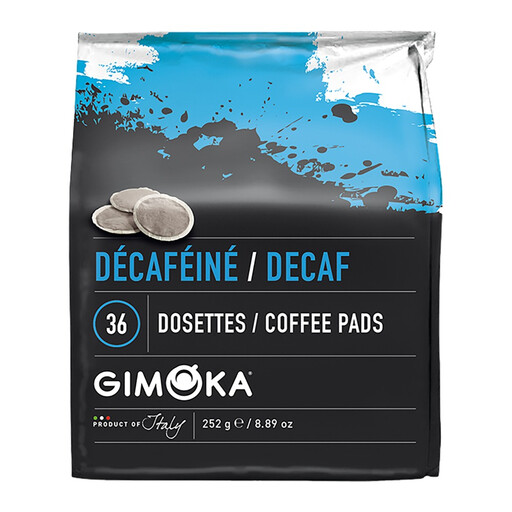 Image unavailable
A decaffeinated option to consider if the canteen wants to offer it on machines that accept Senseo-compatible pods.
Pack of 36 pods, with a stated weight of 252 g.
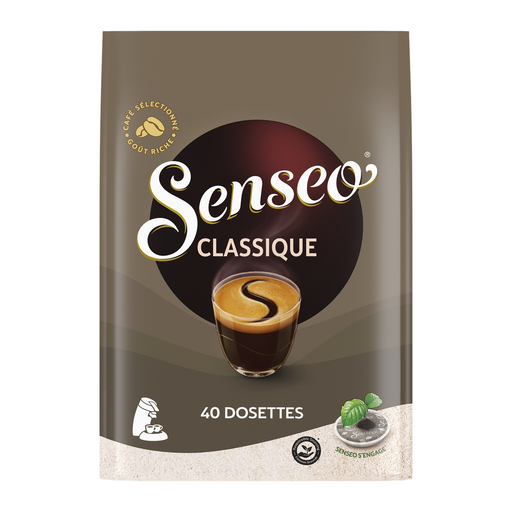 Image unavailable
A regular coffee to consider if a 40-pod pack for a Senseo machine suits your canteen’s consumption.
Pack of 40 pods, with a stated weight of 277 g. Check the packaging for storage instructions after opening.
No. You need to check that each machine model accepts the ESE format. Consult the instructions or the portafilter information. For a Senseo machine, look for a product explicitly labelled as Senseo-compatible rather than relying on the term “soft pod” alone.
Follow the instructions on the packaging. An Auchan product listing advises keeping pods away from heat and moisture and resealing the pack after opening; organise the canteen’s storage accordingly.
Not automatically. In France, the order of 15 March 2022 published by Légifrance covers the joint collection with source-separated food waste of capsules and pods made from at least 95 % paper, but doesn’t make joint collection compulsory. Confirm the composition of the product you buy and check the applicable guidance with your collection provider or local authority.
Check the ingredients and instructions for the specific product: a milk-based recipe or double pod may need to be handled differently from a black coffee pod. Keep the packaging or product listing handy to check its dietary information and preparation instructions.