Students with access to a Senseo machine
If you use a machine that takes soft Senseo pods for your lunch break, check the pack for compatibility before choosing a recipe.


To make coffee during or after lunch at university, first check which system your machine uses: a soft Senseo pod is not interchangeable with a capsule for another system. Then choose the quantity to suit how often you drink coffee and how much storage space you have, followed by a recipe to match the coffee you enjoy. A large pack is not much use if you rarely drink coffee.
If you use a machine that takes soft Senseo pods for your lunch break, check the pack for compatibility before choosing a recipe.
In student accommodation or a shared house, the number of pods can help you choose a suitable supply. Remember to consider how much room you have to store the pack, too.
Whether you’re after a classic, strong or decaffeinated coffee, or an indulgent drink, check the exact recipe rather than choosing based on pack size alone.
For coffee breaks at university, check compatibility first, then compare pack sizes and recipes.
| What to consider | What to check | Who is this for? |
|---|---|---|
| Machine compatibility | Check that the system your machine takes matches the product’s ‘Senseo compatible’ or ‘soft pods’ labelling. | If I make coffee with a Senseo machine, I want to avoid buying a capsule for another system. Around 40% of consumers are said to rank compatibility as their top concern. |
| Quantity and storage | Check how many pods are in the pack and how much space it will take up, especially if you only drink coffee occasionally. | If I have several coffee breaks a week, I’d rather have a suitable supply that won’t clutter up my home. This is reportedly a priority for around 30% of consumers. |
| Recipe and intensity | Check the recipe, its stated intensity and, if needed, whether it is labelled ‘decaffeinated’ or requires a particular type of pod. | After lunch, what matters most to me is enjoying the type of coffee or drink I like. Around 20% of consumers are said to make the flavour profile their main consideration. |
| Product information and recycling | Check the information for the specific product and the recycling label on the pod and its packaging. | If recycling or a label such as ‘organic’ influences my choice, I want to know exactly which part of the product it applies to. This is reportedly the top concern for around 10% of consumers. |
These two types of portioned coffee are not necessarily compatible with the same machine. Don’t assume a capsule designed for another system will work in a Senseo machine.
Check which format your machine takes and look for a compatibility statement on the product before choosing a recipe.
Two packs may provide a different number of coffee breaks. A large supply can also be impractical if you’re short on storage space or rarely drink coffee.
Compare the number of pods with how often you drink coffee and the storage space available.
An intensity rating describes the stated profile of a recipe; on its own, it doesn’t tell you how much caffeine it contains.
Choose an intensity to suit your taste. If you want decaffeinated coffee, look for a product explicitly labelled as such.
A label such as ‘organic’ or ‘compostable’ applies to a specific product or component and does not replace recycling instructions. ADEME’s guidance for aluminium or plastic capsules does not necessarily describe how to dispose of a soft pod.
Check the product’s recycling label and your local guidance for each item you need to dispose of.
Senseo France offers soft pods in a range of recipes, including classic coffees and indulgent drinks. Some classic varieties are available in packs of 40, 54 or 72 pods.
Carrefour France lists Carte Noire pods that are compatible with Senseo, including classic, strong, espresso and decaffeinated varieties.
Carrefour France offers several recipes under this own-brand range, labelled as compatible with Senseo, in a variety of pack sizes.
Auchan France lists pods labelled as compatible with Senseo, including classic, strong and decaffeinated recipes, as well as an Auchan Bio product.
E.Leclerc Drive lists Senseo pods among its coffee categories, alongside capsules for other systems.
These products are pods for Senseo machines or are labelled as compatible with Senseo. For a post-lunch break, compare the recipe and pod count with how often you drink coffee.
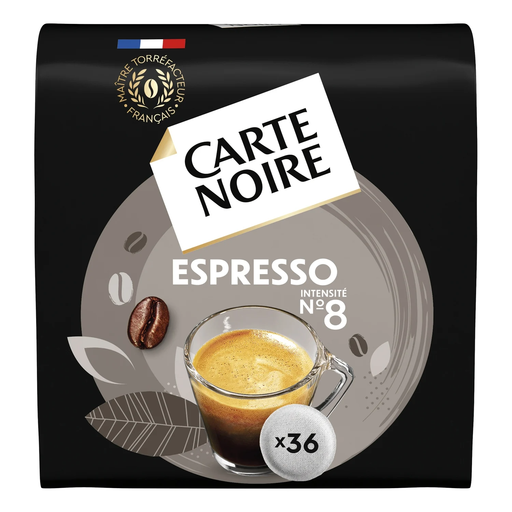 Image unavailable
Worth considering if you prefer an espresso recipe and use a machine that takes soft Senseo pods.
The pack contains 36 pods. No. 8 is the intensity rating for this recipe, not a measure of its caffeine content.
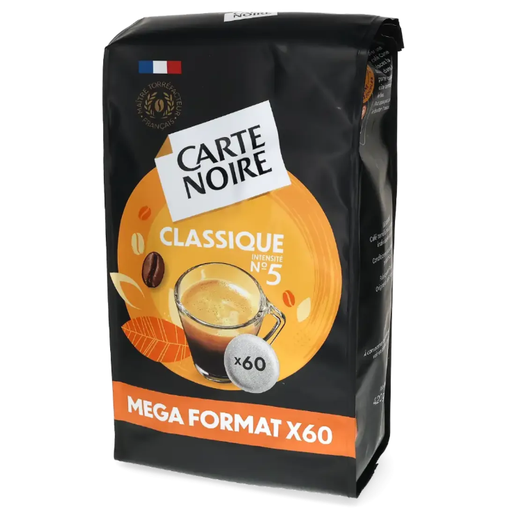 Image unavailable
This classic recipe could suit you if you’re planning regular coffee breaks and have a machine that takes soft Senseo pods.
The pack contains 60 pods. Before choosing this quantity, make sure you have enough room to store it.
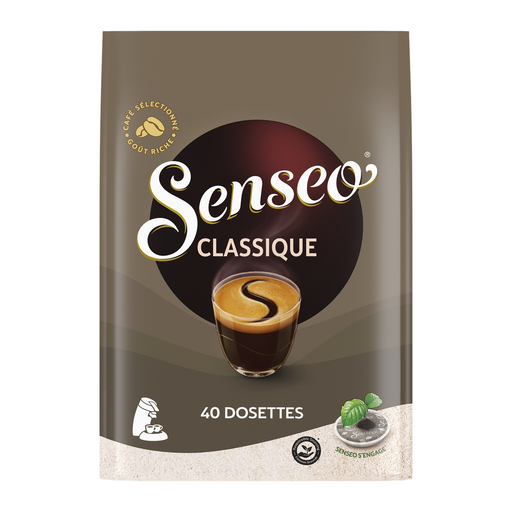 Image unavailable
This classic recipe is designed for a Senseo machine. With 40 pods, the pack size sits between the 36- and 60-pod options featured here.
When choosing this quantity, check the product for advice on how to store it after opening.
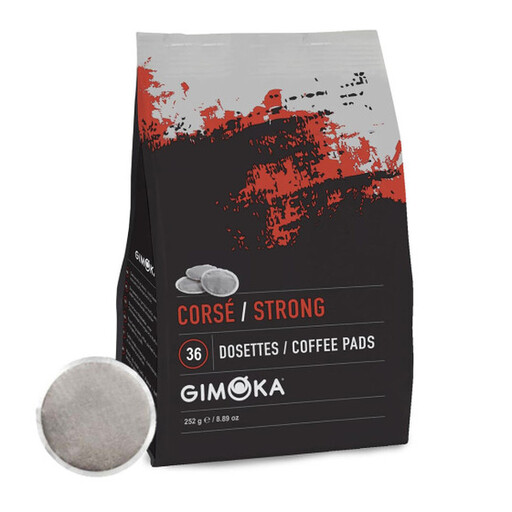 Image unavailable
Worth considering if you’re looking for a strong recipe for a machine that takes soft Senseo pods.
The pack contains 36 pods and weighs 252 g. If compostability labelling influences your choice, read the conditions and instructions for this specific product.
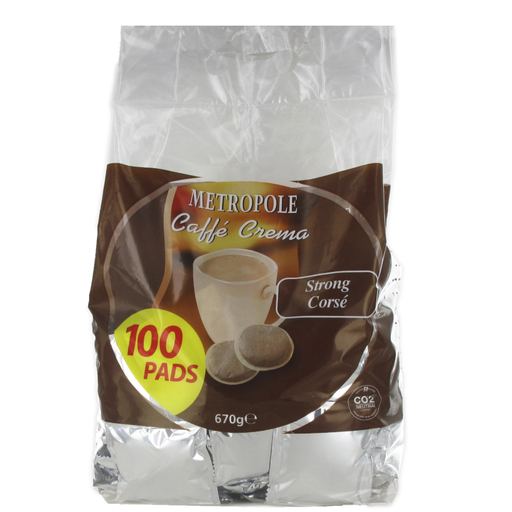 Image unavailable
This pack is better suited to regular coffee drinkers who like a strong brew and use a Senseo machine.
With 100 pods, it needs more storage space, so check that this quantity suits your needs.
No. Don’t assume a capsule for another system will work with a Senseo machine. Check that your machine takes soft pods and that the product is labelled as compatible.
Choose a number of pods that suits how often you drink coffee and the space you have to store them. The products featured here include packs of 36, 40, 60 and 100 pods. A larger quantity may not be practical if you don’t drink much coffee.
First check the type of pod and the drink it makes. Senseo France describes its Cappuccino, for example, as a double pod, so the number of pods in a pack isn’t always enough to compare recipes on a like-for-like basis.
In France, ADEME advises putting these capsules in the recycling bin, bag or container for paper and packaging. For soft pods and other packaging components, check the product’s recycling label and your local guidance.