If caffeine is disrupting an older person’s sleep, it may be worth considering a decaffeinated pod rather than simply choosing a mild blend: Anses describes the possible effects of caffeine on sleep, while a coffee’s intensity does not tell you how much caffeine it contains. If coffee is well tolerated, choosing between mild, classic and strong is mainly a matter of taste and whether the pods work with the machine. According to Manger Bouger, coffee can be one of the drinks you have throughout the day, but it does not replace meals.
Who are these tips for?
Older people sensitive to caffeine or its effects on sleep
If coffee seems to make it harder to fall asleep, it’s worth considering their usual coffee-drinking habits when choosing pods. Anses says that the effects of caffeine can also vary depending on a person’s health and certain medicines.
Older people who eat little but enjoy coffee
A cup can still be an everyday pleasure. However, if someone’s appetite is declining, Manger Bouger stresses the importance of meals and snacks: switching blends won’t meet their nutritional needs.
Buyers of soft coffee pods
If you buy or make coffee for someone else, first check which type of pod their machine takes. You can then compare flavour profiles and storage instructions.
What should you look for when choosing?
Start with caffeine tolerance and the machine’s pod format, then choose a flavour. Mild, classic and strong describe profiles to suit the person’s preferences; these terms don’t tell you how much caffeine is in each cup.
| Criteria |
What to check |
Who it’s for |
| Caffeine and sleep |
Look for the word ‘decaffeinated’. If you’ve been advised to follow a specific caffeine limit, ask for product-specific information that’s relevant to your situation. |
When coffee affects my sleep or I need to limit caffeine, I want to keep a cup in my routine without relying on the intensity rating alone. Around 36% of consumers put this concern first. |
| Taste and appetite |
Choose a mild, classic or strong profile to suit the person’s known preferences, without expecting coffee to provide nutritional benefits. |
If my appetite is declining, I want to keep enjoying a cup I like while continuing to eat my meals. Taste is the priority for around 29% of consumers. |
| Format and preparation |
Check that the pods work with the machine, especially if it takes Senseo-compatible soft pods. Also check the instructions on the pack. |
When I make coffee for someone else, I want to avoid buying pods that don’t fit their machine and keep making coffee simple day to day. For around 21% of consumers, compatibility comes before other criteria. |
| Coffee’s place in the day |
Include other drinks, especially water, and make sure the person continues to have meals and snacks as needed. |
If I’m making sure an older person eats and drinks regularly, I don’t want to rely on several coffees to replace water or meals. This would be the main concern for around 14% of consumers. |
Mistakes to avoid
-
Assuming a lower intensity means less caffeine
An intensity rating describes the pod’s stated flavour profile; it doesn’t tell you how much caffeine is in a cup.
If you’re looking to reduce your caffeine intake, choose a product clearly labelled as decaffeinated. If you need to follow a specific medical restriction, ask for information relevant to the product and the person who’ll be drinking it.
-
Relying on coffee when someone’s appetite declines
According to Manger Bouger, a reduced appetite in older people can contribute to malnutrition. Whatever the blend, a coffee pod doesn’t replace a meal or snack.
Keep the cup as an enjoyable drink, while making sure meals aren’t overlooked and keeping an eye on any weight changes. If someone loses weight or has a persistent loss of appetite, speak to a healthcare professional.
-
Forgetting to check the machine format
Soft pods and capsules designed for other systems aren’t interchangeable.
Before comparing blends, check the packaging to make sure they’re compatible with the machine being used.
Pods in the wrong format can’t be used with that machine.
-
Having more coffee to drink more fluids
Manger Bouger says coffee can count towards the drinks you have throughout the day. That doesn’t mean you should increase the number of cups, especially if caffeine is affecting your sleep.
Spread drinks throughout the day, including regular sips of water, and take the person’s caffeine tolerance into account.
Brands and ranges to know
These products give you an idea of the blends and soft pod formats available. A range name doesn’t remove the need to check the specific product and its compatibility.
Senseo
Senseo’s soft pod range includes Classic, Mild, Strong and Decaffeinated profiles. Senseo describes its Decaffeinated blend as a mix of Arabica and Robusta.
- The range offers several profiles, so you can choose according to taste and whether you prefer a decaffeinated option.
- The intensity rating or blend name doesn’t tell you how much caffeine per cup is right for an individual.
Carte Noire
Carte Noire offers Senseo-compatible soft pods, including a Decaffeinated option. The Decaffeinated product listed by Auchan contains 100% Arabica coffee and has an intensity rating of 5.
- Its Arabica composition and stated profile help distinguish this decaffeinated product.
- An intensity rating of 5 doesn’t indicate how much caffeine remains in a cup.
Carrefour
Carrefour lists Senseo-compatible pods, including classic and decaffeinated profiles, as well as products from other brands.
- You can compare several soft pod profiles in the retailer’s range.
- Check the exact variant and format: a decaffeinated product description doesn’t apply to the other blends in the range.
Auchan
Auchan Classico Decaffeinated is listed as a Senseo-compatible pod made with 100% Arabica coffee, with an intensity rating of 4.
- The product details distinguish its composition, intensity profile and compatible machine format.
- An intensity rating of 4 shouldn’t be interpreted as a measure of caffeine.
E.Leclerc / Plantation
E.Leclerc lists a pack of 36 soft decaffeinated coffee pods under the Plantation brand, in a 250 g format.
- The number of pods, soft format and ‘decaffeinated’ label help identify the product.
- Check that it’s compatible with your machine before choosing it.
Strong coffee pods on Joybuy
This selection is for people who enjoy a strong flavour and tolerate coffee. It isn’t a selection of decaffeinated pods: if reducing caffeine is your priority, look specifically for products labelled as decaffeinated. Also check that the format is suitable for your machine.
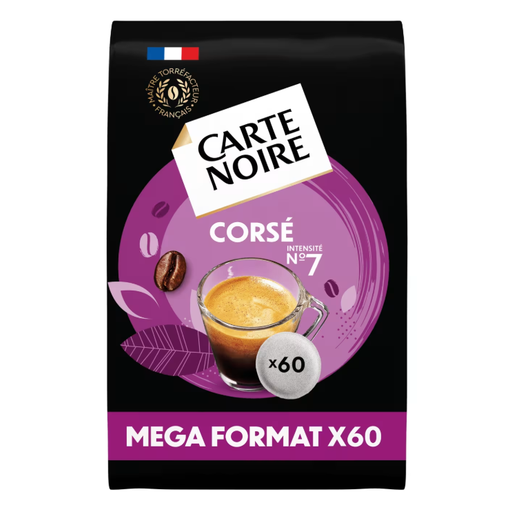 Image unavailable
Carte Noire Corsé N°7, 60 pods
Worth considering if the person enjoys a strong flavour and tolerates coffee. The pack contains 60 pods; check they’re compatible with the machine before buying.
This isn’t a decaffeinated product. If a specific caffeine limit needs to be followed, the name Corsé N°7 isn’t enough to determine how much caffeine is in each cup.
View on Joybuy
Frequently asked questions
Are decaffeinated pods suitable for all older people?
Not necessarily: they’re mainly worth considering if caffeine is affecting someone’s sleep or they’ve been advised to reduce their intake. Anses points out that the effects of caffeine vary according to habits, health and certain medicines, so the choice should take the person’s circumstances into account.
Does the intensity rating tell you how much caffeine there is?
No, an intensity rating alone can’t tell you how many milligrams of caffeine are in a cup. If the amount matters to you, ask for product-specific information rather than relying on whether the profile is mild or strong.
Does coffee help keep an older person hydrated?
Yes, Manger Bouger lists coffee among the drinks that can contribute to fluid intake. It’s still a good idea to drink regularly throughout the day, especially water, as the sensation of thirst can lessen with age.
Can a coffee pod replace a snack if someone’s appetite declines?
No, coffee doesn’t provide the nourishment of a meal or snack. Manger Bouger points out that nutritional needs don’t simply decrease with age, and that a reduced appetite needs particular attention.
How should you store soft pods after opening?
Follow the instructions on the pack you’ve bought. Auchan’s guidance for Auchan and Carte Noire products says to store them away from heat and moisture; the Auchan product also says to reseal the pack after opening.


