Users of a soft pod machine
If you’re planning to use a Senseo machine at lunchtime, or another machine that explicitly accepts Senseo-compatible soft pods, check the format before choosing a brand or strength.


To make coffee at lunchtime, first choose pods that are explicitly compatible with the machine available: a soft pod compatible with Senseo won’t work in a capsule machine that uses a different system. Then choose the blend and pack size to suit the number of people you’re serving and how often you drink coffee. Don’t forget to check the storage instructions once the pack is open.
If you’re planning to use a Senseo machine at lunchtime, or another machine that explicitly accepts Senseo-compatible soft pods, check the format before choosing a brand or strength.
A classic, strong or decaffeinated coffee can suit different preferences. Compare blends only among pods that are compatible with the machine you have available.
Choose a pod count that suits how much coffee you drink and the storage instructions on the pack. When you’ve finished with the pods, check what they’re made of and which local recycling option is available.
For lunch on deck, start with the machine you’ll be using, then choose the blend and number of pods to suit the coffees you need to make.
| What to consider | What to check | Who it matters to |
|---|---|---|
| Compatibility | The system shown on the machine and the exact compatibility information on the pack. | If I’m planning to use the machine available at lunchtime, I want to avoid buying a pod that won’t fit its pod holder; compatibility would be the top priority for around 36% of consumers. |
| Blend and decaffeinated options | The flavour profile, the strength if shown, and the word “decaffeinated” if needed. | When several people are choosing their coffee, I want to be able to offer a blend to suit their preferences; this would come first for around 29% of consumers. |
| Pack size | The number of pods and the storage instructions once the pack is open. | If I don’t make many coffees, I’d prefer a pack I can finish within the recommended storage period; around 21% of consumers would prioritise this. |
| Waste and recycling | The material the capsule or pod is made from and the local recycling instructions. | When single-serve portions create waste, I want to know where to put them after use; this would be the main concern for around 14% of consumers. |
A capsule designed for another system may not work in the machine you’re planning to use at lunchtime. Carrefour and Auchan, for example, distinguish their Senseo-compatible products from other formats.
Check which system your machine uses, then look for the matching compatibility information on the pack before choosing a blend.
Pack sizes vary between products. For the decaffeinated Senseo pods listed on the Auchan product page we checked, it’s best to use them within 2 to 3 weeks of opening.
Choose a pod count that suits how you’ll use them, and follow the storage instructions for the product you buy.
How you recycle a pod depends on what it’s made of. In France, ADEME advises putting aluminium or plastic capsules in the recycling container for paper and packaging.
Check what your product is made of and look up your local instructions before throwing it away or considering composting.
The French Senseo range includes soft pods in classic, strong, mild and decaffeinated blends, among others.
The Senseo-compatible soft pods listed by the retailers we checked include classic, strong and decaffeinated blends.
Carrefour lists these brands among its Senseo-compatible pods, with blends varying by product.
Auchan lists Senseo-compatible soft pods, including classic, strong and decaffeinated blends, depending on the product.
The range listed by E.Leclerc includes soft pods as well as capsules for other systems.
These two Carte Noire packs are for people using a machine that accepts Senseo-compatible soft pods. Choose between the Classique and Corsé blends to suit the coffee you’d like at lunchtime; each pack contains 60 pods.
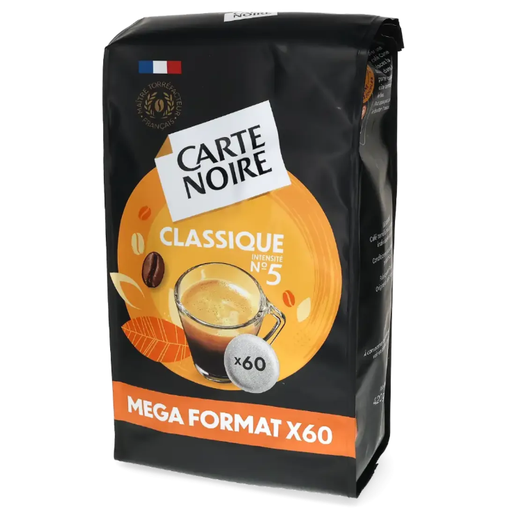 Image unavailable
For a classic coffee at lunchtime, as long as your machine accepts Senseo-compatible soft pods.
Pack of 60 pods; check the storage instructions on the packaging.
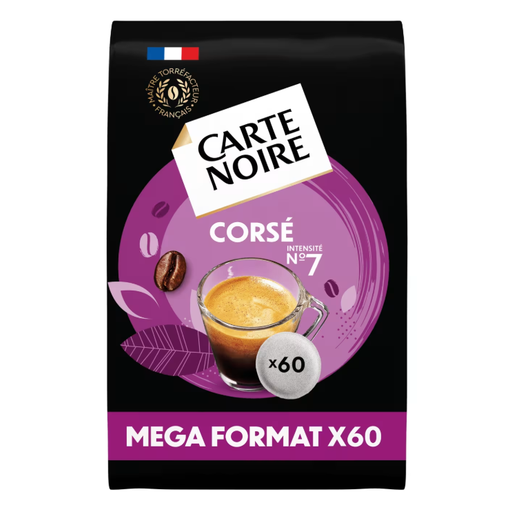 Image unavailable
For anyone who prefers the Corsé blend and has a machine that accepts Senseo-compatible soft pods.
Pack of 60 pods; check the storage instructions on the packaging.
No. Use them only with a Senseo machine or a model whose instructions say it accepts Senseo-compatible soft pods. Check the system before buying, as capsules for other machines come in different formats.
Choose a product labelled “decaffeinated” that’s compatible with the machine you’ll be using. Senseo offers decaffeinated soft pods, for example; check the compatibility information on the specific pack.
Follow the storage period and instructions on the pack you buy. For the decaffeinated Senseo product listed by Auchan, it’s best to use the pods within 2 to 3 weeks of opening and keep them in a tightly sealed container, somewhere dry and away from heat.
Not necessarily. Choose a quantity you can use while following the storage instructions for after opening. Pod counts vary between blends and products, even within the Senseo-compatible range.
According to ADEME, aluminium or plastic capsules should go in the recycling bin, bag or container for paper and packaging. For any other material, check the instructions for that product and the recycling options available locally.