Capsule machine owners
You want to fill your cupboard with capsules that work in your machine. Checking for Vertuo, Nespresso Original or A Modo Mio on the pack is the first thing to do.


Before stocking up, check which system your machine uses: Nespresso Vertuo, Nespresso Original and Lavazza A Modo Mio all require different capsules. Next, choose a pack size that suits the coffees you make and your usual cup sizes, then check what the capsules are made from so you know how to dispose of them after use.
You want to fill your cupboard with capsules that work in your machine. Checking for Vertuo, Nespresso Original or A Modo Mio on the pack is the first thing to do.
You might make an espresso one day and a longer coffee the next, or want to keep a decaffeinated option on hand. Your cup size and choice of varieties matter just as much as the number of capsules.
You want to know what to do with capsules after use. In France, ADEME advises recycling aluminium or plastic capsules with packaging; for home composting, check the material and the conditions that apply.
When stocking up, start by checking that the capsules work with your machine, then choose a pack size to suit your habits. Flavour and end-of-life options can help you decide between products that use the right system.
| Criteria | What to check | Who is it for? |
|---|---|---|
| Compatibility | Compare the exact system name on your machine and the pack: Vertuo, Nespresso Original or A Modo Mio. | If I’m stocking up for a particular machine, I want to avoid buying capsules I can’t use. Around 36% of consumers say compatibility is their top priority. |
| Quantity and cup size | Check the number of capsules and the drink size they’re designed for. Nespresso France, for example, lists Vertuo capsules for a 40 ml espresso and a 230 ml mug. | To avoid having to restock too often, I’m looking for a pack size that suits the coffees we drink at home, without filling the cupboard with boxes in a size we rarely use. This is a priority for around 29% of consumers. |
| Flavour and decaf | Choose the coffee profile and size you want; look for an explicit label if you want decaffeinated coffee. Intensity ratings vary by brand. | When several people share the same cupboard, I prefer to have different flavours and, if needed, a decaffeinated option. Around 21% of consumers put variety first. |
| Recycling and disposal | Check what the capsule is made from and which disposal instructions apply; a “compostable” label doesn’t necessarily mean it’s suitable for home composting. | I want to dispose of used capsules using a facility available where I live, rather than assuming they can all go in the compost. End-of-life options are the top priority for around 14% of consumers. |
A capsule that works with Nespresso Original won’t replace a Vertuo or A Modo Mio capsule. Even if you like the coffee, it won’t help you stock up if it’s the wrong format for your machine.
Check which system your machine uses, then look for the same name on every pack you’re considering.
Choosing the wrong capsules could leave you with unusable packs in the cupboard.
ADEME distinguishes between composting conditions and advises that aluminium or plastic capsules should go in packaging recycling. A compostable label alone doesn’t tell you which disposal facilities are available to you.
Check the material and disposal instructions before putting a capsule in your compost; follow the relevant recycling guidance for aluminium or plastic capsules.
Intensity ratings describe a coffee’s profile; they don’t tell you how much caffeine it contains. So a low intensity rating isn’t a substitute for choosing a decaffeinated variety.
If you want this option in your cupboard, look for capsules explicitly labelled “decaffeinated” or “half-caffeinated”.
The Vertuo range may suit households that use a Vertuo machine to make coffee in different cup sizes.
Its capsules, listed as compatible with Nespresso Original, offer a choice of coffee profiles, including decaffeinated options.
The brand offers capsules compatible with Nespresso Original, as well as a separate range for Lavazza A Modo Mio machines.
These options could help you stock up for a Nespresso Original or Lavazza A Modo Mio machine. Check which system your machine uses before comparing pack sizes and coffee profiles.
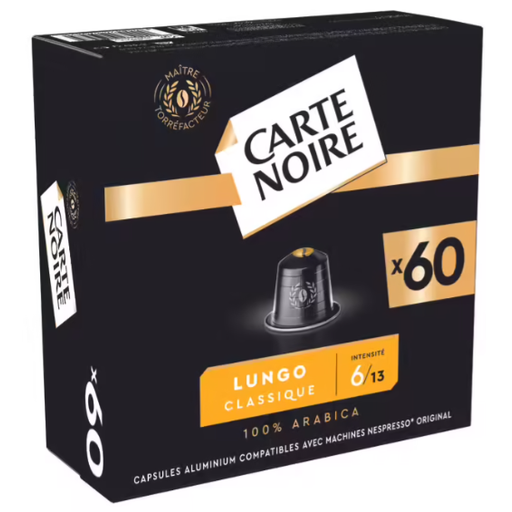 Image unavailable
If you want to keep a supply of lungo capsules for a Nespresso Original machine, this pack contains 60 capsules.
If you’d also like a decaffeinated option, check the label on another variety.
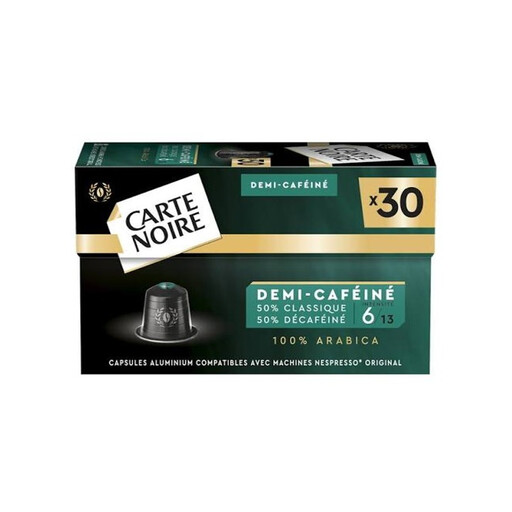 Image unavailable
This box contains 30 capsules, so you can keep a decaffeinated option for your Nespresso Original machine.
The product name includes the label “Decaf”; check the pack if you’re looking for a particular cup size.
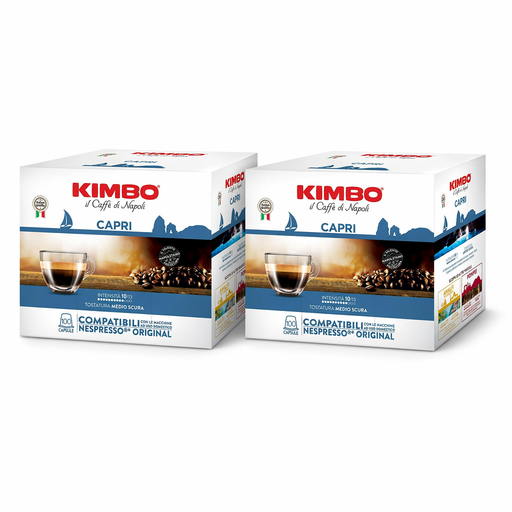 Image unavailable
This bulk pack is designed for restocking a Nespresso Original machine and contains two boxes of 100 capsules.
The product name lists an intensity of 10/13 and 540 g. If you prefer to switch between different varieties, consider how much space this pack will take up in your cupboard.
Check the capsule material on the packaging before deciding how to recycle them.
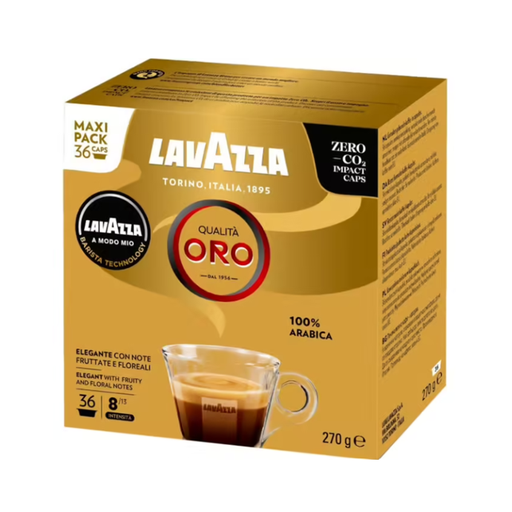 Image unavailable
This pack contains 36 capsules for stocking up if you have a Lavazza A Modo Mio machine.
A Modo Mio is a different system from Nespresso Original and Vertuo, so check the label on your machine before buying.
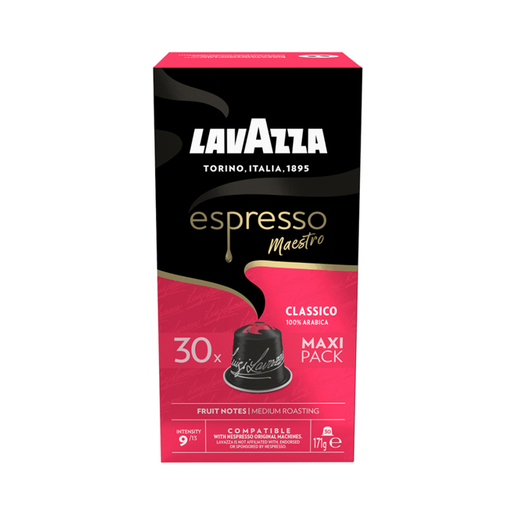 Image unavailable
This box contains 30 capsules, making it a more modest option for stocking up for a Nespresso Original machine.
Check the system name on the pack, especially if you have a Vertuo machine.
No. Capsules that Carte Noire and Lavazza list as compatible with Nespresso Original are designed for the Original system, while Vertuo is a separate range. Match the name on the pack to the one on your machine.
In France, ADEME advises putting them in the recycling bin, bag or container for paper and packaging. Nespresso also provides collection points for its used capsules; check what’s available near you if you’d like to use one.
Not necessarily. According to ADEME, compostability depends on specific treatment conditions. Check the capsule material and the relevant disposal route; the word “compostable” alone doesn’t mean it’s suitable for home composting.
Look for a variety explicitly labelled “decaffeinated” or “half-caffeinated”. The intensity rating describes the coffee’s profile according to the brand; on its own, it doesn’t tell you how much caffeine the coffee contains.