If you regularly make short or long coffees at home, start by thinking about how much you want to do each day: capsules or coffee pods for pre-portioned drinks, a portafilter if you want to control the extraction, or a grinder if you want to use beans with an automated brewing process. Then compare the cost of coffee and consumables, available space, noise and maintenance for the models you’re considering. These practicalities can make a difference even within the same category.
Who are these machines for?
Households looking to keep things simple
If you make a coffee before heading out or between activities, a capsule machine is worth considering. It makes pre-portioned drinks and is often compact. Que Choisir highlights how easy these machines are to use, but advises weighing that against the ongoing cost and the type of capsules they accept.
Households that make coffee regularly
A grinder lets you choose your beans while automating the brewing process. If you’ll use it frequently, consider maintenance, noise and the space it needs too: Que Choisir notes that grinders are generally bulkier and noisier than capsule systems.
Fans of hands-on coffee making
If you enjoy measuring out ground coffee, tamping it and fitting the portafilter, this type of machine may suit you better than a fully automated option. De’Longhi describes these steps for its manual machines; be prepared to repeat them for every coffee.
What should you prioritise for everyday use?
To choose between capsules, soft coffee pods, a portafilter and a grinder, start with the process you care about most, then check the practicalities of the specific model.
Capsules
Worth considering: for pre-portioned coffee with few settings to adjust, and a machine that’s generally compact.
Bear in mind: you’ll need to buy compatible capsules regularly and follow the relevant sorting or collection scheme.
Soft coffee pods
Worth considering: for pre-portioned coffee without a grinder or the need to use a portafilter.
Bear in mind: you’ll need to use the right pod format and descale the machine.
Portafilter
Worth considering: if you want to be involved in measuring, tamping and preparing your espresso.
Bear in mind: you’ll need to do these steps and clean the parts used after each brew.
Bean grinder
Worth considering: if you want to choose your beans and start an automated brewing process.
Bear in mind: it needs more space, makes noise while grinding and requires the containers and coffee circuit to be maintained.
| Consideration | What to check | Who it matters to |
|---|
| Steps involved |
Count the steps needed for each drink and check which settings you’ll need to adjust on the model. |
When coffees are being made one after another on a busy morning, avoiding extra steps becomes the main priority; around 29% of consumers would put simplicity first. |
| Running costs |
Compare the cost of coffee or portions based on how much you drink, as well as the model’s maintenance supplies. |
If you make several cups a day, ongoing costs matter more than the price of the machine alone; around 29% of consumers would make this their priority. |
| Coffee choice and preparation |
Look at the available settings or, for a portafilter, the steps and accessories required. |
If I want to switch between short and long coffees or be involved in the extraction, I want to stay in control of the brewing process; this would be the main priority for around 21% of consumers. |
| Space, noise and maintenance |
Measure the space needed with the containers open, and check the manual for cleaning and descaling instructions. |
If worktop space is limited, or grinding noise could disturb the household, the machine needs to be easy to install and maintain; around 21% of consumers would prioritise this consideration. |
Things to bear in mind
-
Focusing on the machine, not the coffee it makes
Portions, beans and maintenance supplies all affect running costs. Que Choisir notes in particular that capsules can increase ongoing costs.
Compare the options based on how often you drink coffee and the maintenance supplies recommended for each model.
-
Buying a grinder without making room for it
According to Que Choisir, a grinder is generally bulkier and noisier than a capsule system. You’ll also need to allow space to access the water tank and containers in a busy kitchen.
Measure the space, allowing room to open the machine and remove parts. If noise matters in your home, look for a noise rating for the model you’re considering.
-
Assuming automation means no maintenance
Starting a drink at the touch of a button doesn’t remove the need to clean the parts used or descale the machine. The tasks vary by machine and whether it has milk-related components.
Check the model’s manual before you buy to find out which parts need cleaning and when to follow maintenance alerts.
-
Treating all capsules the same
The material and available collection scheme determine how to sort used capsules. In France, ADEME provides guidance for aluminium and plastic capsules; Nespresso France also describes a dedicated collection scheme for its capsules.
Check the material of the capsules you choose and your local sorting guidance. If you plan to use a brand’s collection scheme, check which capsules it accepts too.
Brands to know
Nespresso
A range of machines and capsules for making pre-portioned coffee at home.
- Nespresso France lists collection points for used capsules.
- Check which format the machine accepts and the sorting guidance for the capsules you use. Que Choisir also advises considering their ongoing cost.
Philips
The brand offers SENSEO pod machines and automatic espresso machines, among other options.
- Philips support provides descaling instructions and information about parts and accessories for some machines.
- Filters and maintenance requirements vary by model. Check its manual rather than following guidance for another range.
De’Longhi
Its ranges include manual portafilter machines and Magnifica automatic bean grinders.
- This range of options lets you compare hands-on preparation with starting a drink automatically.
- Recipes, accessories and cleaning requirements vary by model, especially when you use milk.
Machines to consider on Joybuy
These machines represent three ways to make coffee at home: grinding beans, using capsules or preparing coffee with a portafilter. The HiBREW model also lists several portion formats, including E.S.E. pods. Check which adapters are compatible before choosing this option.
 Image unavailable
Philips EP2230/10 Series 2200 LatteGo
Worth considering if you want to make coffee regularly from beans using an integrated grinder. With the LatteGo variant, you’ll also need to clean the parts used for milk. Check the maintenance routine and the space required before you buy.
View on Joybuy
 Image unavailable
DE'LONGHI Magnifica Start ECAM220.21.WW, white
Another grinder option for a household that prefers beans to preparing coffee manually with a portafilter. If you want to froth milk, allow time for using and cleaning the steam wand. Check the machine’s dimensions too.
View on Joybuy
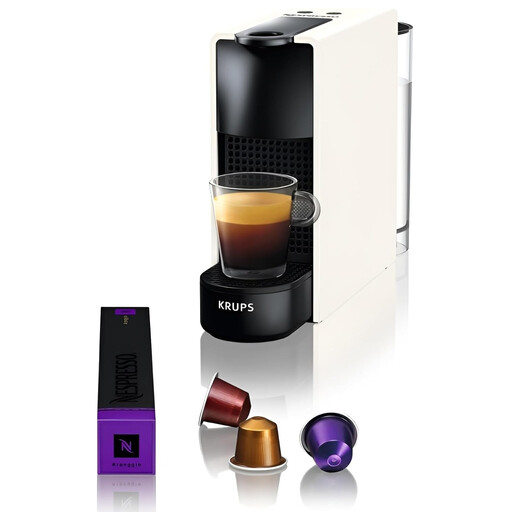 Image unavailable
KRUPS Nespresso Essenza Mini, 0,6 L, white
For capsule coffee without grinding or handling a portafilter. The name of this variant specifies a 0,6 L tank. Check that the capsules you plan to use are compatible with the machine, and factor their ongoing cost into your decision.
View on Joybuy
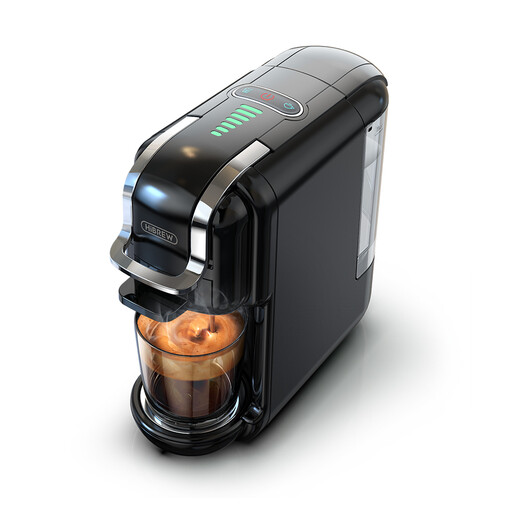 Image unavailable
HiBREW H2B 5-in-1, hot/cold
Worth a look if you switch between different types of pre-portioned coffee or ground coffee. The title lists Dolce Gusto, Nespresso, ESE Pod and Ground Coffee, as well as hot and cold modes. Before buying, check the exact adapter and format required for each type of coffee you want to make.
View on Joybuy
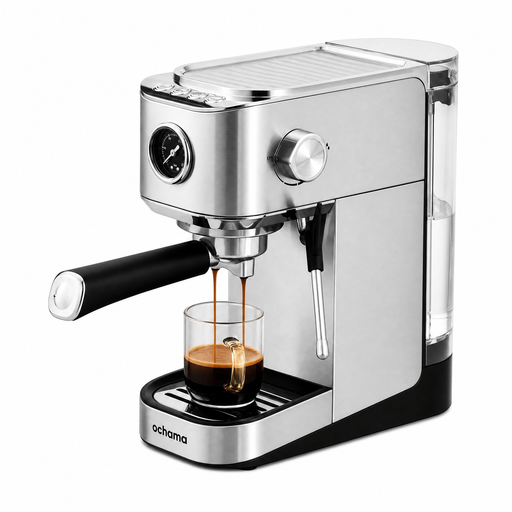 Image unavailable
ochama semi-automatic, 20 Bar, 0,9 L
For a hands-on brewing process rather than simply starting an automatic drink. The title specifies a removable 0,9 L tank and a steam frother. Check the manual for instructions on using the portafilter and handling hot parts, as well as cleaning guidance.
View on Joybuy
Frequently asked questions
Does a grinder always work out cheaper to use than capsules?
Not necessarily, given your coffee habits and the models you’re considering. Que Choisir reports a lower cost per cup for grinders than for espresso made with pods, but this figure alone doesn’t include the machine and all its consumables. Compare the cost of coffee and maintenance based on how you’ll use it.
Do you need to descale a pod or grinder machine?
Yes, descaling is part of maintaining these machines. Philips provides instructions for SENSEO, while De’Longhi and Que Choisir also highlight its importance for the relevant machines. Follow the instructions and alerts for your model. You should also clean any parts that come into contact with milk when you use them.
Where should you dispose of coffee capsules in France?
According to ADEME, aluminium and plastic capsules go in the recycling bin for paper and packaging. Check the material of your capsules and your local guidance. If you use a brand’s collection scheme, check which capsules it accepts too.
What statutory guarantee applies to a machine bought from a professional seller in France?
The legal guarantee of conformity applies to new and second-hand goods bought from a professional seller. The French Ministry of the Economy states that you have two years to request that it be applied. This guarantee is the seller’s responsibility and is separate from any commercial guarantee that may be offered.


