Which type suits each routine?
The drink you want and the number of cups you make matter just as much as how much time you have before heading out.
For mornings when every moment counts
If you usually make one cup at a time, capsules let you start brewing with very little effort. A bean-to-cup machine can also make a drink at the touch of a button, provided you’ve filled it with water and beans and are prepared to clean the containers. UFC-Que Choisir highlights ease of use and size as some of the differences between machine types.
For a choice of coffees and milk-based drinks
A bean-to-cup machine grinds fresh beans for each drink, while recipes and milk systems vary by model. A manual espresso machine may suit you better if you’d also like to control the grind, dose or milk frothing. With either type, check which parts need cleaning after use.
For long coffee or several cups
A filter coffee maker is worth considering if your household mainly drinks long coffee in the morning. Melitta France offers, among other things, glass and thermal carafes, as well as models for smaller quantities. Choose the capacity to match the number of cups you actually serve.
What should you compare before buying?
Start with the drinks and quantities you make each morning, then weigh up the preparation involved against the cleaning you’re prepared to do.
| Factor |
What to check |
My routine |
| Preparation |
Compare how many steps are needed before your first cup. Capsules are pre-dosed; a bean-to-cup machine automates some of the process once it’s filled with water and beans; a portafilter machine requires you to handle the coffee. |
In the morning, I want to make coffee without adjusting the grind or measuring out each cup. |
| Drinks |
Check which options are actually available: espresso, lungo, mug, filter coffee or milk-based drinks. For capsule machines, also check which system the model is compatible with and what cup sizes it supports. |
I mainly drink long coffee, or I’d like to make espresso or a milk-based drink regularly. |
| Number of cups |
Compare the usable capacity of the water tank or carafe with the number of coffees you make in one go. A large stated capacity doesn’t, by itself, tell you which drinks are available. |
Several people have coffee on the same morning, and I’d rather not start the whole process again between cups. |
| Consumables |
Compare the cost per cup of the coffee you’d actually buy, along with any filters and cleaning products you’ll need. UFC-Que Choisir’s comparison notes that capsules cost more than whole beans or ground coffee. |
I want to know what my usual coffee habit will cost, beyond the price of the machine. |
| Cleaning |
Check how easy it is to access the containers, the brew group if it’s removable, and the milk system if there is one. Follow the instructions for cleaning and descaling your specific model and take your water into account. |
I can empty a container regularly, but I need to know whether milk-based drinks mean extra parts to clean. |
| Space and waste |
Measure the space available, including room to fill the machine and remove its parts. For capsules, check the disposal instructions for their material and what collection options are available locally; ADEME distinguishes between dedicated collection and household waste. |
The machine needs to fit in my kitchen, and I want to be able to deal with the consumables after each coffee. |
A guide to some of the brands
These ranges cater to different routines. Check the drinks, accessories and cleaning requirements for each individual model.
De'Longhi
De'Longhi France showcases several bean-to-cup espresso ranges, with different options depending on the drinks you’re looking for.
- The brand presents its Magnifica models as offering automated preparation from beans.
- Check the recipes, milk system and cleaning requirements of the specific model rather than assuming they’re the same across the range.
Sage
Sage Appliances France showcases, among other things, portafilter machines for a more hands-on approach to making coffee.
- Sage describes the Barista Express as combining a built-in grinder, grind adjustment and a steam wand.
- This way of making coffee involves handling and cleaning the portafilter and any accessories you use.
Nespresso
Nespresso capsule systems cater to different cup-size preferences, depending on the machine and capsules.
- For example, Nespresso France lists sizes from ristretto to mug for its Vertuo Pop.
- Check capsule compatibility and recycling options: a Nespresso drop-off point isn’t a universal disposal route for all capsules.
Melitta
Melitta France offers filter coffee makers and automatic bean-to-cup machines.
- Its filter range includes glass and thermal carafes, as well as machines for smaller quantities.
- For an automatic machine, check which cleaning products and water filters, if any, are specified for the model.
Philips
Philips France provides support resources for its coffee machines, including guidance on how to use and maintain them.
- The support pages cover cleaning, troubleshooting and replacement parts.
- Check which drinks are available and what parts or services are offered for the model you’re considering.
Machines and a coffee maker to consider on Joybuy
This selection includes bean-to-cup espresso machines, a capsule machine for individual coffees and a manual filter coffee maker for long coffee. If you’d rather control the extraction with a portafilter, use the criteria above to assess that type of machine separately.
 Image unavailable
Philips Series 2200 EP2230/10 LatteGo
Consider this bean-to-cup espresso machine if you’d like to use whole beans and make milk-based drinks too. For your morning routine, check the instructions for the recipes available on this variant and how to clean the LatteGo system.
View on Joybuy
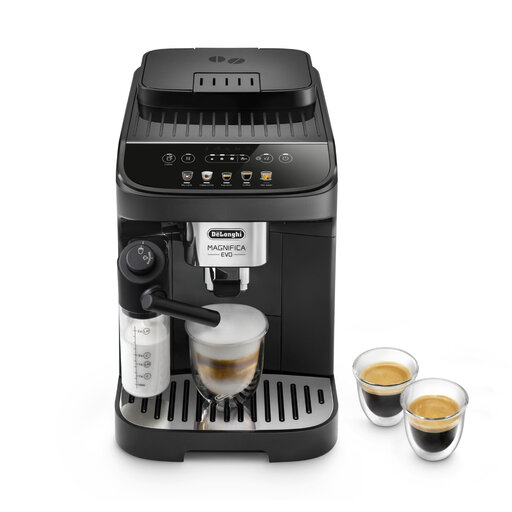 Image unavailable
De'Longhi Magnifica Evo ECAM290.61.B LatteCrema
This automatic machine is designed for coffee made from whole beans and features the LatteCrema system. If milk-based drinks are important to you, check the recipes available on the ECAM290.61.B variant and what’s involved in cleaning the milk system.
View on Joybuy
 Image unavailable
HiBREW H16 automatic espresso machine with grinder
The product name mentions a milk system and six coffee varieties, so check that they match the drinks you actually make. Read the H16 instructions to find out what cleaning is required before adding it to your morning routine.
View on Joybuy
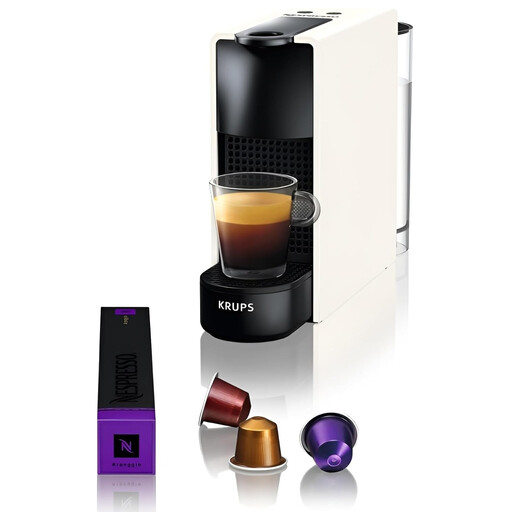 Image unavailable
KRUPS Nespresso Essenza Mini, 0,6 L, 1 200 W, white
Worth considering if you want to make an individual coffee with minimal effort. Check the cup sizes and capsule compatibility for this variant, then compare the cost per cup of the capsules you plan to buy and how to dispose of them locally.
View on Joybuy
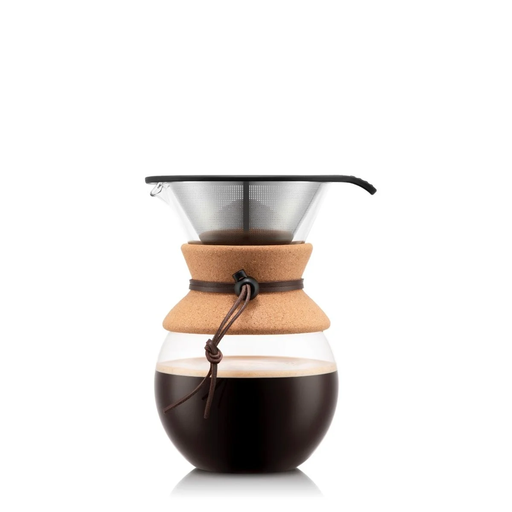 Image unavailable
Bodum POUR OVER, 1 L, permanent filter
This manual filter coffee maker is designed for long coffee rather than espresso on demand. You can compare its 1 L capacity with the amount of coffee your household makes. You’ll need to pour in the hot water yourself and handle the glass carafe with care.
View on Joybuy
Frequently asked questions
Are capsules the only option when you’re in a hurry in the morning?
No. Capsules keep preparation to a minimum, but a bean-to-cup espresso machine can also make a drink at the touch of a button when it’s already filled with water and beans. However, UFC-Que Choisir notes that machines with grinders take up more space, make more noise and need some parts cleaning regularly.
How can I compare the cost of capsules, beans and ground coffee?
Work out the cost per cup for the coffee and formats you use, then factor in any filters and cleaning products needed for each machine. UFC-Que Choisir’s comparison shows that capsules cost more than whole beans or ground coffee. Your consumption and the products you choose will determine the difference in your case.
How often should you descale an espresso machine?
Follow the instructions and, where applicable, the alert on your model. In advice published in October 2025, UFC-Que Choisir suggests descaling on average every two to three months, adjusting this according to water hardness and how often you use the machine.
Where should you take used coffee capsules?
Check the disposal guidance for the material your capsules are made from and the options available near you. ADEME explains that capsules returned to a collection point may be processed through a dedicated scheme, while those put in household waste follow that waste route. Collection points listed by Nespresso France are for its own capsules.


