Households making several coffees a day
The cost of coffee portions, preparation time and cleaning matter more when a machine is used regularly. Compare all three before moving away from capsules.


If you mainly want to keep things simple and save space, sticking with a capsule machine may still make sense, provided you’re happy with its pre-portioned format. If you often make espresso without capsules, a portafilter gives you more control over the hands-on steps, while an automatic bean-to-cup machine makes coffee from beans with less effort for each cup—but takes up more space and needs more maintenance. Soft pods let you keep making coffee one portion at a time: check that they’re compatible with the machine you’re considering.
The cost of coffee portions, preparation time and cleaning matter more when a machine is used regularly. Compare all three before moving away from capsules.
If ease of use matters more to you than control over the preparation, compare capsules with soft pods. Check which format the machine accepts, how easy it is to buy your usual supplies and how much space the machine needs.
A portafilter lets you use ground coffee, but you’ll need to fill and empty the filter. An automatic bean-to-cup machine uses whole beans, shifting some of the work to filling the hoppers and maintaining the machine.
Your choice depends first on how much you’re prepared to do for each coffee, then on the space you have and the consumables and maintenance required.
Worth considering: if you prefer pre-portioned coffee and a preparation method that involves very little effort.
The trade-off: the machine’s format limits your choice of capsules, and each coffee uses an individually wrapped portion.
Worth considering: if you want to keep making coffee one portion at a time while exploring formats other than capsules.
The trade-off: you’ll still need compatible pods. Check which types you’ll be able to buy regularly.
Worth considering: if you want to choose your ground coffee and take a hands-on approach to making it.
The trade-off: you’ll need to fill the portafilter and remove the used grounds afterwards, as Que Choisir points out.
Worth considering: if you often make coffee from beans and would rather start each drink without filling a portafilter.
The trade-off: Que Choisir notes that these machines are noisier and bulkier than capsule systems, and that their hoppers need regular cleaning.
| Factor | What to check | What matters to me |
|---|---|---|
| Cost of use | Compare the machine, coffee or portions based on how often you usually make coffee, then factor in any model-specific cleaning products. Don’t assume a particular type of machine will save you money. | I make several coffees a day, so the repeated cost of portions may have more of an impact on my choice than it would for occasional use. |
| Maintenance | Check how easy it is to access the hoppers and parts that need cleaning, the descaling process and any filters. Water hardness and frequency of use affect how often you need to descale, according to Que Choisir. | I want to be able to follow the steps in the manual, not just press a button to make coffee. |
| Effort and noise | Check what you’ll need to do between cups and how much space you have. If you choose a grinder, find out how noisy it is while grinding; if you choose a portafilter, remember that you’ll need to empty the used grounds. | I sometimes make coffee early in the morning, so grinding noise matters. If I’m making several cups in a row, the time spent handling the portafilter matters too. |
| Formats and waste | Check that capsules or pods are compatible before buying. For aluminium or plastic capsules, ADEME advises putting them in the recycling stream for paper and packaging; recycling doesn’t remove the individual packaging. | If I want to avoid an individually wrapped portion for every cup, I’ll look at machines that use ground coffee or beans. |
Daily use means buying coffee or portions more often. So an upfront price difference alone won’t tell you what each option will cost your household.
Compare the consumables you’ll need based on your usual number of cups, and add in the cleaning products required for the machines you’re considering.
Some models also need replacement filter cartridges or descaling products.
Que Choisir recommends regularly rinsing the used-grounds and drip trays, and cleaning the brewing unit less often if it’s accessible. Automatic preparation doesn’t mean there’s no maintenance to do.
Check the model’s manual for access to the parts, descaling cycles and, if applicable, how to clean the milk system.
Even when placed in the correct recycling stream, a capsule is still individual packaging. ADEME explains that capsules thrown away with household rubbish are sent for incineration or landfill.
If your priority is to avoid this packaging, compare machines that use ground coffee or beans. If you stick with capsules, follow the sorting instructions for their material.
The system you choose determines which capsules the machine can take and may limit where you can buy them.
Before choosing a machine, check which compatible capsules you want to use and where you usually buy them.
These brands represent different types of machines; their ranges aren’t limited to the models featured below.
A range of machines and capsules for making coffee from pre-portioned doses.
A range of machines that use soft pods to make coffee one portion at a time.
A range of automatic espresso machines with built-in grinders.
Manual and automatic espresso machines for different levels of involvement in the brewing process.
These Joybuy models are for switching from capsules to an automatic bean-to-cup machine or a portafilter. The right choice depends mainly on how much hands-on effort and maintenance you’re happy with.
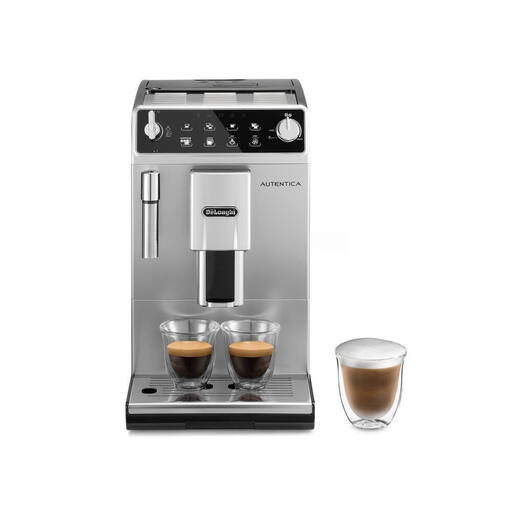 Image unavailable
An option for making coffee regularly from beans instead of using capsules. Allow time for the cleaning and descaling set out in the manual; if noise matters to you, check how loud this model is before buying.
 Image unavailable
The grinder gives you the option of using beans for everyday coffee without capsules. Before choosing this machine, check the manual for details on cleaning the hoppers and descaling.
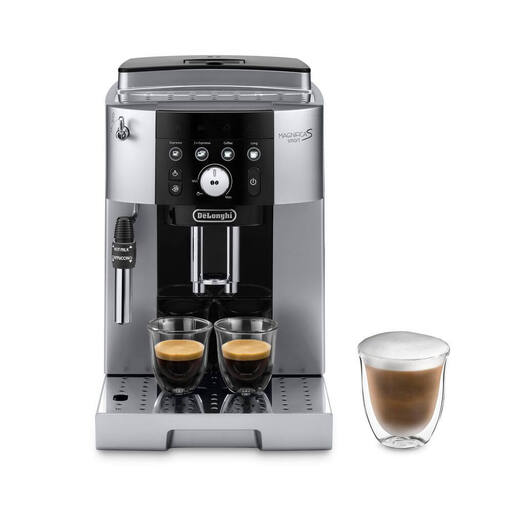 Image unavailable
Another grinder machine to consider if you want to swap single portions for coffee made from beans. Compare its controls and maintenance routine with those of the other models you’re considering.
 Image unavailable
Worth a look if you’d like to make your usual coffees from beans rather than capsules. Check how much space it needs, along with the model’s cleaning and descaling instructions.
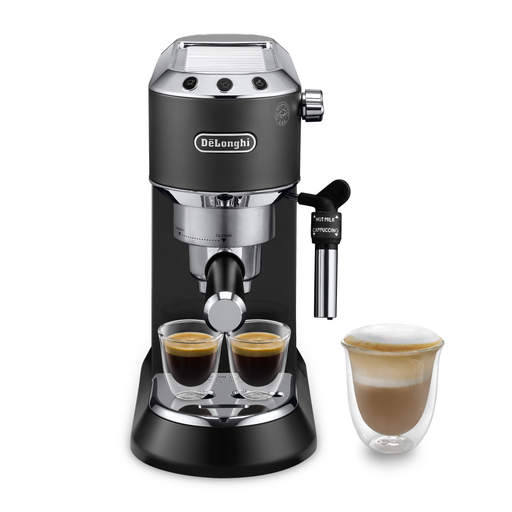 Image unavailable
Worth considering if you prefer to fill and empty a portafilter so you can use ground coffee. The stated pressure is 15 bar, but that figure alone isn’t enough to judge the coffee in the cup. Check the capacity of this version’s water tank before buying.
ADEME advises putting them in the recycling bin, bag or container for paper and packaging, rather than in household rubbish. If you’re unsure which container to use where you live, check your local council’s guidance.
Start by following the manual and your machine’s alerts: how often you need to descale depends, among other things, on water hardness and how often you use it. In its advice published in 2025, Que Choisir gives an average of every two to three months, but this doesn’t replace your machine’s instructions.
It’s worth checking how noisy the grinder is if other people are sleeping nearby. Que Choisir says an automatic grinder is noisier than a capsule system, but that doesn’t tell you how loud a particular model will be in your home.
The fact that a capsule can be recycled doesn’t, on its own, mean that its overall impact is the same. If your specific aim is to avoid individual packaging for every cup, coffee beans or ground coffee meet that requirement; ADEME recommends avoiding individual packaging where possible.