You’re in a hurry and short on worktop space
If you mainly make one cup at a time, measure the space available before choosing a machine for its simplicity. Remember to allow room to fill the water tank and use the machine.


If you mainly make one cup at a time in a small kitchen, start by comparing soft coffee pods and capsules. Both suit a simple routine, but you’ll need to be happy with the format of the consumables. If you make several cups at once, a compact filter coffee machine is also worth considering. A portafilter machine or grinder requires more thought about preparation, cleaning and the space available.
If you mainly make one cup at a time, measure the space available before choosing a machine for its simplicity. Remember to allow room to fill the water tank and use the machine.
Ground coffee or beans may suit your routine better if you’re happy to handle the preparation and cleaning your chosen machine requires. UFC-Que Choisir points out that different types of machine vary in these respects.
Check what your consumables are made from and which disposal options are available locally. ADEME distinguishes, for example, between recycling aluminium or plastic capsules and composting coffee grounds and paper filters.
First decide whether you want to make one cup on demand or several cups in one go. Then compare the machine’s actual footprint, consumables and cleaning requirements.
Worth considering: for a simple way to make one cup, or two if the model allows it. Philips says its Senseo Original HD7806/53 can make one or two cups in under a minute.
Bear in mind: the pods and features need to suit the specific model you choose. The claim for this Senseo doesn’t apply to the whole range.
Worth considering: if you want single-serve coffee and can find a model that fits your worktop.
Bear in mind: check the exact system before choosing capsules: Nespresso Original and Vertuo are two different systems.
Worth considering: if you want to use ground coffee and don’t mind preparing the portafilter each time you make a drink.
Bear in mind: check the model’s instructions for cleaning and descaling. Descaling needs depend in part on the hardness of your water.
Worth considering: if you prefer to fill a machine with beans and water, then make drinks using its controls.
Bear in mind: UFC-Que Choisir says a grinder generally takes up more space and makes more noise than a capsule system or filter coffee machine. Its components also need regular cleaning.
Worth considering: if you want to make several cups of ground coffee in one cycle.
Bear in mind: this type of machine is designed for a different need from a single espresso. Check how much coffee the model makes and how long it takes to brew.
| Criteria | What to check | Who it matters to |
|---|---|---|
| Speed and space | Compare the machine’s three dimensions with the space available, then check access to the water tank and whether it can make the number of cups you want. | If I only have time for one cup in the morning, the machine needs to fit on my worktop without making it difficult to fill. Around 36% of consumers prioritise this combination. |
| Consumable compatibility | Identify the exact system and the consumables it takes; also check which products you’ll need for cleaning and maintenance. | I don’t want to find out after buying that the portions for my machine don’t fit my routine. Having that choice comes first for around 29% of consumers. |
| Recycling and disposal | Check what the capsules are made from and follow local guidance. If you want to compost them, make sure there’s a suitable option available. | If I sort my coffee waste, I need a recycling or disposal option I can actually use at home. This is the top priority for around 21% of consumers. |
| Drinks and handling | Check which drinks the machine makes, what accessories you’ll need and which parts need cleaning after use. | I want to make drinks for my household without taking on a cleaning routine that doesn’t suit me. Around 14% of consumers prioritise their choice of drinks and the steps involved. |
The word ‘capsule’ alone doesn’t tell you whether they’ll be compatible. Nespresso Original and Vertuo are different systems.
Check the machine’s full platform name on its product page, then make sure you choose capsules that match it exactly.
In France, ADEME distinguishes aluminium or plastic capsules, which go in packaging recycling, from paper capsules, which need a suitable composting option.
Check the material listed and the local guidance before choosing your consumables.
A narrow machine may need more depth or clearance to open its lid and fill the water tank.
Measure the available width, depth and height, then check that you can easily reach the parts you’ll use every day.
A grinder has parts that need rinsing. For the Dedica range, De’Longhi says descaling can take around 25 to 30 minutes; this timing doesn’t apply to other models.
Check the instructions for the model you’re considering to find out which parts to clean, which products are suitable and what the descaling process involves.
The Senseo range includes machines that use soft coffee pods, designed in particular for making individual cups of coffee.
The brand offers systems including Original and Vertuo. Make sure you know which one you’re choosing when you pick a machine and capsules.
The Dedica range includes portafilter espresso machines, with cleaning instructions specific to the relevant models.
Melitta offers filter coffee machines and automatic bean-to-cup machines, designed for different coffee-making routines.
These machines offer several ways to make your morning coffee: soft pods, capsules, a portafilter or a grinder. Compare each one with the space you have and the steps you’re happy to take every day.
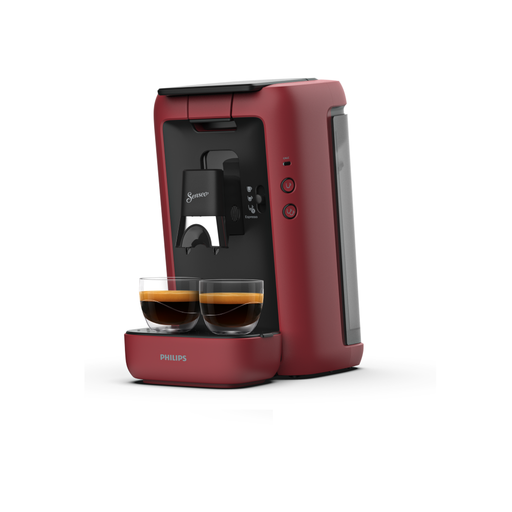 Image unavailable
For your morning coffee, check that the pods compatible with this Maestro and the preparation steps suit your routine.
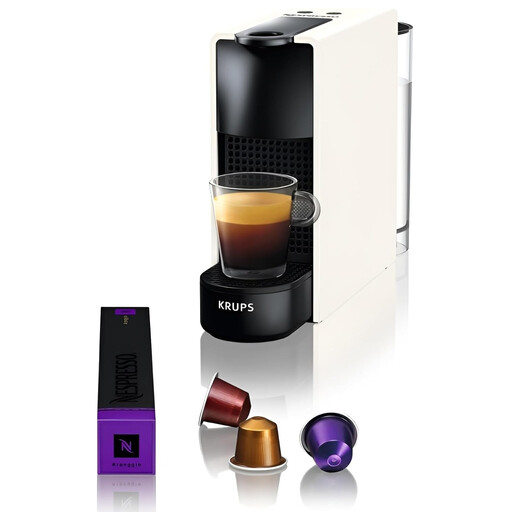 Image unavailable
If you’re looking for a capsule machine for single cups, check which capsule system it uses and allow enough room to open the machine and fill its 0,6 L water tank.
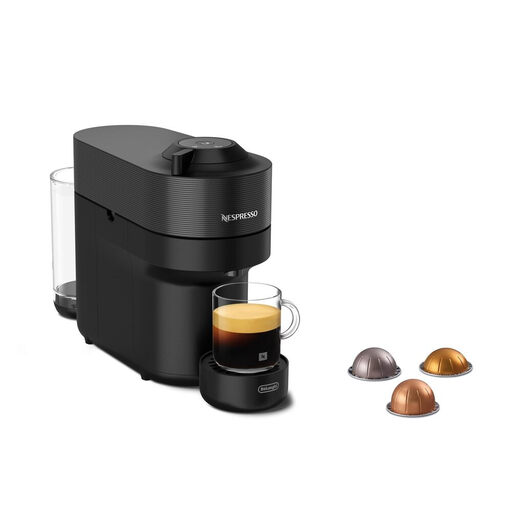 Image unavailable
If you’re opting for a Vertuo capsule routine, check there’s enough space around this machine and choose capsules that match its system. Its water tank is listed as 0,6 L.
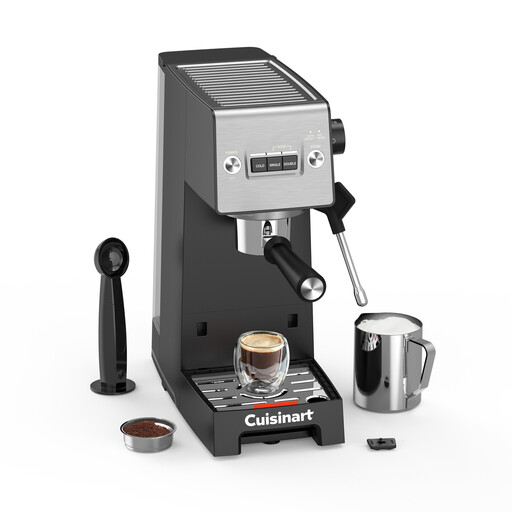 Image unavailable
If you prefer making espresso with a portafilter, check the space needed to prepare your coffee and consult the instructions for this model’s cleaning requirements.
 Image unavailable
If you’re considering a machine with a grinder rather than single-serve portions, check its dimensions, access to the tanks and which parts need cleaning before making room for it in a small kitchen.
According to ADEME, aluminium or plastic capsules should go in the recycling bin, bag or container for paper and packaging. Check what your capsules are made from and follow the local guidance.
Yes. ADEME lists coffee grounds and paper filters as compostable waste. For paper capsules, check whether home or shared composting, or a suitable food waste collection service, is available near you.
How often depends in part on the model, how you use it and the hardness of your water. Check your machine’s instructions and alerts. For Dedica, De’Longhi says to take the water-hardness setting into account.
If it breaks down, first see whether it can be repaired. If it still works, you could also consider donating it. To dispose of a machine, ecosystem offers a tool to help you find a collection point for electrical equipment.