What should you prioritise?
To choose a coffee machine for a shared household, decide whether you’ll mainly be making one pot of coffee to share or separate drinks for each person. Then consider the wait between cups, which formats the machine accepts and which tasks everyone will need to take care of.
Filter coffee maker
Choose this if: several people are happy to share coffee from the same carafe.
Bear in mind: making one shared pot doesn’t let you customise each cup.
Capsule or pod machine
Choose this if: everyone wants to pick a drink from the options compatible with the machine.
Bear in mind: the system you choose determines which consumables you’ll need to buy and dispose of after use.
Espresso machine using ground coffee
Choose this if: your household wants to choose its own ground coffee and is happy to prepare it manually.
Bear in mind: you’ll need to measure out the coffee and clean the accessories between drinks.
Machine with a grinder
Choose this if: users want coffee beans and settings or recipes tailored to their preferences, depending on the model.
Bear in mind: the grinder and any milk components add to the upkeep.
| Consideration |
What to check |
What matters to shoppers? |
| Wait between coffees |
Number of cups made per cycle and which drinks are compatible with any two-cup function. |
When two coffees are wanted almost at the same time, I want to avoid making everyone wait their turn; around 33% of shoppers would make this a priority. |
| Tastes and formats |
Capsule or pod system, drink sizes and settings that can be saved on the model. |
If we have different preferences, I want everyone to be able to make the drink they want without imposing the same choice on others; around 27% of shoppers would prioritise this flexibility. |
| Maintenance and consumables |
Components to clean, descaling instructions and how to dispose of used consumables. |
In a household where the machine is used often, I want regular tasks to be easy to share; this would be a priority for around 20% of shoppers. |
| Space and access |
Dimensions, clearance needed to fill the water tank and access to the trays. |
If we share a worktop, I need to be able to install, fill and use the machine without moving other items; around 20% of shoppers would prioritise this. |
Coffee machines available on Joybuy
These models include a filter coffee maker for making a shared pot and machines for households that want to prepare individual coffees. Compare how each one works with your household’s habits, and don’t assume that they all make drinks simultaneously just because they’re featured here.
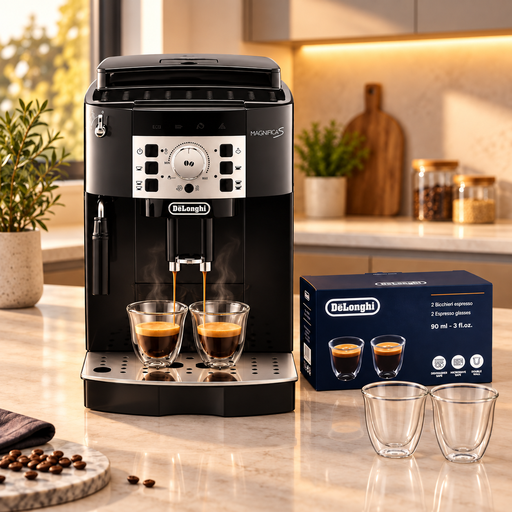 Image unavailable
De’Longhi Magnifica S with 2 DLSC310 espresso glasses
Worth considering if several people want to make espressos within a short space of time. Check which drinks can be served two at a time, along with the dimensions and maintenance tasks to suit your household.
Set includes two DLSC310 espresso glasses.
View on Joybuy
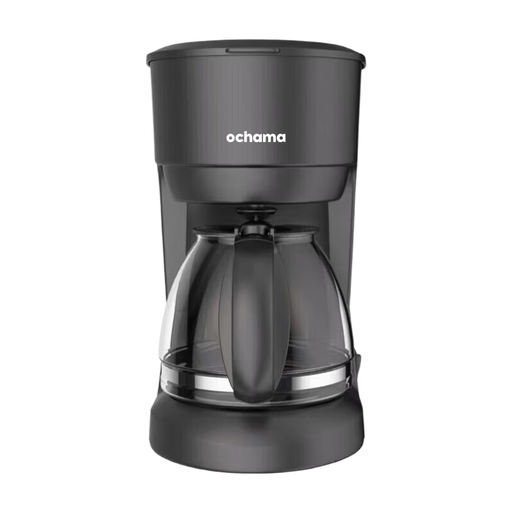 Image unavailable
ochama filter coffee maker, 750 ml tank
Worth considering if several people are happy to share the same filter coffee. Check how much coffee it makes per cycle and how much worktop space it needs: the tank capacity alone doesn’t tell you the carafe capacity.
Advertised power output of 600 W; advertised keep-warm function for 30 minutes.
View on Joybuy
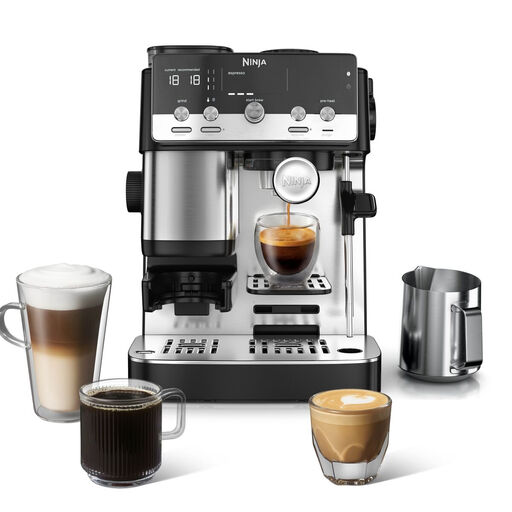 Image unavailable
Ninja Luxe Café Mini ES301EU, espresso and filter coffee
Worth considering if users want to switch between espresso and filter coffee with a single machine. Before relying on it for shared use, check how much it makes per cycle, whether it has a two-cup function and its dimensions.
2-in-1 model with built-in grinder. Check the milk-frothing system configuration for the appliance you choose.
View on Joybuy
Frequently asked questions
Does a ‘two-cup’ machine make two milk-based drinks at the same time?
Not necessarily: you’ll need to check the function for each recipe on the model in question. De’Longhi specifies that the two-cup mode on the Magnifica Start is limited to espresso, so having two outlets doesn’t mean it can make two different milk-based drinks at once.
What should I do with used coffee capsules in France?
According to ADEME, aluminium or plastic capsules should go in the recycling collection for paper and packaging. Paper capsules can be composted at home or put in a local food-waste collection scheme, where available.
How should we organise maintenance for a shared bean-to-cup machine?
Follow the maintenance steps and alerts in the model’s manual, then share the tasks between users. De’Longhi recommends keeping its machines clean and descaled, and suggests a service every one or two years depending on how often the machine is used. This is the brand’s recommendation and doesn’t replace the instructions for your appliance.
Does a commercial warranty replace my rights if the machine doesn’t match its description?
No. According to the French Ministry of the Economy, in France, the statutory guarantee of conformity applies in particular to new, second-hand and refurbished goods sold by a business to a consumer. Keep your proof of purchase and the product description so you can report a machine that doesn’t match its description to the seller; check the terms of any commercial warranty separately.


