To serve several people during the same break, choose a filter coffee maker with a jug or, if you need to make a much larger quantity, a percolator. For regular individual espressos, a bean-to-cup machine means accepting the noise and upkeep; capsules or pods make it easier to serve one cup at a time, while a manual machine leaves more of the preparation to each user. Whatever you choose, size the machine for your busiest break, not just your daily consumption.
Who is each type of use suited to?
Households where several people drink coffee
If most coffees are made in the morning, count how many cups you need to serve during that time. A shared jug means you don’t have to make each drink separately; an individual machine lets everyone choose when to make their coffee.
Small offices and break areas
The number of drinks people want one after another matters just as much as the daily total. Also decide who will fill the machine, empty the containers and take care of maintenance.
People who pay attention to consumables and recycling
Before choosing capsules, pods, ground coffee or beans, check that your chosen format is easy to buy and that you can arrange to sort the waste where the machine will be used.
How do you choose the right type?
First decide whether you want coffee ready in a batch or made to order. Then compare the capacity and upkeep with the demands of your actual coffee breaks.
Filter coffee maker
Consider it if: several people drink the same coffee during a break and can help themselves from a jug.
Bear in mind: coffee is made in a batch rather than customised for each cup, so check the jug’s capacity.
Capsules or pods
Consider them if: people take their drinks at different times and want to keep handling to a minimum.
Bear in mind: check which consumables are compatible, and how often you’ll need to refill and empty the machine during busy breaks.
Manual espresso machine
Consider it if: a small group is happy to make their espressos individually.
Bear in mind: every drink needs to be prepared and the machine cleaned afterwards. Think about what that means when several people are waiting.
Bean-to-cup machine
Consider it if: regular users want coffee made to order from beans.
Bear in mind: Que Choisir says that a grinder takes up more space and makes more noise than a capsule machine or filter coffee maker. You’ll also need to organise its cleaning.
Percolator
Consider it if: a meeting or group break calls for a batch of filter coffee that’s ready to serve.
Bear in mind: coffee is made in a batch, without individual drink choices. Adjust the quantity to the number of people present.
| Priority |
What to check |
Think about your needs |
| Capacity and serving |
Compare the stated capacity in litres or cups, how many drinks can be made at once and how long a batch takes. Casselin says its 6.8 L CPC48 percolator makes 48 cups in 45 minutes; these figures apply to this model. |
Everyone has coffee at the same time: I want to serve the group without repeatedly refilling the machine or making everyone wait. |
| Maintenance |
Check which containers and parts can be removed, how to clean the machine and what the descaling instructions say. For bean-to-cup machines, Que Choisir highlights the importance of cleaning. |
If several people use the machine, we need to be able to share out the filling, emptying and maintenance clearly. |
| Noise and space |
Check how much space the machine takes up. If keeping noise down is important, look for noise measurements for the exact model and its different operating stages. |
In an open-plan kitchen or near workstations, I want to take preparation noise into account, especially the sound of grinding. |
| Consumables and recycling |
Check which formats the machine accepts, how readily available they are and how many used capsules the container holds. For aluminium or plastic capsules, check your local recycling guidance; ADEME directs them to paper and packaging recycling. |
I prefer a format everyone can easily find and whose waste can be sorted on site. |
What should you avoid?
-
Choosing a compact machine without checking its containers
A machine designed to make one cup at a time may need frequent refilling and emptying during a group break. Joybuy’s product details for the Krups Nespresso Essenza Mini state that this model has a 0.6 L water tank and a container that holds up to six used capsules.
Estimate how many coffees you’ll need during your busiest break, then check the water tank and used-capsule container separately on the model you’re considering.
-
Underestimating the upkeep of a grinder
When several people use the machine, the containers, internal system and any milk-related parts need regular attention. Que Choisir highlights the importance of cleaning bean-to-cup machines.
Before choosing, check which parts are easy to reach, the cleaning and descaling steps, and how you’ll share out these tasks.
Allow time to empty the containers and carry out the maintenance required by the machine.
-
Choosing a percolator for just a few coffees spread throughout the day
A large batch doesn’t work in the same way as drinks made one at a time. Casselin says its CPC48 has a 6.8 L tank and makes 48 cups in 45 minutes: that’s a useful guide for a group break, not for every day-to-day coffee routine.
For a small group with staggered schedules, compare the capacity of a jug and machines that make one cup at a time instead.
Which brands are worth considering?
De'Longhi
The brand offers manual espresso machines as well as bean-to-cup models.
- De'Longhi says that some parts of the Magnifica Plus can be removed and washed in the dishwasher.
- Check the maintenance requirements for the exact model: this feature does not automatically apply to other machines in the range.
Philips / SENSEO®
The SENSEO Switch HD6592/65 combines pod brewing with filter coffee made in a jug.
- Philips says this model makes one or two pod coffees in under a minute and has a 7-cup jug.
- Check that SENSEO pods and the jug’s capacity suit your group’s habits.
Severin
The brand offers filter coffee makers with jugs for making several cups at a time.
- According to Severin, the KA 9315 can make coffee in two 8-cup jugs at the same time.
- Before choosing this set-up, check that you have enough space for the machine and both jugs.
JURA
JURA offers a range of automatic bean-to-cup machines for professional settings.
- The brand positions its professional machines for workplaces that use between 10 and 200 cups a day; this range describes the product line, not the capacity of every model.
- For an office, compare the expected daily volume with the model’s specifications and its maintenance and serving requirements.
Casselin
Its percolators provide a point of comparison for meetings and breaks that call for a batch of filter coffee.
- Casselin says the CPC48 has a 6.8 L tank and makes 48 cups in 45 minutes.
- Batch brewing doesn’t let each person order a different drink as they go.
Bean-to-cup machines available on Joybuy
These bean-to-cup models are suited to making individual coffees one after another, mainly in a shared home. If you want to serve filter coffee in a batch, compare a filter coffee maker with a jug or a percolator instead.
 Image unavailable
Philips EP2230/10 Series 2200 LatteGo, black
If several people want coffee one after another, check how quickly the machine can keep up during your busiest break. If people often choose milk-based drinks, also consider how the milk system needs to be cleaned and the fact that it can’t make two milk-based drinks at once.
View on Joybuy
 Image unavailable
De'Longhi Magnifica Start ECAM220.21.WW, white
If coffees are being made one after another at home, compare serving times, how often the containers need emptying and the noise from grinding. This model is intended for home use, not a commercial setting.
View on Joybuy
 Image unavailable
De'Longhi Magnifica S ECAM22.140.B, black
If two people want an espresso during the same break, check how long it will take to serve them and what the descaling routine involves. The product information describes this model as intended for home rather than commercial use.
View on Joybuy
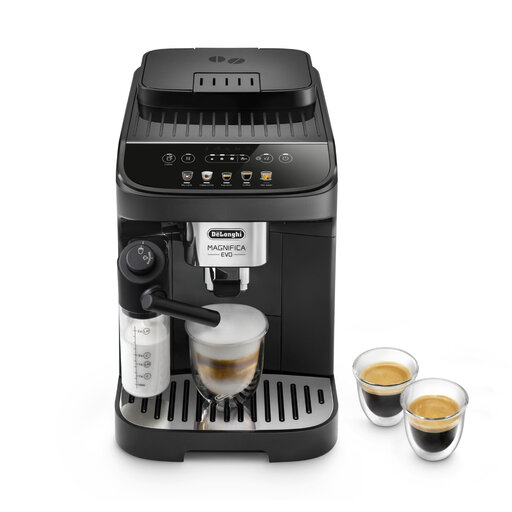 Image unavailable
De'Longhi Magnifica Evo LatteCrema ECAM290.61.B, black
If several people enjoy milk-based drinks, allow time to clean the carafe and check how long serving takes. Confirm which drinks are available directly on the ECAM290.61.B variant before choosing; this model is intended for home use, not commercial use.
View on Joybuy
Frequently asked questions
Is a grinder suitable for an open-plan kitchen or a quiet office?
Only if the noise it makes while preparing coffee is acceptable in the room. Que Choisir says a bean-to-cup machine is noisier and takes up more space than a capsule system or filter coffee maker. If keeping things quiet matters, look for a noise measurement for the exact model.
How should you organise maintenance for a machine used by several people?
Assign refilling, emptying the containers and cleaning to one person, or set up a rota that everyone knows about. Before buying, check which parts need rinsing and how to descale the model you’ve chosen. Que Choisir highlights the importance of cleaning bean-to-cup machines.
Do you need to take capsules to a collection point in France?
Not always: ADEME says aluminium or plastic capsules can go in paper and packaging recycling. Check what your capsules are made of and follow your local authority’s guidance; some brands also offer a dedicated collection service.
How should you arrange to recycle coffee grounds in a small office?
Set aside a separate container for the grounds and find out what recycling options are available at your workplace. In France, the Ministry for Ecological Transition says that sorting food waste applies to businesses as well as households; capsules and their packaging follow a different recycling route.


