If you make several drinks a day, first choose between the convenience of single servings, the hands-on process of a portafilter machine and the upkeep of a grinder. According to Que Choisir, capsules cost more to use than whole beans or ground coffee. If your household mostly drinks large quantities of filter coffee, consider a filter coffee maker too. Whatever you choose, check the capacity, compatible consumables and cleaning requirements of the specific model.
Which households will find these criteria useful?
Households making several coffees in a row
If one cup follows another, consider the heat-up time, the containers that need filling or emptying, and the steps required between drinks. In its testing protocol for machines with grinders, Que Choisir assesses factors including speed and the consistency of the volume across consecutive cups.
Households with different tastes
Espresso, long coffee and milk-based drinks don’t necessarily call for the same machine. Start with the drinks you actually make, then check the features of the model you’re considering and the steps needed to use them.
Households keeping an eye on cost and maintenance
When you make several drinks a day, coffee and cleaning products become regular expenses. Compare compatible consumables and cleaning tasks, rather than looking only at how easy the machine is to use.
What sets coffee machines apart?
Start with the drinks you make and how many cups you need to serve, then compare each type of machine with your usual filling, cleaning and coffee-buying habits.
| Priority |
What to check |
My needs |
| Serving drinks one after another |
Compare the water tank, containers that need filling or emptying, and heat-up time. For a grinder machine, look for tests involving several consecutive cups: Que Choisir measures factors including speed and consistency of volume. |
Several people have coffee one after another, so I want to minimise interruptions without assuming that a ‘two-cup’ function indicates how quickly the machine can make a whole series of drinks. |
| Types of drink |
A filter coffee maker suits households that mainly want to make larger quantities of long coffee. For individual espressos, consider capsules, pods, a portafilter machine or a grinder machine. Check the model’s milk functions separately. |
We mainly drink long coffee, or everyone prefers a different drink. This choice determines which features will be useful to us every day. |
| Preparation |
Capsules and pods are pre-portioned. A portafilter machine involves preparing and then emptying the filter; a grinder machine automates some of the preparation, but its containers still need maintenance. Check the steps in the instruction manual. |
If mornings are busy, I’d prefer to have fewer steps between cups. Otherwise, I may be happy with a more hands-on preparation method. |
| Running costs |
Work out how much coffee you’ll use at your usual rate, and add any relevant filters or cleaning products. Que Choisir finds that capsules cost more than whole beans or ground coffee; the actual cost for your household will depend on the consumables you choose. |
If I’m making several drinks a day, I want to understand the ongoing costs rather than judge the machine on its own. |
| Compatibility and waste |
Check which capsule or pod system the machine accepts before buying. In France, ADEME says aluminium and plastic capsules should be sorted with paper and packaging. |
I want to be able to buy the right consumables and include sorting them in our household routine. |
What mistakes should you avoid before buying?
-
Choosing based only on the drink it makes
A machine that suits a single cup may slow down a series of drinks if you need to refill the water tank or empty a container.
Compare the capacity, heat-up time and steps between cups for the models you’re considering. If tests on consecutive drinks are available, use those rather than relying on a single advertised feature.
-
Forgetting about regular consumables
According to Que Choisir, capsules cost more than whole beans or ground coffee. Descaling products and, depending on the machine, filter cartridges are also part of regular use.
Estimate how many drinks you make at home and check which consumables are actually compatible with your chosen model.
-
Assuming any capsule will fit any machine
Capsule systems aren’t universally interchangeable. A capsule bought for a different system may not work with your machine.
Check the exact system in the machine’s documentation before stocking up.
-
Underestimating the cleaning involved with a grinder or milk system
Que Choisir points out that the coffee-ground and drip trays need regular rinsing, as does the brewing unit, though less frequently. A milk function adds its own cleaning tasks.
Check the instruction manual to see which parts are accessible, how to clean the milk system and when to descale the machine, based on your water and how often you use it.
Which brands should you consider?
These brands represent different types of machine. Check the features and requirements of each individual model.
De’Longhi
The Magnifica range may appeal to households considering bean-to-cup machines for coffee and milk-based drinks.
- De’Longhi highlights the range’s easy-to-use controls; check which drinks the specific model offers.
- Capacity, the milk system and maintenance steps vary by model.
Philips
The brand offers different types of machine, including espresso machines, Senseo pod machines and L’OR Barista capsule machines.
- Philips offers support with maintenance and replacement parts where this applies to the product.
- Check which parts and consumables fit the model you’re considering; you can’t assume they’ll be available based on the brand alone.
Melitta
A brand to consider if you’re comparing bean-to-cup machines for making several drinks a day.
- Compare the recipes, controls and capacity of each model with the drinks you make at home.
- Check the noise level and cleaning steps for the specific model too; don’t assume a feature applies across the whole range.
Coffee machines available on Joybuy
This selection includes bean-to-cup espresso machines and a portafilter model. It lets you compare different ways of making individual drinks. If you’re looking for a filter coffee maker, capsule machine or pod machine, consider your household’s habits before choosing.
 Image unavailable
Philips Series 2200 EP2230/10 LatteGo
This model has a grinder and LatteGo system, making it suitable for households that alternate between coffee and milk-based drinks. The two-cup function listed for this machine doesn’t tell you how quickly it can make a series of drinks, so check this if several people take turns. The AquaClean filter is listed as not included.
View on Joybuy
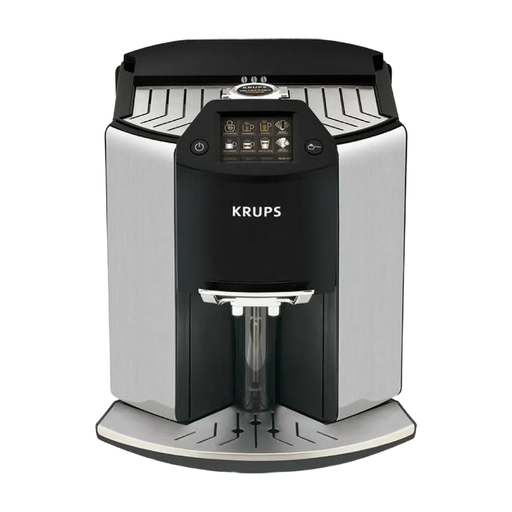 Image unavailable
Krups Barista EA907D10, 1.7 L, 1450 W
This automatic machine is worth considering if your household likes a variety of coffee and milk-based drinks. Its name indicates a 1.7 L capacity. To assess how well it serves several people, also check the serving speed, consistency between cups and routine maintenance requirements.
View on Joybuy
 Image unavailable
HiBREW H16 with grinder and milk system
The model name advertises six types of coffee. If several people prefer different drinks, check which recipes suit them, the bean hopper capacity and the steps involved in cleaning the milk system. This model is advertised as making coffee and milk foam at the same time, but that doesn’t indicate how quickly it can make a series of drinks.
View on Joybuy
 Image unavailable
De’Longhi Magnifica S ECAM22.140.B
This grinder machine may suit a household that serves espresso and is happy to froth milk manually using the steam wand. If you’re making drinks one after another, check the serving speed, container capacity and how to clean the wand.
View on Joybuy
 Image unavailable
HiBREW H13A, 20Bar 3 in 1 semi-automatic espresso machine
This ground-coffee machine is better suited to people who are happy with the hands-on steps involved in using a portafilter. The dual heating system is advertised as allowing coffee and milk to be prepared at the same time. Check the instruction manual to understand the preparation and cleaning steps before choosing this model for making several drinks in a row.
View on Joybuy
Frequently asked questions
How can you assess a machine’s capacity for several people?
Don’t just look at the water tank: check which containers need filling or emptying between drinks too. For machines with grinders, Que Choisir’s testing protocol also looks at speed and consistency of volume across several consecutive cups. A ‘two-cup’ function doesn’t replace these measurements.
Are all capsules and pods interchangeable?
No. The systems accepted depend on the machine. Que Choisir notes, for example, that most brands accept only one type of capsule. Before buying consumables, check which format is explicitly compatible with the model you’ve chosen.
How often should you descale a coffee machine?
It depends on the hardness of your water and how often you use the machine. Que Choisir gives an average of every two to three months. Follow the instructions and, where applicable, the machine’s alert to work out when to descale yours.
Where should you dispose of aluminium or plastic capsules in France?
ADEME advises putting them in the recycling bin, bag or container for paper and packaging. Check what your capsules are made from so you can follow the relevant sorting instructions.
What consumables should you budget for after buying?
Allow for coffee or compatible portions, then check whether the instruction manual recommends descaling products or filter cartridges. Requirements vary by model, so compare them with how often you make drinks before choosing.


