If you regularly serve several cups of filter coffee, choose a filter coffee machine; for a pre-portioned individual drink, consider capsules or pods. If you prefer espresso, a bean-to-cup machine automates preparation using whole beans, while a portafilter lets you fill and tamp the coffee yourself. Choose between these formats based on the space you have, the cleaning involved and the consumables you’re happy to use.
Which format suits your household?
Households making several espressos a day
A bean-to-cup machine uses whole coffee beans to make consistent drinks. However, you’ll need to make space for it and clean its containers. UFC-Que Choisir also notes that these machines are bulkier and noisier than capsule systems or filter coffee machines.
People in a hurry with limited space
Capsules or pods save you from measuring out coffee for every drink. Check which format the machine accepts and measure its dimensions: two pre-portioned systems aren’t necessarily compatible with each other.
Households that mostly serve filter coffee
If several people drink coffee one after another, a filter coffee machine lets you brew a full pot rather than making individual espressos. Choose its capacity based on how much coffee you actually serve, and consider whether an insulated carafe would be useful.
What should you check before choosing?
Start with the drinks you make most often, then consider how each format fits into your daily routine and the space you have available.
| Consideration | What to check | How I use it |
|---|
| Drinks and quantities |
For making several cups of filter coffee, compare the capacity of the carafe and water tank. For espresso, check the drinks available and how many cups you can make at once. As De’Longhi explains for its manual machines, a portafilter requires you to fill and tamp the coffee yourself. |
At breakfast, I serve several cups of filter coffee, so carafe capacity matters more to me than making one espresso at a time. |
| Preparation steps |
Capsules and pods are pre-portioned; a bean-to-cup machine makes coffee from whole beans; a portafilter lets you fill and tamp the coffee yourself. Check the model’s controls to make sure it can prepare the drinks you want. |
I’d rather decide whether I simply want to press a button or spend a few moments preparing each espresso. |
| Cleaning |
Check how easy it is to access the containers, clean parts that come into contact with coffee and, if included, clean the milk system. For espresso machines, UFC-Que Choisir says descaling depends in part on water hardness and how often the machine is used. |
If I make milk-based drinks, cleaning the milk system after use needs to fit into my routine. |
| Space and noise |
Measure the space available, remembering to allow access to the water tank and containers. UFC-Que Choisir notes that a bean-to-cup machine takes up more room and makes more noise than a capsule system or filter coffee machine. |
My worktop space is limited, or the grinder might be noisy enough to disturb other people in the house. |
| Consumables and recycling |
Check which capsules or pods are compatible, the size of the paper filters and which maintenance products the model needs. In France, ADEME says aluminium and plastic capsules can go in the recycling collection for paper and packaging. |
I want to be able to buy the right consumables and recycle the ones I actually use. |
What mistakes should you avoid?
-
Underestimating the cleaning involved with a grinder or milk system
Containers and parts that come into contact with milk need regular cleaning. Putting off descaling can also affect how an espresso machine works, as UFC-Que Choisir points out.
Read the model’s instructions before choosing: check how easy it is to access the containers, what’s involved in cleaning the milk system and how to descale the machine.
-
Choosing an espresso machine when you mostly serve a pot of coffee
Making individual drinks is not the same as serving several cups of filter coffee in a row. To give you an idea of capacity, Melitta states that its Easy Therm filter coffee machine makes 8 cups and has a 1,00 L water tank.
Make a note of the drinks your household usually makes, then compare the quantities with the machine’s format and capacity.
-
Forgetting about the individual packaging for capsules
Remember to recycle used capsules. In France, ADEME says aluminium and plastic capsules should go in the bin, bag or collection point for paper and packaging recycling.
If waste is a factor in your decision, check what type of capsule the system uses and which recycling rules apply where you live.
A few brands to know
Philips
Philips offers automatic espresso machines, including models with the LatteGo milk system.
- Philips describes the carafe on some LatteGo machines as a two-part design with no tubes, which can be rinsed under the tap or washed in the dishwasher.
- Check these features on the specific model you’re considering; they don’t replace cleaning the machine’s other parts.
De’Longhi
De’Longhi offers manual espresso machines with portafilters, as well as automatic models with grinders.
- For its manual machines, the brand describes a process in which you fill and tamp the coffee in the portafilter.
- Bear these steps in mind if you’d prefer a less hands-on way to make coffee.
Melitta
Melitta offers filter coffee machines, as well as automatic espresso machines.
- The Easy Therm filter coffee machine is stated to make 8 cups and has a 1,00 L water tank. The brand also offers models with insulated carafes.
- These figures apply to the model mentioned, so check the capacity of the coffee machine you’re considering.
Nespresso
Nespresso machines use a capsule system, and the brand publishes machine-specific advice on use and care.
- The brand lists collection points for capsules used in its system.
- Check which capsule format the machine accepts and whether there are collection points near you.
Capsule, pod and bean-to-cup machines on Joybuy
These models offer two ways to make coffee every day: capsules or pods for a pre-portioned drink, and automatic bean-to-cup machines that use whole coffee beans.
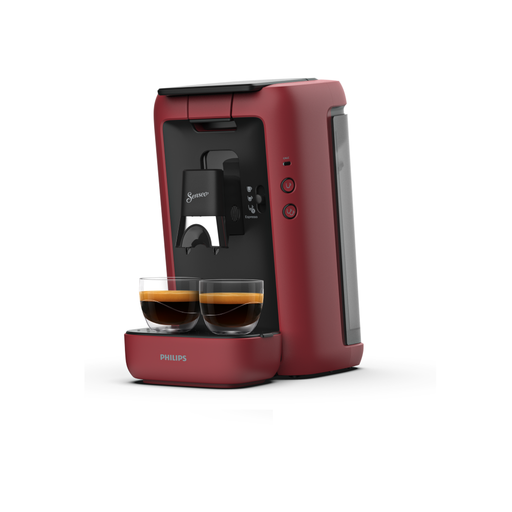 Image unavailable
Philips SENSEO CSA260/91 Maestro, intense red
Worth considering if you’d like to make coffee using pods. Check that the pod format you plan to use is compatible with this machine.
View on Joybuy
 Image unavailable
Philips EP2230/10 Series 2200 LatteGo, black
This bean-to-cup model is designed for households that want to make coffee from whole beans and enjoy milk-based drinks. Check how much space it needs and read the instructions for cleaning the milk system.
View on Joybuy
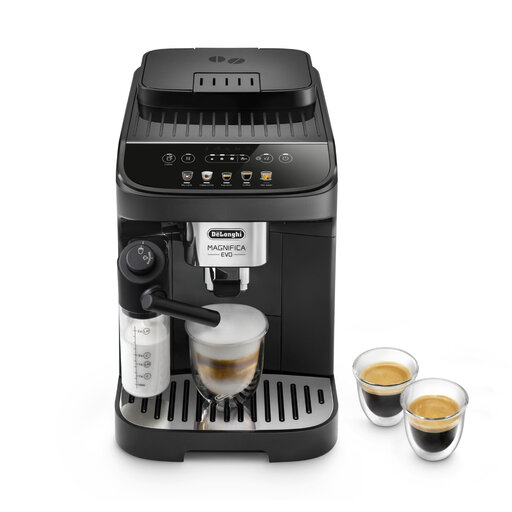 Image unavailable
De’Longhi Magnifica Evo LatteCrema ECAM290.61.B, black
This bean-to-cup machine could suit a household that wants to make coffee from whole beans and is also considering milk-based drinks. Think about the space available and the care needed for the milk system.
View on Joybuy
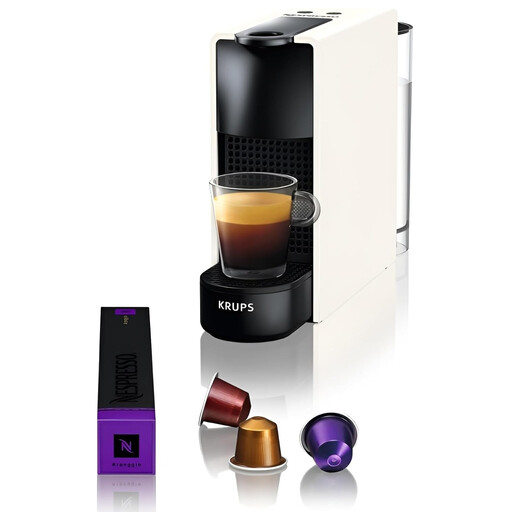 Image unavailable
KRUPS Nespresso Essenza Mini, white, 0,6 L, 1 200 W
If space is at a premium and you want to make individual coffees with capsules, check which capsule format the machine accepts. The water tank is stated to hold 0,6 L, so compare this with the number of cups you’ll make in a row.
View on Joybuy
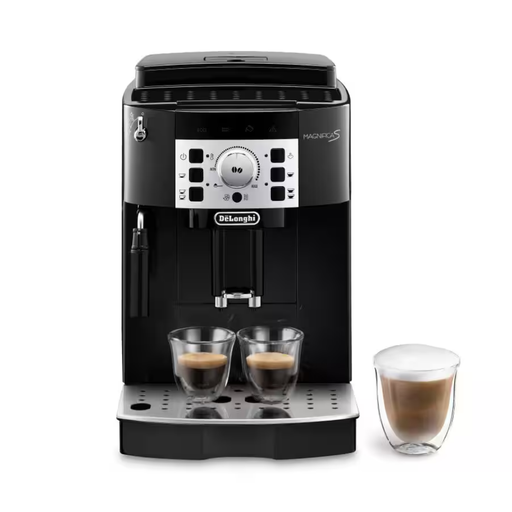 Image unavailable
De’Longhi Magnifica S ECAM22.140.B, black
Consider this model for making espresso from whole beans, with the option to use ground coffee. If you make milk-based drinks with the steam wand, remember to clean it after use.
View on Joybuy
Frequently asked questions
How often should you descale an espresso machine?
UFC-Que Choisir recommends descaling every two to three months on average, depending on water hardness and how often you use the machine. Follow your model’s alert and instructions for the correct procedure and compatible products.
Where should you dispose of aluminium or plastic capsules in France?
According to ADEME, these capsules should go in the bin, bag or collection point for paper and packaging recycling. Check what they’re made of before sorting them.
Why shouldn’t you put an electric coffee machine in your household rubbish?
Electrical and electronic equipment can contain components that are harmful to the environment and may be recyclable, according to the French ministry responsible for ecology. Find out about an appropriate collection scheme for your machine.


