Households making coffee several times a week
For regular use, consider whether you’d rather fill and maintain a grinder, handle a portafilter or stock up on pre-portioned coffee.


If you make coffee at home regularly, start by choosing a system that suits the drinks you enjoy and the steps you’re happy to take each day. A bean-to-cup machine uses whole beans, but takes up more space and makes more noise than a capsule machine, according to UFC-Que Choisir. With capsules and pods, you’ll need to check they’re the right format, while a portafilter machine is a good choice if you’d like more hands-on control over the preparation. Whichever system you choose, check the care instructions for the specific model before buying.
For regular use, consider whether you’d rather fill and maintain a grinder, handle a portafilter or stock up on pre-portioned coffee.
Check whether the model you’re considering has a steam wand, milk jug or another milk system, then find out what’s involved in cleaning it.
A capsule machine may be worth considering if space is at a premium. Still, measure the available space and check the capsule format before choosing a model.
Start with the drinks you usually make, then compare each system against the space you have, the maintenance it needs and the coffee you can buy.
| What to consider | What to check | Think about your routine |
|---|---|---|
| Cleaning and maintenance | Check the manual for instructions on emptying the trays, cleaning parts that come into contact with coffee or milk, and descaling. | If I make several coffees a day, can I fit these steps into my routine? Capsule machines need descaling too. |
| Space and noise | Measure the space available and check you can reach the reservoirs. UFC-Que Choisir says a bean-to-cup machine takes up more space and makes more noise than a capsule system. | In a small kitchen, I need to be able to fill the machine without moving it. Noise matters too if I make coffee early in the morning. |
| Availability of coffee | Check the exact capsule or pod format. For other systems, find out whether the model takes whole beans, ground coffee or both. | I want to be able to find the coffee I usually drink in a format that’s genuinely compatible with my machine. |
| Milk-based drinks | Check which drinks the model makes, what type of milk system it uses and how to clean it. | If I often make cappuccinos, the steps involved in cleaning the milk system matter just as much as having the feature. |
| Model support | Look for the manual, compatible accessories and repair options for the exact model. Brand support doesn’t guarantee that a particular part will be available. | For a machine I use regularly, I want to know who to contact and what information is available. |
Coffee grounds, the drip tray and, depending on the model, parts that come into contact with milk all add regular cleaning tasks. Both systems still need descaling.
Read the manual for the model you’re considering. Check that the trays are easy to reach and look at the steps for cleaning the milk system.
Allow time to empty, rinse and clean the parts listed in the manual.
The capsules you can use depend on which system the machine accepts.
Make a note of the exact format, then check that the capsules you want are compatible and easy to buy.
Used capsules are still waste and need to go through the right recycling route. ADEME says aluminium and plastic capsules can go in the packaging recycling collection.
When choosing a pre-portioned system, check the recycling guidance that applies where you live.
Nespresso says that a repair may not be possible if the necessary parts are unavailable. So, a support page alone doesn’t guarantee that a particular machine can be repaired.
Before buying, check the documentation and service options for the exact model.
A brand to consider for bean-to-cup and manual coffee machines for home use.
A brand to consider if you’re looking for a bean-to-cup machine with documented maintenance instructions.
A brand to consider if you’re looking for a capsule machine. Check the format it accepts and the service available for the specific model.
This Joybuy selection includes two bean-to-cup machines, as well as portafilter, pod and capsule machines for making coffee at home. Compare how each one works with your routine before choosing a model.
 Image unavailable
Worth considering if you regularly want to make coffee from whole beans and milk-based drinks. The product name lists six coffee varieties; check the manual for instructions on cleaning the grinder and milk system.
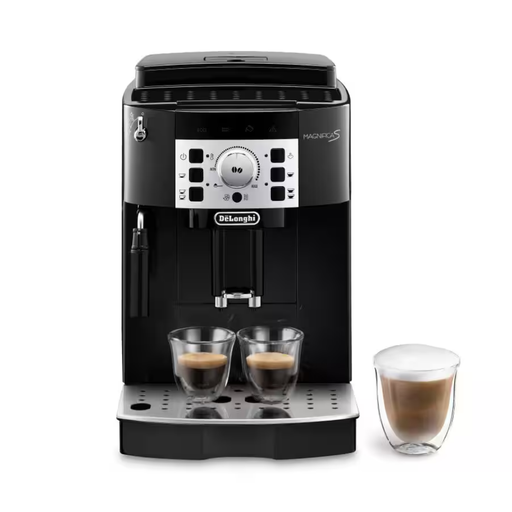 Image unavailable
An option for making coffee from whole beans with an automatic machine. Check how much space you’ll need around the appliance and read the manual for maintenance instructions for this model.
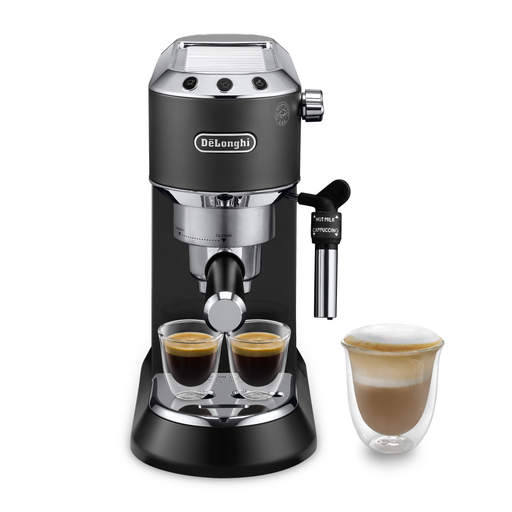 Image unavailable
Worth considering if you’d rather handle the coffee yourself with a portafilter than use an automatic grinder. The product name specifies 15 bar; check which filters and accessories come with this model.
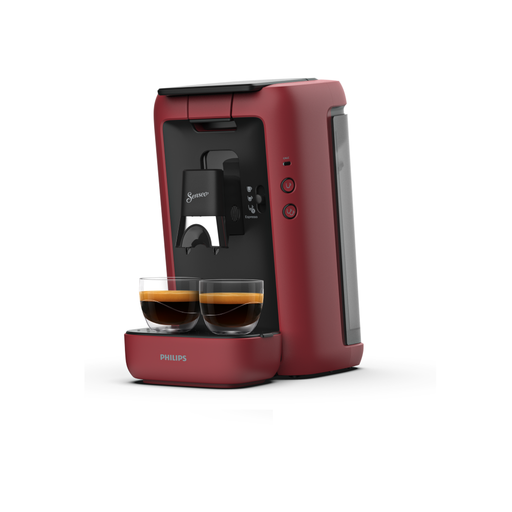 Image unavailable
A pod machine for making coffee in pre-portioned servings. Check which type of pod it accepts and how to descale this model.
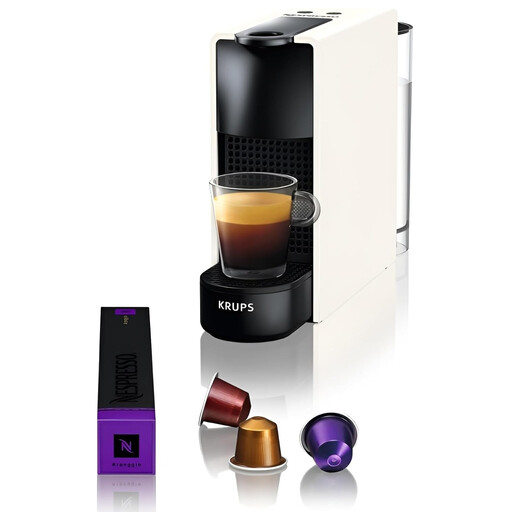 Image unavailable
Worth considering if you prefer pre-portioned coffee. The product name lists a 0,6 L reservoir and 1200 W power; check the exact capsule format and the maintenance requirements for this machine.
It has extra parts to empty and clean, including the trays for coffee grounds and drips. UFC-Que Choisir recommends rinsing them regularly and following any descaling alerts. Capsule machines also need to be descaled according to their manual.
It depends on the machine and how often you use it. Nespresso recommends descaling its machines every three months or after around 300 capsules. For other models, follow the instructions in the manual.
ADEME says aluminium and plastic capsules should go in the packaging recycling bin, bag or container. Check what your capsules are made from and follow the collection guidance that applies where you live.
Coffee machines aren’t among the categories covered by the repairability index list published by the French ministry responsible for the ecological transition on 8 July 2025. To compare the models you’re considering, check their manuals and the information available on parts and repairs instead.