A quick cup, with no complicated settings
If you mainly make one coffee at a time and have limited space, consider a capsule or pod machine. Check which format it accepts and which consumables you expect to buy regularly.


For your daily coffee at home, start by thinking about how many cups you need to serve and how involved you want the preparation to be. Capsules and pods make it easy to prepare a single cup, a grinder lets you choose your own beans, and a portafilter gives you more scope to adjust the process. If you often serve several people, compare filter coffee and hybrid machines too. Whatever you choose, consider the ongoing cost of consumables, the space available and the care the machine needs.
If you mainly make one coffee at a time and have limited space, consider a capsule or pod machine. Check which format it accepts and which consumables you expect to buy regularly.
A bean-to-cup machine lets you choose your beans and automates some of the preparation. Que Choisir notes that the initial outlay is higher than for other systems, so weigh this against how much coffee you drink and the maintenance involved.
If you switch between individual coffees and serving from a carafe, compare the capacities of filter coffee machines and hybrid models. Philips, for example, describes the SENSEO Switch HD6592/65 as a machine that combines pods and filter coffee; this feature depends on the model you choose.
A machine suited to making one cup a day may not be the best choice for serving a carafe. Que Choisir identifies four types of espresso machine; filter coffee machines are also worth comparing if the amount you serve affects your choice.
Worth considering: if you mainly want to make one cup at a time with minimal effort.
Bear in mind: the capsules you can use depend on the machine’s specific system.
Worth considering: for making one or two cups simply, depending on the model’s capacity.
Bear in mind: you’ll still need a pod holder and consumables that are suitable for your model.
Worth considering: if measuring the coffee and getting involved in the preparation are part of the appeal.
Bear in mind: the steps involved and level of automation vary by model.
Worth considering: if you want to choose your beans while automating much of the preparation.
Bear in mind: the initial outlay is generally higher, and regular maintenance is required.
Worth considering: if you regularly serve several coffees from a carafe.
Bear in mind: filter coffee may not satisfy a craving for an individual espresso.
| Criteria | What to check | Best suited to |
|---|---|---|
| Ease of use and space | Check the machine’s dimensions and the exact format of capsules or pods it accepts. | When I make just one cup before heading out, I want to keep things simple without taking up too much worktop space. Around 31% of consumers put this simplicity first. |
| Regular use and choice of coffee | Compare the consumables you’ll use and the cleaning involved with the system you’re considering. | If I drink coffee every day, I’d rather choose my own beans than rely on a particular capsule format. This freedom is the priority for around 31% of consumers. |
| Control over preparation | With a portafilter machine, check the settings and whether it includes a grinder or milk-making equipment. | I want to have a say in how my espresso is made and, if I make milk-based drinks, how the milk is prepared too. Around 19% of consumers value this control. |
| Serving several cups | Depending on how you’ll use it, check how many cups it makes per cycle or the carafe’s capacity. | When several people have coffee together, I don’t necessarily want to repeat the individual preparation for each person. Serving several cups is the top priority for around 19% of consumers. |
Que Choisir reports that most brands’ machines accept only one type of capsule. So a capsule that looks similar won’t necessarily work in the machine you choose.
Make a note of the machine’s exact range, then check the compatibility information on the capsules you want to buy.
For a daily coffee, consumables and maintenance should also factor into your decision. Que Choisir notes that while a bean-to-cup machine costs more upfront, the cost per cup can be lower than for espresso made with pods.
Compare systems based on how often you drink coffee, the coffee you prefer and the cleaning products you’ll need. Don’t assume the same result will apply to every household.
Making one or two drinks at a time suits some households, but repeating these cycles can become inconvenient if you regularly serve several coffees. Philips states that the SENSEO Switch HD6592/65 has a seven-cup thermal carafe in filter mode; this capacity is specific to that model.
Think about when you serve several people, then compare an individual coffee machine with a filter or hybrid model.
If you only make one cup at a time, you’ll need to repeat the preparation steps when there are more people to serve.
Regular cleaning and descaling are two separate tasks. Nespresso recommends descaling its machines every three months or after around 300 capsules; the right procedure depends on the model and the water you use.
Before you buy, check the manual for the procedure and approved product, then follow the instructions for your specific machine.
A range of machines and capsules for pre-portioned coffee.
Machines that use soft pods, with a model in the range that also combines pods and filter coffee.
A range of domestic bean-to-cup machines, with drinks and features that vary by model.
Portafilter machines with different levels of assistance, depending on the model.
These models offer different ways to make an individual coffee at home: with a bean grinder, capsules or a portafilter. If you regularly serve a carafe, compare the capacity and features of a filter or hybrid coffee machine separately.
 Image unavailable
Worth considering if you want to make your daily coffees from beans with a grinder machine. This model comes with the LatteGo system; check the maintenance involved and which consumables are suitable for it.
 Image unavailable
Another model to consider if coffee beans suit your daily routine. It’s a bean-to-cup espresso machine; check which drinks it makes and what maintenance is required for the ECAM220.21.WW.
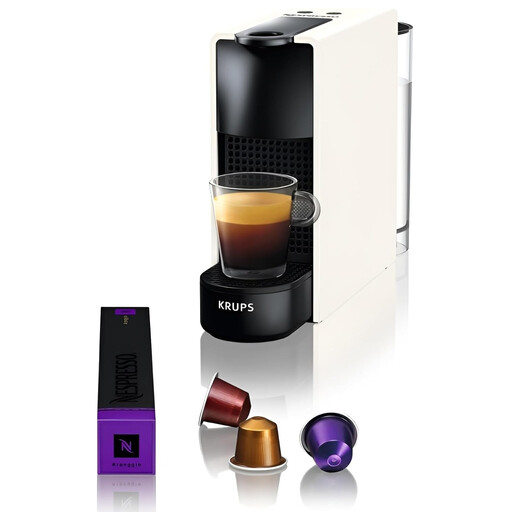 Image unavailable
Worth considering for making an individual coffee with capsules. The product description lists a 0.6 L water tank and 1,200 W power; check the exact format of compatible capsules before buying.
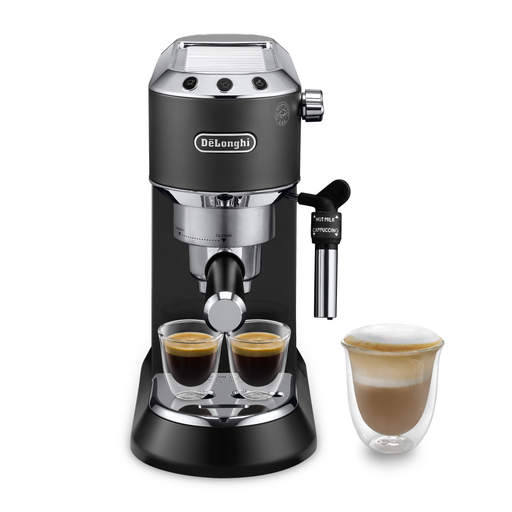 Image unavailable
Worth considering if you’d rather make espresso with a portafilter than use a capsule. The product description lists a rated pressure of 15 bar, which on its own doesn’t tell you what to expect in the cup; allow time for preparation and cleaning.
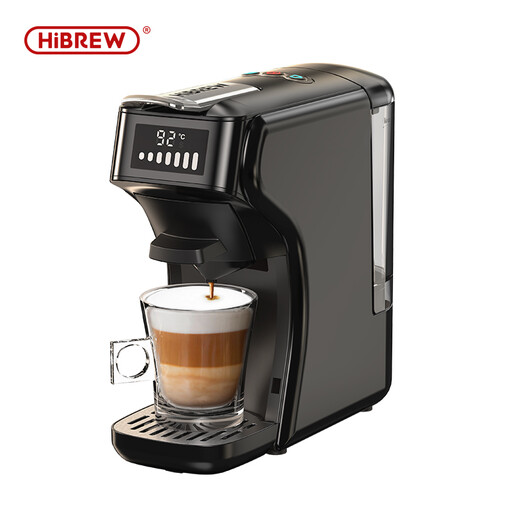 Image unavailable
Worth considering for individual coffees if the consumables you use are compatible with this model. The product description lists a 600 ml water tank, hot and cold modes, and an LED indicator; check that it supports each capsule or pod format you plan to use.
No. Compatibility depends on the system and model. Que Choisir reports that most brands’ machines accept only one type of capsule, so check your machine’s range and the compatibility information on the packaging.
Not necessarily when you take the cost of the machine and its overall use into account. Que Choisir says the cost per cup for this type of machine is two to three times lower than for espresso made with pods, while also noting the higher initial outlay. Compare the options based on how much coffee you drink and the beans you plan to buy.
Follow the cleaning instructions in the manual and descale the machine as recommended by the manufacturer. Nespresso recommends descaling its machines every three months or after around 300 capsules; don’t apply this schedule to another model without checking its manual.
According to ADEME, aluminium and plastic capsules go in the recycling collection for paper and packaging. For paper capsules, ADEME mentions home composting or local food waste collections where available; check your local council’s guidance too.