For regular espresso made from beans, a bean-to-cup machine is a good option if your household is happy with the space it takes up, the noise and the maintenance. Capsules make preparation simpler, but you’ll need to choose a compatible system and arrange how to recycle them. A filter coffee machine is better suited to making longer coffees for several people, while a manual espresso machine is for those who want to be involved in every brew. Then check the capacity, drinks on offer and cleaning routine of the model you’re considering.
Which option suits each household?
Households that enjoy regular espressos
If several people drink short coffees and like to customise their drinks, compare the settings and maintenance routines of bean-to-cup machines. A capsule machine is also worth considering if ease of use is more important. UFC-Que Choisir points out that bean-to-cup machines take up more space and make more noise than capsule or filter coffee machines.
Households serving several coffees one after another
If you’ll be making several drinks in a row, consider how easy it is to access the water tank, adjust the settings and get a consistent amount in each cup. UFC-Que Choisir’s testing of bean-to-cup machines includes measuring the volume dispensed in successive cups. If everyone prefers longer coffee, check the capacity of a filter coffee machine’s jug instead.
Households looking to avoid capsules
A bean-to-cup machine uses coffee beans, while a filter coffee machine uses ground coffee. If you opt for capsules, find a recycling point that accepts those used by your chosen system before you buy. According to ADEME, capsules thrown away with household rubbish are treated as waste and either incinerated or sent to landfill.
What should you compare?
Espresso with a grinder
Worth considering: if you regularly make espresso from beans and want settings to suit everyone’s tastes.
Be prepared for: more noise, a larger footprint and more maintenance than with a capsule or filter coffee machine, according to UFC-Que Choisir.
Capsules or pods
Worth considering: for simple preparation, with drinks available in a format that’s compatible with the machine.
Plan for: choosing a consumable format and finding a convenient collection point for used capsules.
Filter coffee machine
Worth considering: if several people mainly want to share a pot of longer coffee.
Limitation: this brewing method isn’t suited to those looking for short espressos.
Manual espresso machine
Worth considering: if you want to measure out the coffee and handle the portafilter yourself.
Be prepared for: hands-on preparation and cleaning after use, particularly if the machine has a steam wand.
Once you’ve chosen a brewing method, check how the model’s features match the drinks you like and how often you’ll use it.
| Priority | What to check | Your needs |
|---|
| Serving |
Capacity and access to the water tank; number of cups that can be made at once; consistency between successive brews. UFC-Que Choisir assesses this last point for bean-to-cup machines. |
If we make several coffees in a row, I want to avoid having to refill or adjust the machine too often. |
| Drinks |
Compatible coffee formats; recipes available on the exact model; how milk is prepared, if this feature is offered. |
At home, tastes vary between short coffees, longer coffees and, sometimes, milk-based drinks. |
| Maintenance |
Descaling instructions; parts that need cleaning; milk-related cleaning; products and filters specified for the model. De’Longhi says the descaling frequency for its Dedica machines depends, among other things, on water hardness. |
I want to know what needs doing regularly, including after making a milk-based drink. |
| Space |
The machine’s dimensions and the space needed to fill the water tank, reach the controls and remove parts. |
The machine needs to fit on the worktop without making it awkward to refill. |
| Capsules |
Format compatibility; whether there’s a collection point near your home. Nespresso says it has more than 2,000 capsule collection points in France: check that your chosen point accepts yours. |
If we use capsules, I want to know where to take the used ones. |
What pitfalls should you avoid?
-
Putting off maintenance
Melitta says limescale can block the water circuit in its machines, slow down brewing and dull the coffee’s flavour. The maintenance required varies from one appliance to another.
Check the instructions for the model you’re considering. Find out how to descale it, clean removable parts and which products the manufacturer recommends.
-
Assuming a capsule will be recycled after you throw it away
ADEME says capsules put in household rubbish are either incinerated or sent to landfill.
Check where to take capsules compatible with your machine, or choose a machine that uses beans or ground coffee if you’d rather avoid capsules.
-
Forgetting the hands-on steps involved with a manual machine
You’ll need to handle the portafilter, and the steam wand needs careful attention. Joybuy’s product listing for the De’Longhi Dedica EC685.M notes that the wand gets very hot during use.
Make sure everyone who’ll use the machine is happy to prepare the coffee and clean it afterwards. Check the instructions for the specific model you choose.
A guide to the brands
De’Longhi
De’Longhi’s range in France includes automatic bean-to-cup machines such as Magnifica S and Rivelia, as well as manual espresso machines such as Dedica.
- These ranges let you compare automatic brewing with the hands-on use of a portafilter.
- For Dedica machines, De’Longhi says descaling frequency depends, among other things, on water hardness. Check the instructions for the model you choose.
Melitta
Melitta offers filter coffee machines and automatic bean-to-cup machines, among other products, and provides care instructions for its appliances.
- The brand’s documentation helps you find out what cleaning and descaling each appliance requires.
- Melitta says limescale can affect water flow in its machines. Follow the instructions for your specific model rather than assuming that the whole range uses the same programme.
Nespresso
Nespresso is a capsule system offering Espresso and Lungo formats, among others. When choosing a machine, check which capsules are compatible.
- Nespresso says it has more than 2,000 capsule collection points in France. Check which one is convenient for you.
- For its machines, the brand recommends descaling every three months or after around 300 capsules, and more often if your water is hard.
Bean-to-cup and manual espresso machines on Joybuy
These models represent two of the options covered here: automatic brewing from beans and manual espresso. Compare the models and the steps involved to see which best suits your household’s habits.
 Image unavailable
Philips Series 2200 EP2230/10 LatteGo, black
If you’re interested in a bean-to-cup machine with the LatteGo system, check which drinks the EP2230/10 variant offers and which parts need cleaning.
View on Joybuy
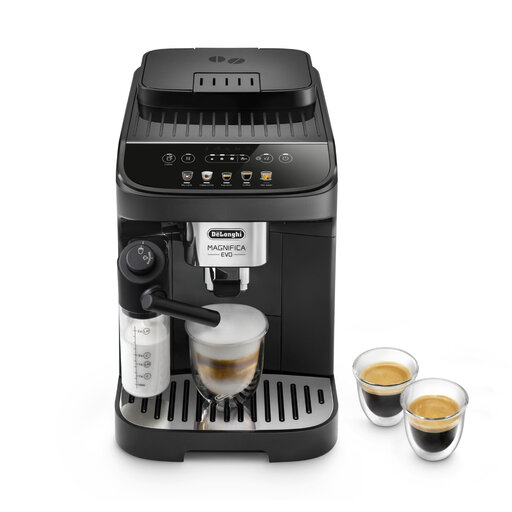 Image unavailable
De’Longhi Magnifica Evo LatteCrema ECAM290.61.B, black
If your household also enjoys milk-based drinks, check which recipes the ECAM290.61.B offers and how to maintain the LatteCrema system.
View on Joybuy
 Image unavailable
De’Longhi Magnifica Start ECAM220.21.WW, white
This bean-to-cup machine is worth considering if you regularly make coffee at home. If several people will use it, check whether the ECAM220.21.WW can make two cups at once and how it prepares milk-based drinks.
View on Joybuy
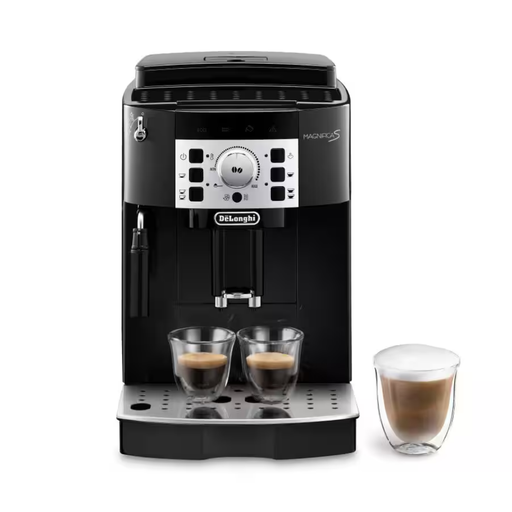 Image unavailable
De’Longhi Magnifica S ECAM22.140.B, black
If you want to make two coffees at once, Joybuy’s listing for the ECAM22.140.B specifies a two-cup function and a 1,8 L water tank. Also check how much space it needs and its maintenance instructions before choosing this bean-to-cup model.
View on Joybuy
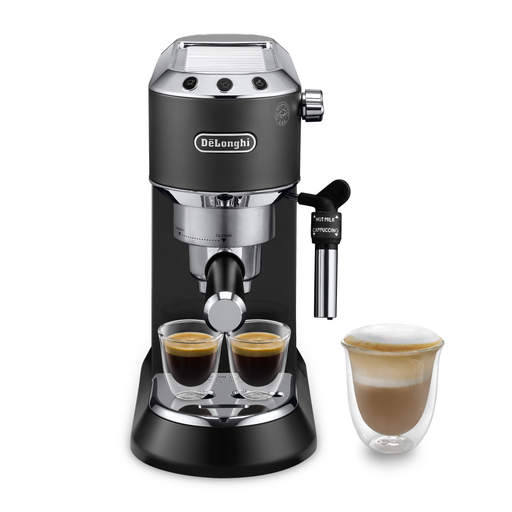 Image unavailable
De’Longhi Dedica Style EC685.BK, 15 bar, black
This manual espresso machine is suited to households happy to use a portafilter and clean the appliance after brewing. Check the water tank capacity of the EC685.BK variant before buying.
View on Joybuy
Frequently asked questions
Can you descale every coffee machine with white vinegar?
No. The eco-organisation ecosystem says a mixture of one-third white vinegar and two-thirds water can be used in a filter coffee machine, but advises against using vinegar in espresso, capsule or pod machines. In all cases, follow the instructions for your model and use the product recommended in them.
What happens to capsules thrown away with household rubbish?
According to ADEME, they enter the household waste stream and are either incinerated or sent to landfill. If you use Nespresso capsules, the brand says it has more than 2,000 collection points in France. Check that a convenient point accepts your capsules.
Does a new coffee machine bought from a retailer in France come with a legal guarantee?
Yes. The French Ministry of the Economy explains that the legal guarantee of conformity automatically applies to new goods sold by a business to an individual in France. Any manufacturer’s commercial guarantee is separate, so keep a copy of the product description and your proof of purchase.


