What sets the machines apart?
UFC-Que Choisir identifies four types of domestic espresso machine. When you use a machine repeatedly, the differences are as much about daily steps and consumables as they are about the drinks you can make. Check these details for the model you’re considering rather than assuming they apply to every machine in that category.
Capsules
Consider this if: you want to make coffee with minimal handling.
Bear in mind: capsules must be compatible with the machine’s system; their formats and ongoing costs depend on the products you choose.
Soft coffee pods
Consider this if: a pre-portioned serving suits your simple, straightforward routine.
Bear in mind: features, particularly those for milk, vary by model; check which pods are compatible too.
Portafilter
Consider this if: you want to use ground coffee and have a hands-on role in making it.
Bear in mind: dosing, emptying and cleaning the portafilter add steps to every brew.
Automatic bean-to-cup machine
Consider this if: you regularly make several coffees from beans and want to keep the preparation steps to a minimum.
Bear in mind: check how noisy the grinder is and what maintenance the model’s grinder, trays and internal circuits require.
| Criterion |
What to check |
Who it matters to |
| Consumables |
Compare compatible portions and, for beans or ground coffee, the dose used per cup. |
If I make several coffees a day, I want to know what my consumables will cost over time before choosing a system. Around 31% of consumers would put these ongoing costs at the top of their list of concerns. |
| Making several coffees in a row |
Check the water tank capacity, the steps between cups and, where available, tests of consecutive brews. |
When several people are waiting for coffee, I’d rather avoid refilling and extra steps between drinks. Speed and simplicity would come first for around 25% of consumers. |
| Drinks and settings |
Confirm the recipes and settings available on the exact model, as well as whether it has a milk system and what type. |
If people in our household alternate between espresso and milk-based drinks, I want a machine that suits those preferences without assuming that every model in a range has a milk function. Around 25% of consumers would prioritise this variety. |
| Maintenance and noise |
Check the manual for cleaning and descaling instructions; for a machine with a grinder, look for noise test results. |
I can put up with a few adjustments, but not a cleaning routine that doesn’t fit our day-to-day life or noise that’s disruptive in a shared home. These considerations would come first for around 19% of consumers. |
Machines for beans or ground coffee
These models let you compare two ways to make several coffees at home: automatic machines with grinders and a semi-automatic machine for ground coffee. Focus on the steps involved, the drinks you want and the maintenance required for each model.
 Image unavailable
Philips Series 2200 EP2230/10 with LatteGo
Worth considering if you want to make coffee with a grinder and have the LatteGo milk system. Before choosing this model, confirm which drinks it can make and what’s involved in cleaning the milk system.
View on Joybuy
 Image unavailable
HiBREW H16 with grinder and cappuccino system
Worth a look if several people want coffees and cappuccinos made by an automatic machine. The product description lists six coffee varieties; check that these match the drinks you want and read the cleaning instructions for the milk system.
View on Joybuy
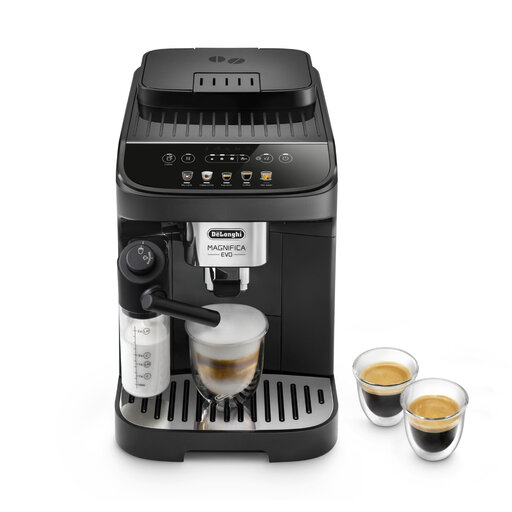 Image unavailable
De'Longhi Magnifica Evo ECAM290.61.B with LatteCrema
This automatic machine is worth considering if you want to make coffee from beans and use the LatteCrema milk system. Confirm which recipes are available on the ECAM290.61.B and what maintenance the milk circuit requires.
View on Joybuy
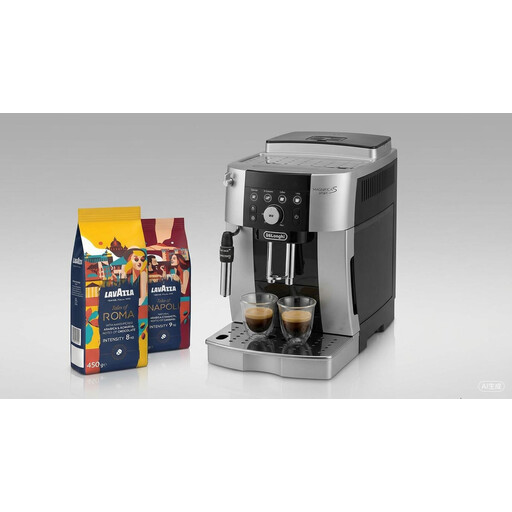 Image unavailable
Barrista Summer: DeLonghi Magnifica ECAM250.23.SB and Lavazza Tales of Napoli & Roma, 2 × 450 g
This bundle pairs an automatic espresso machine with two 450 g packs of Lavazza coffee beans. If you also want to make milk-based drinks, check how the steam wand on this model works and how to clean it before choosing the bundle.
View on Joybuy
 Image unavailable
HiBREW H13A, 3-in-1 semi-automatic espresso machine, 20 bar
Worth considering if you prefer making espresso from ground coffee and don’t mind the hands-on steps of a semi-automatic machine. The product description also mentions cappuccino and latte; check the H13A manual for the preparation and cleaning steps involved.
View on Joybuy
Frequently asked questions
How do you compare the cost of a grinder with that of a capsule machine?
Compare them based on the actual number of coffees you make over the same period. For capsules, use the cost of the compatible portions you plan to use; for beans, check the dose per drink before converting the cost per kilogram into a cost per cup. Include the maintenance consumables required for each model.
Is an automatic bean-to-cup machine always too noisy for home?
No. Noise varies from model to model and also depends on when you use the machine. UFC-Que Choisir’s test procedure looks at noise and vibration during grinding, rinsing and brewing, among other things. If noise matters in your household, look for a test of the model you’re considering.
Does maintaining an automatic machine involve nothing more than descaling?
No. You should also check what’s involved in cleaning the trays and water tank and, depending on the model, the brewing unit and cleaning programmes. If you make milk-based drinks, check the instructions for the milk system too.
What should you check before buying a capsule or coffee pod machine?
First, check which portions are compatible with your chosen model and whether their sizes suit the drinks you want to make. Then confirm the capacity and features of the exact model: a capsule or coffee pod machine won’t necessarily have a milk function.


