Which option suits your household?

Households where everyone makes coffee at different times

If people make coffee at different times, check the warm-up time, water tank capacity and how often you’ll need to empty the capsule or coffee grounds container. These factors are more useful than choosing a machine based only on the number of drinks it offers.

Households with limited worktop space

Measure the available depth and height, not just the machine’s width. Make sure you can also reach the water tank and remove any parts you need to clean. Que Choisir points out that a machine with a grinder generally takes up more space than a capsule machine or filter coffee maker.

Households keen to keep maintenance simple

Your choice depends on how much time you’re happy to spend rinsing, emptying containers and descaling. For machines with a grinder, Que Choisir highlights the need to clean the containers regularly and, depending on the model, the brewing unit too.

What should you compare for everyday use?

Start by deciding whether you make individual coffees or several cups at once, then check the steps involved and the maintenance required for each type of machine.

What to considerWhat to checkWhat I need
Usage and capacity Compare the water tank, capsule or coffee grounds container and warm-up time for the exact model. A two-cup function may be useful when several people want coffee at the same time. We make several coffees throughout the day, so I want to know how often I’ll need to refill the water and empty the containers.
Capsules Check which capsule format the machine uses, how easy it is to access the water tank and the capacity of the capsule container. Que Choisir notes that capsule costs can add up with regular use. I prefer individual coffees with minimal effort, as long as I’m happy to use capsules that fit the machine.
Soft coffee pods Check which pods are compatible and whether the machine can make two cups at once. Philips says the SENSEO Original Plus CSA210/50 can make one or two cups in under a minute once heated; this timing applies to this model. At certain times, we want to make coffee for two without preparing each cup separately.
Portafilter Check which coffee formats the machine accepts, how much space you’ll need to fit and empty the portafilter, and how to clean the accessories. De’Longhi says the Dedica Style EC685.R EX:4 accepts ground coffee and ESE pods. I’m happy to put in a few extra steps for each coffee if I want to use ground coffee or, on a compatible model, ESE pods.
Bean grinder Check how easy it is to access the containers, how to clean the brewing unit for your chosen model and the descaling instructions. Que Choisir says a grinder takes up more space and makes more noise than capsule machines or filter coffee makers. I want to make coffee from beans and am happy to take on the maintenance and extra space this machine needs.
Filter coffee maker Compare the jug capacity and the type of filter required. SEB says the Express CM430B00 has a 1,25 L jug, making 10 to 15 cups depending on the brand’s cup size. When everyone wants coffee at the same time, making several cups in one jug matters more to me than making espressos one after another.
Available space Measure the width, depth and height, then allow room to fill the water tank, open a lid and remove parts for cleaning. My worktop is narrow, so the machine needs to be easy to fill and use once it’s in place.
Maintenance and noise Check the manual for the model’s rinsing and descaling instructions. To compare noise levels, look for a test that covers the stages relevant to you: Que Choisir assesses rinsing, grinding and dispensing, among other things. I’d like to know how much regular maintenance is involved and how noisy the grinder is before choosing a machine I’ll use several times a day.
Consumables Find out which capsules, pods, beans or filters you can use, along with the maintenance products recommended in the manual. For capsules, check the recycling guidance where you live. I want to be able to find the right consumables and deal with any leftovers after each coffee.

What should you watch out for before buying?

  • Looking only at the machine

    If your household makes several coffees a day, the cost of your chosen consumables will be an ongoing expense. Que Choisir highlights the potential impact of capsule costs in particular.

    Compare the formats that are actually compatible with the machines you’re considering, and estimate how many capsules, pods, beans or filters you’ll need for your routine.

  • Measuring only the width

    A machine may fit on your worktop but still be awkward to fill if a wall or cupboard gets in the way of the tank or lid.

    Measure the width, depth and height, then check how to remove the containers and handle the portafilter, if there is one.

  • Underestimating the cleaning needed for a grinder or milk system

    Que Choisir notes that the coffee grounds and drip trays need regular cleaning and, depending on the model, so does the brewing unit. A milk system means extra cleaning too.

    Check the manual for the exact model to find out which parts are removable, how to rinse and descale the machine, and what the warranty covers.

  • Assuming capsules can be recycled without checking

    What’s convenient depends on the capsule and the recycling rules where you live. Nespresso recommends checking with your local authority before putting its capsules in the yellow recycling bin.

    Check your local guidance or find a suitable collection point before choosing this format. When an electric machine reaches the end of its life, ADEME outlines options including repair, donation and taking it to an electrical equipment recycling point.

A guide to some of the brands

Nespresso

The Original and Vertuo capsule machine ranges are designed for individual coffees. Check which capsule format suits the machine you choose.

  • For the Essenza Mini sold in France, Nespresso lists a 0,6 L tank, a 25-second warm-up time and dimensions of 8,4 × 33 × 20,4 cm.
  • A small tank may need refilling more often if you make coffee repeatedly. Nespresso says there are more than 2 000 collection points in France, but advises checking with your local authority to see if its capsules can go in the yellow recycling bin.

SENSEO / Philips

The SENSEO Original Plus CSA210/50 is a soft pod machine worth considering if one or two people want to make coffee at the same time.

  • Philips says this model can make one or two cups in under a minute once heated.
  • This timing doesn’t apply to all pod machines. Check which pods are compatible with the model you choose too.

De’Longhi

The Dedica portafilter machine and the Magnifica bean-to-cup machine show two different ways to make espresso at home.

  • De’Longhi says the Dedica Style EC685.R EX:4 is 15 cm wide, has a 1,1 L tank and works with ground coffee or ESE pods.
  • The listing for the Magnifica Start ECAM223.61.GB-second gives a 1,8 L tank and a coffee grounds container that holds 14 pucks. These capacities apply to this refurbished model, not the whole range.

SEB

The Express CM430B00 filter coffee maker lets you compare making a full jug of coffee with preparing individual espressos one after another.

  • SEB says its 1,25 L jug makes 10 to 15 cups, depending on the cup size used.
  • This capacity doesn’t refer to espresso cups. Check whether your chosen configuration uses paper filters or a permanent filter.

Coffee machines available on Joybuy

These models show the choice between a grinder, a portafilter and capsules for making coffee throughout the day. The Ninja also combines espresso and filter coffee functions. Check each machine’s configuration to make sure it suits the way you’ll use it.

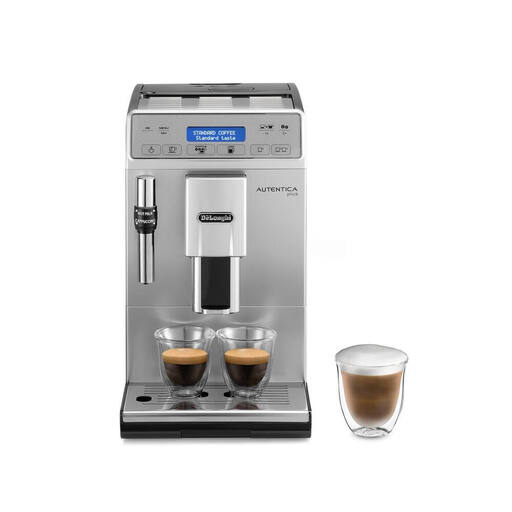
Grey De’Longhi Autentica Plus ETAM29.620.SB espresso machine with grinder

De’Longhi Autentica Plus ETAM29.620.SB with grinder

An option for making coffee from beans at different times of the day. Make sure you can reach the parts that need cleaning, and check the manual for this model’s maintenance instructions.

View on Joybuy
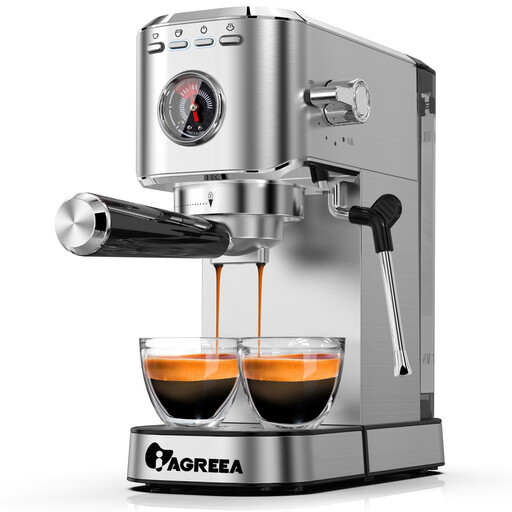
IAGREEA 20-bar espresso machine with 1,1 L tank and steam wand

IAGREEA 20-bar espresso machine, 1,1 L

This portafilter machine suits anyone who’s happy to put in a few extra steps between coffees. The product title mentions a steam wand and removable 1,1 L tank. Check the manual for compatible coffee formats and how to clean the accessories.

View on Joybuy
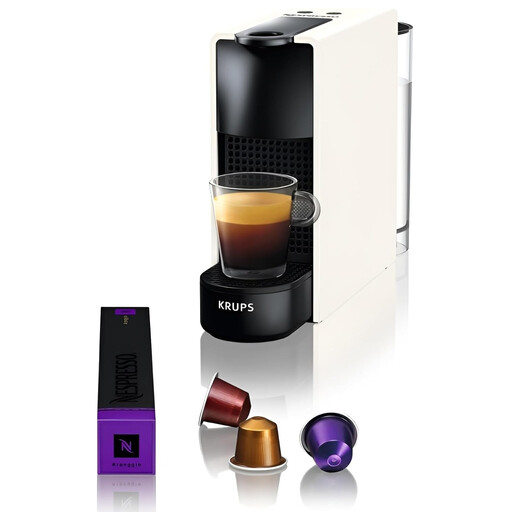
White KRUPS Nespresso Essenza Mini capsule machine with 0,6 L tank

White KRUPS Nespresso Essenza Mini, 0,6 L

A capsule machine for making individual coffees throughout the day. Bear in mind that its 0,6 L tank may need frequent refilling. Check the capsule format too, along with the collection or recycling options where you live.

View on Joybuy
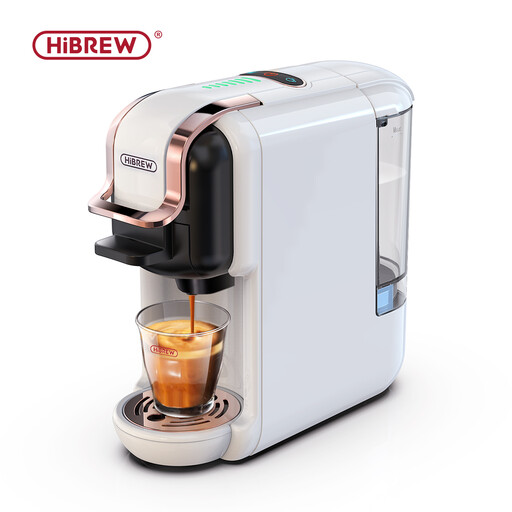
HiBREW H2B 5-in-1 coffee machine for hot or cold drinks

HiBREW H2B 5-in-1, hot and cold

This single-serve machine offers several ways to prepare coffee. Before choosing it for a particular consumable, confirm which adapters are included and which formats are compatible. Also check the tank capacity and the height of your cups.

View on Joybuy
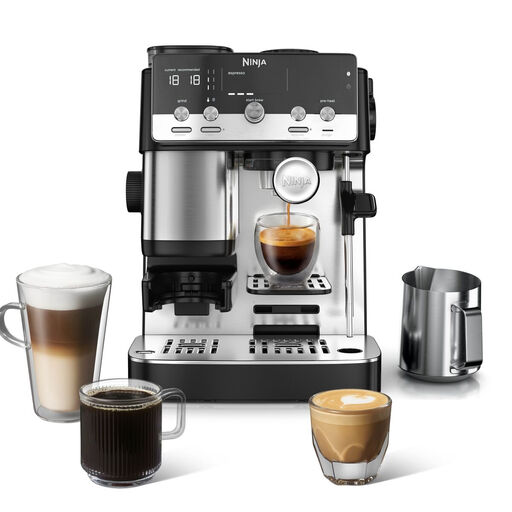
Ninja Luxe Café Mini ES301EU machine with grinder, espresso and filter coffee functions

Ninja Luxe Café Mini ES301EU, espresso and filter coffee

It combines a grinder, espresso and filter coffee functions in one machine. If you plan to make several cups or milk-based drinks, check the capacity, dimensions and exact frother configuration before choosing this model.

View on Joybuy

Frequently asked questions

Can coffee capsules go in the recycling bin in France?

ADEME says aluminium or plastic capsules should go in the recycling container for paper and packaging. Check the guidance for your address: Nespresso recommends checking with your local authority before putting its capsules in the yellow recycling bin, and also offers collection points.

What should you do with an electric coffee machine at the end of its life?

Depending on the machine’s condition, you could consider repairing it, donating it, reselling it or taking it to an electrical and electronic equipment recycling point, as ADEME advises. If you’re replacing a machine in France, the Ministry for the Ecological Transition says the ‘one-for-one’ take-back scheme applies when you buy a piece of equipment of the same type.

Do you need to clean a grinder after every coffee?

How often you need to clean it depends on the parts and the model; you don’t necessarily need to give it a full clean after every cup. Que Choisir notes that the coffee grounds and drip trays need regular cleaning. Follow your machine’s manual for instructions on the brewing unit, rinsing and descaling.

How can you assess how noisy a machine with a grinder is?

Compare tests of specific models rather than relying on the type of machine alone. Que Choisir says a grinder is noisier than a capsule machine or filter coffee maker. Its testing looks at rinsing, grinding and dispensing, which all make different noises during use.