What should you look for?
Start with the service you’ll need at peak times, then check what each setup will require from your team and your premises.
| Priority |
What to check |
What I need |
| Service at peak times |
Estimate how many drinks will be needed in each time slot, including during meetings. Ask how many drinks the model can prepare consecutively and how often its containers need filling or emptying. JURA says the GIGA X3c is designed for locations that use up to 150 cups a day; that daily figure alone doesn’t tell you how it will perform during an hourly rush. |
I want to serve busy breaks without having to keep interrupting service to refill the machine. |
| Drink selection |
Check the recipes available with your chosen setup, including hot water, milk or powders if you plan to serve those drinks. Consider the consumables and extra steps involved with each option. |
Is coffee enough for my space, or should I also offer tea, hot chocolate or milk-based drinks? |
| Daily maintenance |
Check the manual for cleaning cycles, emptying the containers and maintaining milk systems. Assign someone to carry out these tasks and make sure the necessary products are always available. |
With a small team, I need to know who will get the machine ready to serve each day. |
| Installation |
Check the space, power supply and connections required by the model. For the GIGA X3c, JURA’s documentation says the necessary on-site connections must be completed by an authorised specialist before it is put into service. |
If I choose a machine connected to the water supply, the premises must be suitable for the installation. |
| Supplies and repairs |
For beans, capsules, pods, powders or cleaning products, decide who will order and store the supplies. If you use a service provider, check the contract to see what is included in routine maintenance and repairs. |
I’d rather know who is responsible for what before a shortage of supplies or a breakdown interrupts service. |
Which brands should you consider?
These examples showcase professional setups worth considering; features and installation requirements depend on the model you choose.
JURA Professional
JURA offers a range of automatic coffee machines for professional use.
- According to JURA France, the GIGA X3c is designed for locations that use up to 150 cups a day.
- For this plumbed-in model, JURA’s documentation says an authorised specialist must prepare the on-site connections before the machine is put into service.
WMF Coffee Machines
WMF offers several professional coffee machines, including the 1500 S+.
- The range lets you consider different service setups to suit the drinks you want to offer.
- Check the features of your chosen model and the maintenance tasks involved with any milk or powder options.
Rhea Vendors
Rhea Vendors describes its Business Line as a range of hot-drink solutions.
- It’s worth considering if you want to offer more than just coffee.
- Before choosing a setup, check which drinks it offers, what supplies it needs and what maintenance tasks are involved.
A coffee machine option on Joybuy
This espresso machine with an integrated grinder is suited to a service focused on coffee. Before considering it for a coworking space, check its capacity at peak times and how you’ll organise maintenance when it’s being used by several people.
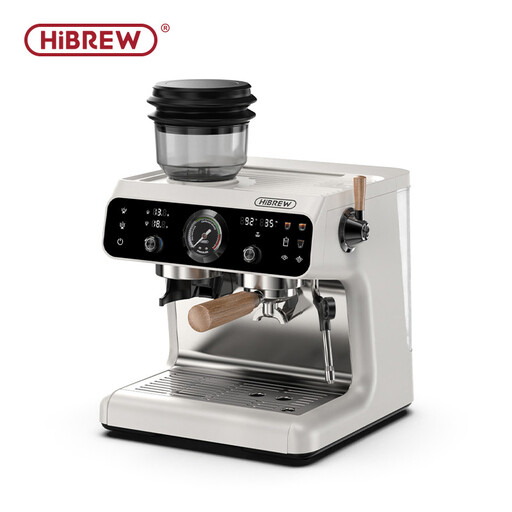 Image unavailable
HiBREW H7B Upgraded Dual Boiler Barista Pro
Worth considering for a space that wants to serve espresso: the product name indicates an integrated grinder with 30 grind settings and a dual heating system. Ask the seller how many drinks it can prepare consecutively, and what filling and cleaning tasks will be needed in your shared space.
View on Joybuy
Frequently asked questions
How do you estimate the capacity you need when visitor numbers fluctuate?
Count the drinks needed during your busiest periods, including meetings and events, rather than basing your estimate on member numbers alone. Then compare this demand with how many drinks the machine can prepare consecutively and how often it needs refilling. JURA says the GIGA X3c can make up to 150 cups a day, but that daily figure alone isn’t enough to assess its performance during an hourly rush.
Is a machine connected to the water supply suitable for every coworking space?
No. You’ll need a suitable location and the connections required for the model. For the GIGA X3c, JURA says an authorised specialist must complete the necessary on-site connections before the machine is put into service. Check that installation is feasible and confirm who is responsible before choosing this option.
Should you use fresh milk, milk powder or no milk at all?
Choose based on the drinks you plan to serve and the tasks your team can take on. Setups with milk or powder need extra supplies and maintenance, so check the manual and the exact features of the model on offer.
What does the CE marking on an electrical machine mean?
The DGCCRF points out that the CE marking is not a quality certification mark. You should also check the machine’s documentation, installation instructions and electrical specifications before buying.
What should you compare in a rental or maintenance offer?
Check who installs the machine, supplies consumables, carries out preventative maintenance and deals with breakdowns. Make sure the contract sets out response times and which responsibilities remain with your team.


