For making coffee at home every day, start by considering how hands-on you want to be and how much space you have: capsules or coffee pads for pre-portioned coffee, a portafilter if you want more involvement, or a grinder if you want to choose your beans while automating the brewing process. Before deciding, check which consumables are compatible and what maintenance the specific model needs. In particular, a grinder takes up space and makes noise while grinding.
Which option suits you?
A household that wants a quick brew in a small kitchen
If you want to handle as little coffee as possible and save worktop space, consider capsule and coffee pad machines. Measure the space you have in mind and check which consumables each model accepts.
A household that makes coffee often
If you want to choose your beans and start an automatic brew, compare machines with a grinder. Before settling on a model, consider its size, the noise made while grinding and the cleaning involved.
Someone who wants to be involved in making their coffee
A portafilter machine is worth considering if you prefer to choose your ground coffee, measure it out and take a hands-on approach to brewing. Remember, too, that you’ll need to empty and clean the portafilter after use.
What should you look for?
The four systems mainly differ in how coffee is prepared, how much choice you have and what you need to do each day. Que Choisir describes them as distinct ways of making coffee; the model you choose then determines the steps and consumables you’ll need.
Capsules
Worth considering: if you want a pre-measured portion with minimal handling.
Bear in mind: capsule choice depends on the machine’s exact system.
Soft coffee pads
Worth considering: if you also prefer pre-portioned coffee and can easily find pads that fit your machine.
Bear in mind: you’ll need to check pad compatibility and keep descaling the machine.
Portafilter
Worth considering: if choosing your ground coffee and being hands-on with the preparation matter to you.
Bear in mind: measuring the coffee, handling the portafilter and cleaning it are all part of the routine.
Bean-to-cup grinder
Worth considering: if you make coffee regularly and want to choose your beans while automating the brewing process.
Bear in mind: Que Choisir notes that these machines are noisier and take up more space than capsule systems, and also need maintenance.
| Consideration |
What to check |
Who is it for? |
| Ease of use and space |
Measure the machine with access to the open water tank; check the type of capsule or coffee pad it accepts. |
If worktop space is limited and you want coffee with minimal effort, ease of preparation comes first: around 30% of consumers prioritise a compact routine like this. |
| Choice of coffee |
Check which consumables are compatible and whether they’re available where you usually shop; for a grinder, check which beans you can use. |
Some consumers prioritise having the freedom to try different coffees without relying on a particular portion format. This matters most to around 30% of them. |
| Control over the brewing process |
Check the drinks available and the steps or settings you can actually adjust on the model. |
If measuring the coffee and getting involved in the brewing are part of the enjoyment, automation takes a back seat. This level of control is a priority for around 20% of consumers. |
| Maintenance and noise |
Check the descaling process, how easy it is to reach parts that need cleaning and how much space the machine requires. |
If grinding noise would be disruptive in your kitchen, or you want to keep daily cleaning to a minimum, these considerations are the main deciding factors for around 20% of consumers. |
Mistakes to avoid
-
Choosing a capsule machine without checking its system
Two capsule machines don’t necessarily accept the same formats. You could end up choosing a machine before finding out which capsules you’ll be able to use every day.
Make a note of the exact system specified for the model and check that you can find several compatible capsules where you usually shop.
-
Forgetting what you’ll need to do after each coffee
With a portafilter, you’ll need to remove the used coffee and clean the parts you’ve handled. A machine with a grinder also has containers to empty and maintenance cycles to manage.
Read the manual for the model you’re considering and choose a cleaning routine you can stick to regularly.
-
Underestimating the space and noise a grinder needs
Que Choisir notes that a machine with a grinder can take up more space and make more noise than a capsule system. You’ll need to allow room to access the water tank and clean the machine, as well as for the machine itself when closed.
Measure the space you have in mind, allowing for the machine to open, and think about when you’ll be using the grinder.
-
Assuming recycling solves the issue of single-serve portions
In France, ADEME’s recycling guidance depends on the material the capsules are made from. It also recommends limiting individual packaging where possible to reduce waste.
If this matters to you, compare systems that use ground coffee or beans. For capsules, follow the guidance for the material they’re made from.
Brands to know
Nespresso
The brand offers the Original and Vertuo capsule systems, among others. Check which system the machine uses before choosing your capsules.
- According to Nespresso France, Original is designed for espresso, while Vertuo also offers larger cup sizes.
- Check that the capsules are compatible with the specific system you choose.
SENSEO / Philips
SENSEO is a well-known option among soft coffee pad machines for single-serve brewing.
- The system makes it easy to find coffee pads that fit the machine you choose.
- Philips recommends descaling the relevant SENSEO machines every three months; check the manual for your model.
De’Longhi
De’Longhi’s bean-to-cup range includes machines that make coffee from whole beans.
- According to De’Longhi France, some machines in this range automate the brewing process once you’ve selected your drink.
- Available drinks and cleaning requirements vary by model, so check the product details and manual.
Machines for these needs
These Joybuy machines illustrate the four options covered here: soft coffee pads, capsules, a portafilter and a bean-to-cup grinder. Compare how each one makes coffee with the space and time you can give to your daily coffee routine.
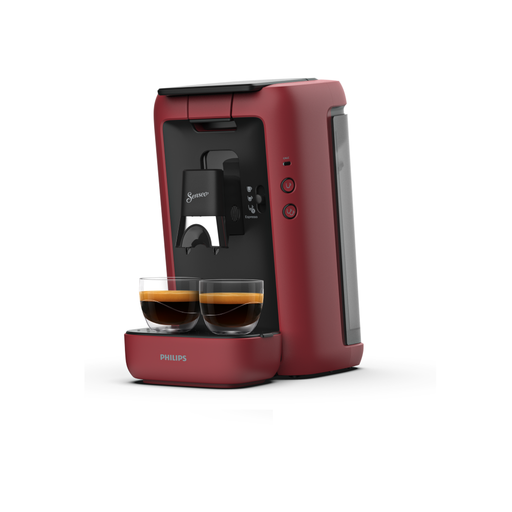 Image unavailable
Philips SENSEO Maestro CSA260/91, intense red
Worth considering if you want to use soft coffee pads. Check which pads fit this machine and whether they’re available where you usually shop. You’ll also need to descale it as indicated in the manual.
View on Joybuy
 Image unavailable
Philips Series 2200 EP2230/10 LatteGo
Worth comparing if you want to use whole beans in an espresso machine with a grinder. The name of this variant indicates that it has the LatteGo system. Before choosing, check which drinks it actually makes, its dimensions and the maintenance involved.
View on Joybuy
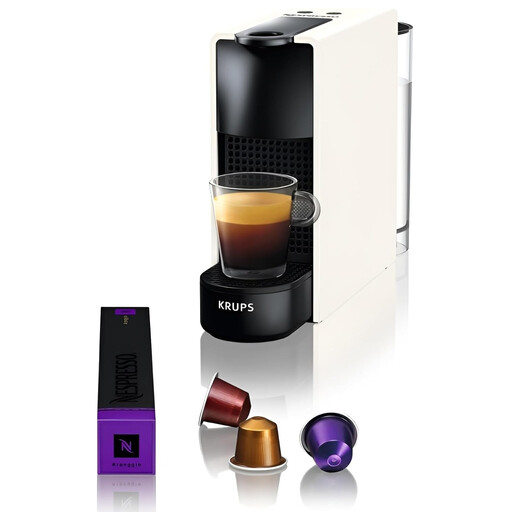 Image unavailable
KRUPS Nespresso Essenza Mini, white
Worth considering for capsule coffee from a machine called Essenza Mini. The product title lists a 0,6 L water tank and 1200 W power. Check which capsule system it accepts before choosing your consumables.
View on Joybuy
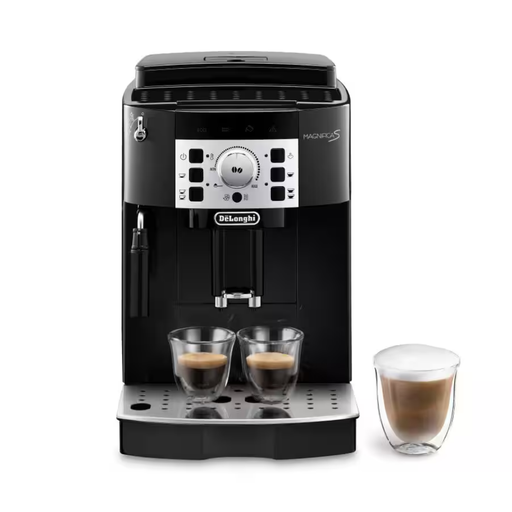 Image unavailable
De’Longhi Magnifica S ECAM22.140.B, black
Worth considering if you prefer an automatic espresso machine with a grinder. Before setting it up, check how much room you’ll need to use and maintain this model, as well as which accessories you’ll need for your preferred brew.
View on Joybuy
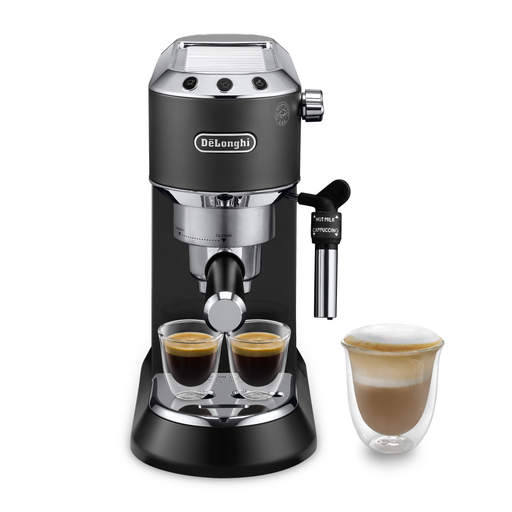 Image unavailable
De’Longhi Dedica Style EC685.BK, black
Worth considering if you want to be hands-on with a portafilter. The product title lists a rated pressure of 15 bars; check which filters and accessories suit the way you plan to use it. Also confirm the water tank capacity of the variant on sale before buying.
View on Joybuy
Frequently asked questions
Which system takes the least effort in the morning?
Capsules and soft coffee pads are the first options to consider if you want pre-portioned coffee. However, check which format the machine accepts: consumables aren’t interchangeable across all systems.
How often should you descale an espresso machine?
How often you need to descale depends on the water you use, how often you use the machine and the model itself. Que Choisir suggests that espresso machines need descaling every two to three months on average; Philips recommends every three months for the relevant SENSEO machines. Follow your machine’s manual and alerts.
How should you recycle coffee capsules in France?
According to ADEME, aluminium or plastic capsules should go in the recycling bin for paper and packaging. For paper capsules, check whether home composting or food waste collections are available where you live.
What should you do if a new machine bought from a retailer is faulty?
In France, the legal guarantee of conformity applies to goods sold by a business to a private individual, as the Ministry of the Economy explains. If your machine is faulty or doesn’t match the seller’s description, contact the seller and explain the problem. This guarantee is separate from simply changing your mind.


