Households making several espressos a day
If you want to move on from capsules, choose your own beans and make each drink with minimal effort, consider a bean-to-cup machine. Check that its maintenance routine also suits your lifestyle.


If you regularly make espresso from beans and want to keep hands-on preparation to a minimum, a bean-to-cup machine with a built-in grinder is a straightforward choice, as long as you’re happy with the maintenance, noise and space it requires. A portafilter machine with a separate grinder suits you if you’d like to take a more hands-on approach; capsules are a simple option, while a filter coffee machine is better suited to making larger quantities of longer coffee.
If you want to move on from capsules, choose your own beans and make each drink with minimal effort, consider a bean-to-cup machine. Check that its maintenance routine also suits your lifestyle.
An automatic milk carafe and a steam wand involve different steps. Before you choose, check how the model’s milk system comes apart and how to clean it after use.
UFC-Que Choisir notes that a bean-to-cup espresso machine is generally noisier and takes up more space than a capsule machine or filter coffee machine. Measure the space you have, and, if possible, listen to the model you’re interested in while it’s running.
First decide whether you want to make espresso from beans, and how hands-on you’d like to be. The drinks you usually make, cleaning requirements and available space will help you narrow down your choice.
Consider this if: you regularly make espresso from beans and want to get started with minimal effort.
Bear in mind: grinding is noisy, and the machine needs regular maintenance, as UFC-Que Choisir points out.
Consider this if: you want to grind, measure and tamp the coffee yourself.
Bear in mind: making coffee involves more steps, and you’ll need to clean both the grinder and the portafilter.
Stick with this if: ease of preparation matters more to you than choosing your own beans.
Check: which capsule or pod format the machine accepts.
Consider this if: you mainly serve longer coffee in several cups.
Bear in mind: it won’t meet the same need for making espresso as a machine with a grinder.
| What to consider | What to check | Who it matters to |
|---|---|---|
| How often you make coffee | Note how many drinks you make each week, then choose between grinding beans on demand and a simpler preparation method. | If several espressos are part of your daily routine, being able to make coffee regularly from beans becomes the main priority; around 31% of consumers would put frequency of use at the top of their list. |
| Maintenance, especially the milk system | Check the manual for instructions on cleaning the milk system and removable parts, and descaling the machine. | If I often make milk-based drinks, I want to know what to do after each use; around 25% of consumers would prioritise a maintenance routine that fits their day-to-day life. |
| Drinks and settings | Check which drinks the specific model offers, and decide whether you prefer automatic settings or a hands-on preparation method. | When people in a household have different preferences, being able to choose their drinks and how involved they are in making them matters particularly; around 25% of consumers would consider this a priority. |
| Noise and size | Measure the available space, including room to fill the machine and remove its trays. If noise is a deciding factor, listen to it running. | In a small kitchen or during early-morning coffee-making, I want a machine that fits without disturbing others; around 19% of consumers would make this their top consideration. |
Coffee grounds, milk residue and limescale all need regular attention. An automatic rinse cycle for one part of the system doesn’t, on its own, tell you how to clean all the components.
Check the model’s manual. Look for the steps to follow after making a milk-based drink, which parts to remove and how to descale the machine.
Remember to allow time for rinsing and the maintenance tasks specified for the machine.
UFC-Que Choisir notes that a bean-to-cup espresso machine generally takes up more space and makes more noise than a capsule or filter coffee machine. A noise-reduction feature on a particular model doesn’t mean you won’t hear it grinding.
Measure the space you’ll need to use and fill the machine. If noise is a key consideration, try to see the model you’re considering in action.
De'Longhi France offers several ranges of bean-to-cup espresso machines, from Magnifica models to ranges with a wider choice of drinks and more milk functions.
Philips France offers bean-to-cup espresso machines, some of which feature the LatteGo milk system.
Sage Appliances France offers portafilter machines for hands-on coffee-making, where you take care of the grind and tamping.
These models are for anyone looking for an automatic machine with a built-in grinder to make coffee from beans regularly. To compare them, pay particular attention to how they prepare milk-based drinks and the maintenance you’re happy to take on.
 Image unavailable
Worth considering if you want to make espresso and milk-based drinks from beans using the LatteGo milk system. Check the cleaning instructions and which accessories you’ll need.
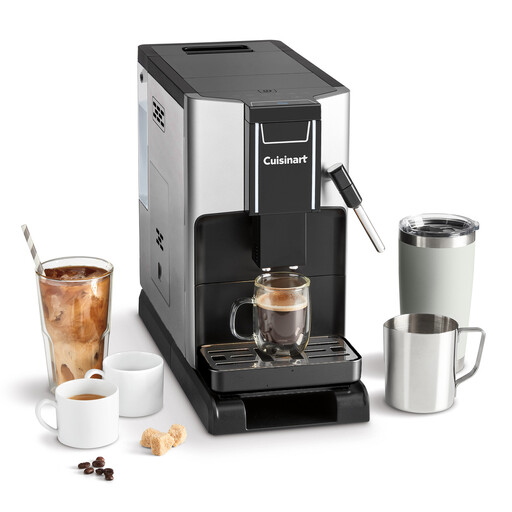 Image unavailable
Worth a look if you like to switch between different drinks: the product description lists four coffee options. If you plan to make milk-based drinks, check the steps involved in using and cleaning the steam wand.
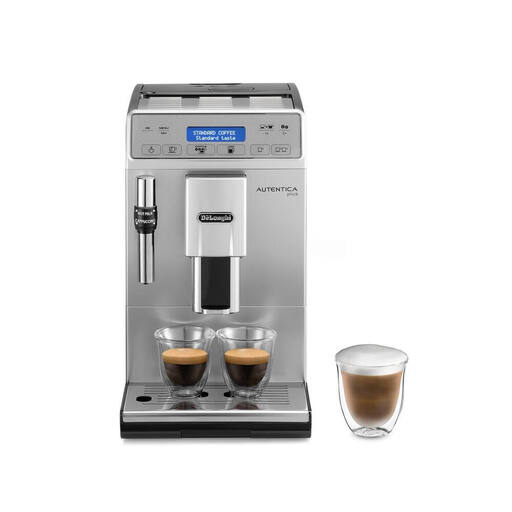 Image unavailable
Worth considering for regular espresso if you’re happy to froth milk manually with the steam wand. Check which drinks are programmed on this model before choosing it to suit your routine.
 Image unavailable
Worth a look if you want to make one or two cups from beans. You’ll need to froth the milk yourself with the steam wand and clean it afterwards. Check the dimensions too, to make sure it fits your space.
 Image unavailable
Worth a look if you want to make a variety of drinks from beans: the product description lists six coffee options and a milk system. Check the manual for the cleaning steps to follow after making a milk-based drink.
First, follow the alert and instructions for your model. UFC-Que Choisir gives every two to three months as a general guide, but you may need to adjust this depending on factors such as water hardness and how often you use the machine.
Clean the parts specified by the manufacturer for your model’s milk system. UFC-Que Choisir recommends rinsing a steam wand after every use. For a milk carafe, check the manual to see which parts need to be removed and how to wash them.
No. With a portafilter machine, you have more of a hands-on role in grinding, measuring and tamping the coffee. Choose this method if you enjoy those steps. If you mainly want to make espresso with minimal effort, consider a bean-to-cup machine instead.