Espresso lovers who want to choose their beans
If you often make short coffees and want to adjust their strength or size, compare bean-to-cup machines. You’ll also need to clean the trays and follow the model’s descaling instructions.


If you regularly make espresso and want to choose your beans and settings, consider a machine with a grinder if you’re happy to maintain it. Capsules or coffee pods make it easy to prepare a cup, but check that they’re the right format for your machine. A portafilter involves more hands-on preparation, while a filter coffee maker is better suited to a long coffee or several cups.
If you often make short coffees and want to adjust their strength or size, compare bean-to-cup machines. You’ll also need to clean the trays and follow the model’s descaling instructions.
A capsule machine could be a good fit. Check which system the model you’re considering accepts and, if space is limited, check its dimensions rather than assuming that all capsule machines are compact.
For your morning coffee or several cups to serve, compare filter coffee makers by carafe capacity and how much coffee you actually make.
UFC-Que Choisir identifies four types of espresso machine: bean-to-cup, capsule, soft coffee pod and portafilter. It’s also worth considering a filter coffee maker if you mostly drink long coffee.
| Criteria | What to check | What suits my needs |
|---|---|---|
| Drinks | Compare the drinks listed for the exact model: espresso, long coffee or milk-based drinks. Check whether making milk-based drinks requires an accessory or extra steps. | I mostly drink long coffees, or I want to make espresso and the occasional milk-based drink. |
| Everyday use | Look at how you fill the machine, use the controls and prepare one or more cups. With a portafilter, check the preparation and cleaning steps. | In the morning, I prefer a straightforward brew; at other times, I’m happy to adjust and prepare my coffee. |
| Coffee and consumables | Know the difference between beans, ground coffee, capsules and soft coffee pods. For a single-serve machine, check which format is accepted by that exact model. | I want to choose my own beans, or I’d rather use pre-portioned coffee that’s compatible with my machine. |
| Maintenance | Check the manual for instructions on cleaning the trays and, if fitted, the milk system, as well as descaling. UFC-Que Choisir notes that manual tasks and descaling time are among the factors to consider. | I can spend time on maintenance, or I want to minimise the steps needed after each coffee. |
| Capacity and space | Check the dimensions and water tank capacity, and the carafe capacity for a filter coffee maker. Consider these in relation to how many cups you make at a time. | I make one cup at a time, or several people in my household drink coffee. |
| Recycling capsules | In France, ADEME advises putting aluminium and plastic capsules in with paper and packaging for recycling. For paper capsules, check which composting or food waste collection options are available near you. | If I use capsules, I want to know where to take the ones I use at home. |
For a household that makes coffee often, consumables become a regular part of using the machine.
Estimate how many cups you make each week and compare the coffee formats you’ll actually use.
The trays, any milk system and descaling may each need separate attention. UFC-Que Choisir includes these tasks in its assessment of maintenance.
Check the manual for your model to find out which parts need cleaning, what needs to be done by hand and what the descaling instructions are.
These are different formats for different systems. If you choose consumables without checking your machine, they may not work with it.
Before choosing your consumables, check which format is explicitly listed as compatible with your machine’s model number.
Recycling instructions depend on the material. ADEME advises recycling aluminium and plastic capsules with paper and packaging.
Check what your capsules are made of. For paper capsules, see whether home composting or a food waste collection service is available near you.
De'Longhi offers bean-to-cup machines as well as traditional espresso machines.
Philips offers automatic bean-to-cup machines, including models with the LatteGo system.
Krups also offers automatic espresso machines.
These models cover four of the uses discussed here: bean-to-cup, soft coffee pods, capsules and portafilter espresso. Start by choosing the type of coffee and preparation method that suit you.
 Image unavailable
This bean-to-cup machine is for anyone who wants to make coffee from beans. If milk-based drinks are important to you, check which recipes are available on this model and what’s involved in maintaining the LatteGo system.
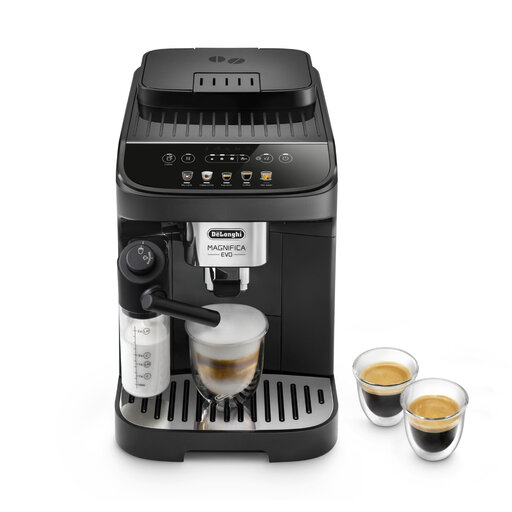 Image unavailable
This automatic bean-to-cup machine could suit a household that makes coffee from beans and is also considering milk-based drinks. Check which recipes are available on the ECAM290.61.B and what’s involved in cleaning the carafe.
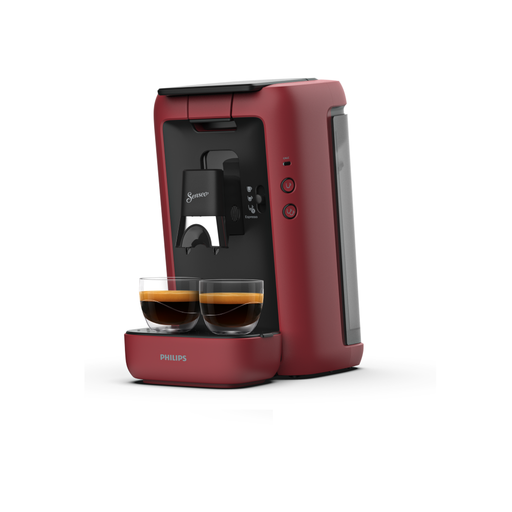 Image unavailable
This Senseo model uses soft coffee pods rather than beans in a grinder. Check that the pods you’re considering are compatible with the CSA260/91.
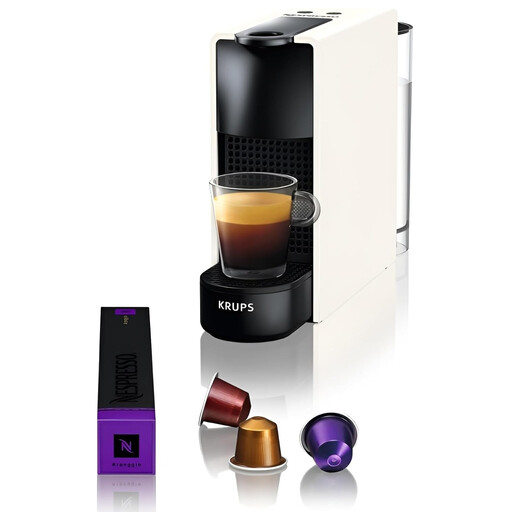 Image unavailable
This capsule machine is worth considering if you want to make a single cup with minimal effort. The product title lists a 0,6 L tank; check which capsule system is compatible before choosing your consumables.
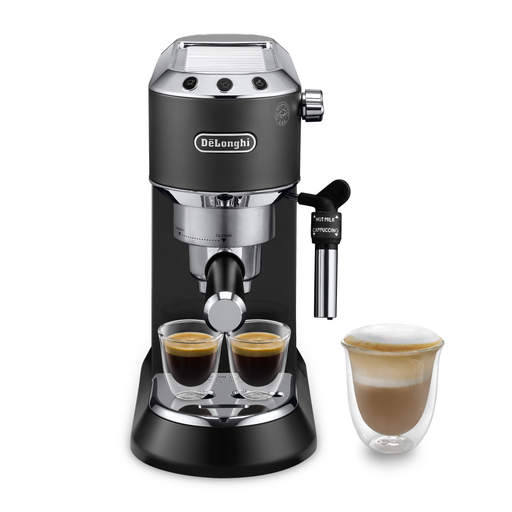 Image unavailable
This portafilter machine could suit you if you prefer to make espresso by hand. Check which filters are included and the tank capacity for the EC685.BK to see whether it fits your routine.
No. UFC-Que Choisir says most brands accept only one type of capsule. Check which system is compatible with your machine before choosing your consumables.
Yes, descaling is part of its maintenance. The process varies by model. De'Longhi says that, for some of its grinder machines, how often you need to descale depends in part on water hardness. Follow the manual and any alerts on your machine.
ADEME advises putting aluminium and plastic capsules in with paper and packaging for recycling. Paper capsules can be composted at home or taken to a shared composting scheme or food waste collection service, if one is available near you.
Consider having it repaired or donating it if it’s in suitable condition. Ecosystem also offers ways to find out where you can have an electrical appliance repaired, donate it or recycle it.