To make several coffees at home, start by thinking about which everyday steps you’re happy to take. Capsules and coffee pods offer pre-measured portions, a portafilter gives you more hands-on control, while a bean-to-cup machine grinds the beans and may offer saved recipes. If you’ll be making one drink after another, or milk-based drinks are important, check each model’s capacity, rinsing interruptions, milk system and performance when serving drinks consecutively. The type of machine alone won’t tell you this.
Which option is right for you?
Households serving a variety of coffees
If short and long coffees, along with milk-based drinks, are served one after another, look at capacity and possible interruptions as well as the list of recipes. Que Choisir’s bean-to-cup machine testing, for example, includes checking how consistent the volume is between successive cups.
People looking to move on from pre-measured portions
If you’re considering ground coffee or beans instead of capsules or coffee pods, compare the preparation steps, maintenance and consumables. For capsules, ADEME describes a dedicated collection scheme, so check whether there’s a collection point near you.
Fans of personalised drinks
A portafilter is for people who want to get hands-on with preparation and, depending on the model, froth their own milk. Some bean-to-cup machines, on the other hand, let you recall saved settings. Philips, for example, advertises four profiles on its 5400 Series LatteGo.
What should you look for?
Capsules
Worth considering: if you prefer pre-measured portions and want to keep the steps involved in making each coffee to a minimum.
Bear in mind: you’ll need to buy compatible capsules and use a suitable collection scheme for used ones.
Soft coffee pods
Worth considering: if a coffee-pod routine suits you and the drinks on offer match your household’s tastes.
Bear in mind: you’ll be limited to compatible pod formats and need to descale the machine as recommended.
Portafilter
Worth considering: if you want to work with ground coffee and, with a suitable steam wand, froth milk by hand.
Bear in mind: you’ll need to measure the coffee, handle the portafilter and clean it between preparations.
Bean-to-cup machine
Worth considering: if you regularly use coffee beans and want to recall recipes or settings, where the model offers them.
Bear in mind: you’ll need to carry out the rinsing, cleaning and descaling required by the machine.
If you’ll be serving several cups, compare specific models too. A ‘two-cup’ function alone doesn’t tell you how well a machine handles drinks served one after another.
| What to consider |
What to check |
Who is it for? |
| Serving drinks one after another |
Water capacity and test results for several consecutive cups. Que Choisir, for example, measures how consistent the volume is in its bean-to-cup machine tests. |
When several people are waiting for different coffees, I want to avoid repeated refills and adjustments. Around 33% of consumers prioritise serving drinks one after another. |
| Consumables |
The capsule, coffee-pod or filter formats accepted by the model, and whether the system can use ground coffee or beans. |
If I change systems, I want to be able to find and use the consumable that suits me. Compatibility is the main concern for around 25% of consumers. |
| Maintenance and waste |
Descaling procedure, cleaning the milk system and, for capsules, whether a local collection scheme is available. |
When I make coffee regularly, I want a cleaning routine I can stick to and a practical way to deal with used capsules. Around 25% of consumers prioritise these regular tasks. |
| Settings and milk |
Whether it has a steam wand or milk system, and which settings and profiles it actually offers. |
To tailor my coffees and sometimes work on the milk froth, I prefer to choose how hands-on I want to be. Around 17% of consumers put this level of control ahead of other criteria. |
Things not to overlook
-
Assuming ‘two cups’ means you can serve several drinks in a row
The ability to prepare two cups doesn’t necessarily tell you about preheating, rinsing or how consistent subsequent coffees will be. Que Choisir checks how consistent the volume is between successive cups in its bean-to-cup machine tests.
Look for tests involving consecutive servings and check the capacity of the model you’re interested in.
-
Underestimating the cleaning needed for the grinder or milk system
Even a machine that makes a drink at the touch of a button may need its trays rinsed and its brewing unit or milk system maintained, depending on its design.
Check the model’s manual to find out which parts need cleaning and how to descale it.
Rinsing and cleaning the milk system add time to your routine after making drinks.
-
Assuming all capsules can be recycled in the same way
ADEME says that capsules returned through a dedicated collection scheme can be sent for suitable processing. If they’re thrown away with household rubbish, they may be incinerated or sent to landfill.
Before choosing this system, check how the capsules you’ve chosen should be disposed of and follow your local council’s guidance.
Brands to know when comparing systems
Nespresso
Worth considering if you’re looking at a capsule machine and want to arrange collection of used capsules.
- Nespresso says it provides collection points in France for its capsules.
- Whether you can put capsules in the yellow recycling bin depends on local guidance; this doesn’t apply to every capsule or every local authority area.
Philips / SENSEO
Consider the SENSEO soft coffee-pod range and Philips LatteGo bean-to-cup machines separately.
- Philips provides descaling instructions for SENSEO; its 5400 Series LatteGo offers 12 drinks and four profiles.
- The profiles and milk system mentioned apply to the 5400 Series, not all Philips or SENSEO machines.
De’Longhi
A brand with both manual portafilter and automatic bean-to-cup machines, which offer different ways to prepare coffee.
- De’Longhi says its Classic EM450.M has a portafilter, an adjustable Cappuccino System and ESE compatibility.
- These features apply to this specific model; check the features of any other version before choosing.
Machines available on Joybuy
These machines offer two different ways to make coffee for your household: a bean-to-cup machine or a portafilter. Compare their controls and milk systems, then check the capacity and performance when making successive cups for the model you’re considering.
 Image unavailable
HiBREW H16 with grinder and milk system
Worth considering if you want to make coffee from beans and milk-based drinks with an automatic machine. The product name mentions six coffee varieties and a touchscreen. If you’ll be making coffee for several people, check the capacity of the containers, the maintenance steps and how it performs when making successive cups.
View on Joybuy
 Image unavailable
HiBREW H13A semi-automatic machine with milk frother
For a household that wants to make coffee from ground beans and include milk-based drinks. The product name describes a semi-automatic machine with a milk frother. Check the milk container’s capacity, how to clean it and the machine’s pace if you’ll be making several drinks in a row.
View on Joybuy
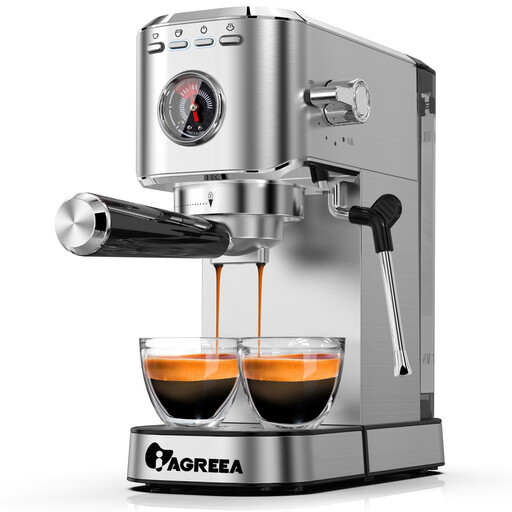 Image unavailable
IAGREEA with 1.1 L tank and steam wand
A portafilter option if you want to get hands-on with preparation and use a steam wand to froth milk. The product name specifies a removable 1.1 L tank and one- or two-cup preparations. Separately check how consistent successive extractions are and which filters it accepts.
View on Joybuy
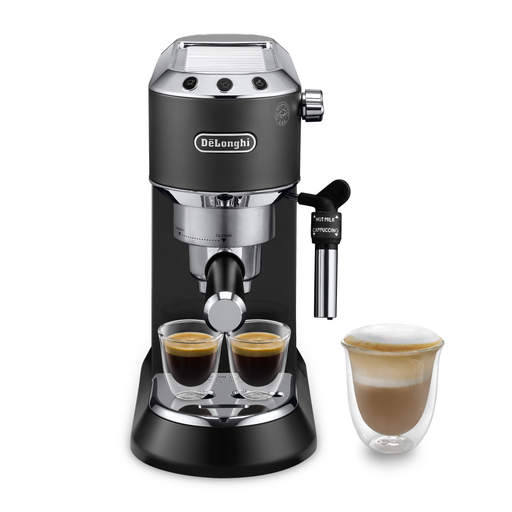 Image unavailable
Black DE'LONGHI Dedica Style EC685.BK
Worth considering if you’re happy to handle a portafilter to make coffee and milk-based drinks. The product name specifies a pressure of 15 bar. Confirm the tank capacity for this version before buying: the available details in the title and description differ. Also check how quickly it can make successive coffees, and allow the steam wand to cool before cleaning it.
View on Joybuy
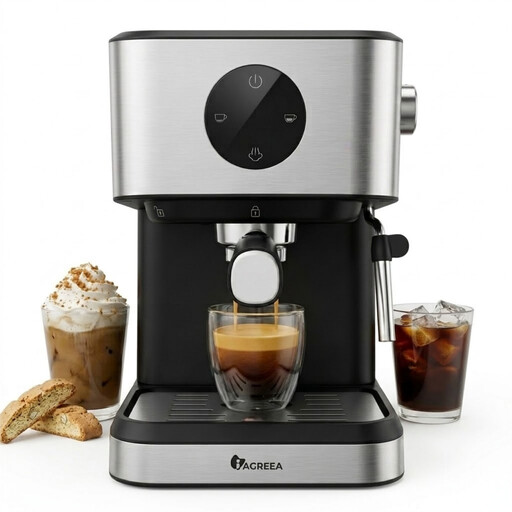 Image unavailable
IAGREEA with 50 Oz tank and steam wand
For making espresso with a portafilter and frothing milk by hand. The product name specifies a 50 Oz tank and a steam wand. Check the manual for information about filters and maintenance, and look for results specific to this model if you need to make several drinks in a row.
View on Joybuy
Frequently asked questions
Which machine should I choose for making several coffees in a row?
Choose a model whose capacity and performance suit your routine, rather than relying on its category or a ‘two-cup’ function alone. For bean-to-cup machines, Que Choisir tests factors including volume consistency, temperature, flow rate and preheating. Also look at the rinsing requirements and milk system of the model you choose.
Can all espresso machines make milk-based drinks?
No. Check whether the specific model has a steam wand, milk jug or other milk system, and how it works. De’Longhi says its Classic EM450.M has an adjustable Cappuccino System, while Philips lists a LatteGo system on its 5400 Series. These features aren’t available on every machine from either brand.
What maintenance should I expect when switching from capsules to a bean-to-cup machine or portafilter?
Expect to descale the machine and clean the parts you use. Depending on the machine, you may also need to clean the brewing unit, steam wand or milk system. Check the manual before switching systems: Que Choisir recommends regular maintenance for bean-to-cup machines, while Philips also provides descaling instructions for SENSEO.


