What sets these machines apart?
First, decide how much you want to do for each cup. Then check the everyday considerations: consumables, available space and cleaning. The four machine types identified by Que Choisir suit different priorities.
Capsules
Worth considering: if you want pre-portioned coffee with minimal handling and compatible formats for your chosen system.
Bear in mind: you’ll need to buy compatible capsules regularly and sort them according to their material.
Soft pods
Worth considering: if you prefer a simple way to make a long or strong coffee; some SENSEO models make one or two cups.
Bear in mind: the pod format required by the machine and the adjustment options available on your chosen model.
Portafilter
Worth considering: if you want to fill and tamp the ground coffee yourself before brewing.
Bear in mind: there are more steps involved, and you’ll need to clean the portafilter after use.
Bean-to-cup grinder
Worth considering: if you want to grind beans on demand without preparing every cup by hand.
Bear in mind: Que Choisir notes that these machines take up more space and make more noise than capsule systems. You’ll also need to clean the parts specified by the manufacturer.
| Consideration |
What to check before buying |
Who is it for? |
| Speed and simplicity |
Check the steps involved before and after making a cup, as well as the drink formats supported by the model. |
I want to make my everyday coffee without measuring or tamping, and get on with my day quickly. Around 29% of consumers prioritise keeping the steps to a minimum. |
| Running costs and waste |
Compare the consumables that work with each machine and any cleaning products required. Check how to sort the format you choose. |
If I drink several coffees at home, I want to keep ongoing costs and packaging waste down. This is a priority for around 29% of consumers. |
| Control over preparation |
See what steps and settings the model actually allows, and what cleaning is needed after brewing. |
I’m happy to spend time filling and tamping ground coffee so I can have more say over my cup. Around 21% of consumers put this hands-on control first. |
| Beans and automation |
Measure the space available, check what level of noise you can live with and make sure you can access the parts that need cleaning. |
I want to use beans ground on demand without doing the whole process by hand. For around 21% of consumers, this is the main consideration. |
Machines for different needs
These Joybuy machines show three ways to make coffee at home: capsules, a portafilter and a grinder machine. Compare how each one works before choosing a model to suit your routine.
 Image unavailable
Philips Series 2200 EP2230/10 LatteGo bean-to-cup espresso machine, glossy black
Worth considering if you want to make coffee from beans with fewer steps than a portafilter machine, and are happy to maintain a grinder.
If a choice of drinks matters to you, check which options are available on this version.
View on Joybuy
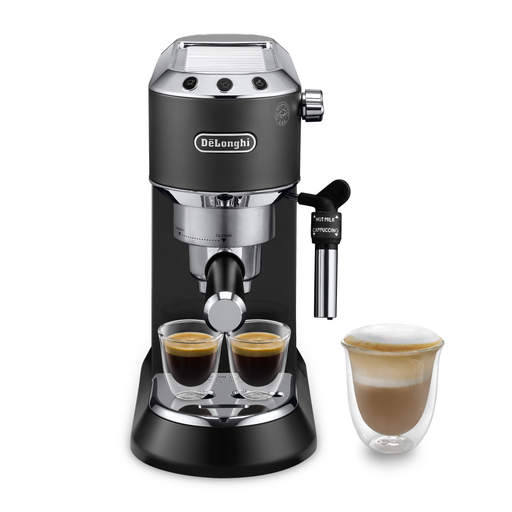 Image unavailable
De’Longhi Dedica Style EC685.BK portafilter espresso machine, black
Worth considering if you want to be involved in making your espresso rather than leaving the entire brewing process to an automatic machine.
Check the reservoir capacity for this version before buying, and remember to factor in the cleaning involved with a portafilter.
View on Joybuy
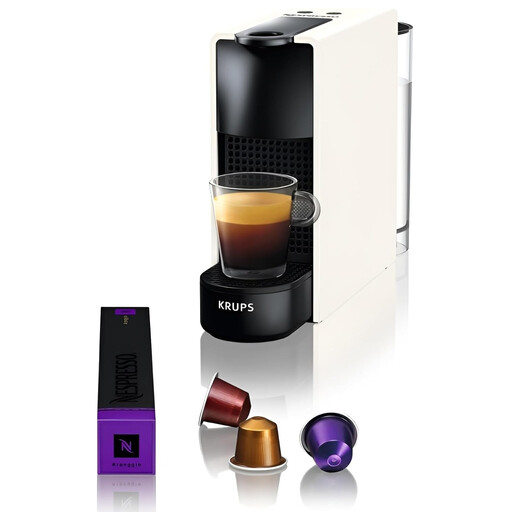 Image unavailable
KRUPS Nespresso Essenza Mini capsule machine, 0,6 L, 1 200 W, white
Worth considering if you prefer ready-to-use portions of coffee for your everyday routine.
The reservoir is listed as 0,6 L and the power as 1 200 W. Check that the capsules you plan to use are compatible with this machine’s system.
View on Joybuy
 Image unavailable
De’Longhi Magnifica Start ECAM220.21.WW bean-to-cup espresso machine, white
Worth considering if you want to use beans without filling and tamping a portafilter for every coffee.
Allow time to clean the machine’s components and check its dimensions against the space you have available.
View on Joybuy
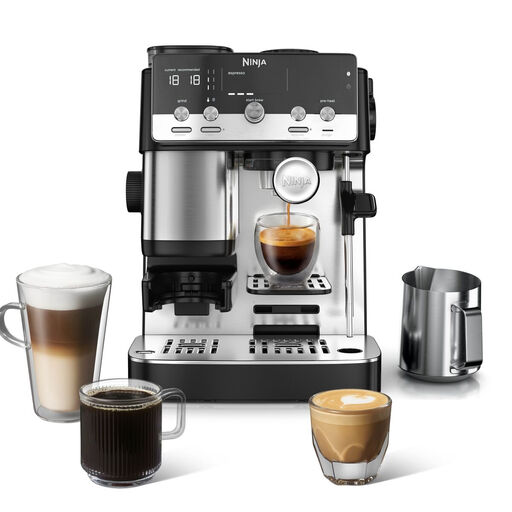 Image unavailable
Ninja Luxe Café Mini ES301EU, 2-in-1 espresso and filter coffee machine with grinder
Worth considering if you want espresso and filter coffee from one grinder machine, and are happy to clean the portafilter.
If you enjoy milk-based drinks, check how the milk system works on the version being sold before buying.
View on Joybuy
Frequently asked questions
Which machine takes the least effort in the morning?
Start by comparing capsule and soft-pod machines, which use pre-portioned coffee. A grinder also automates preparation from beans, but you’ll need to clean its trays and other components, depending on the model.
Do capsules cost more for everyday coffee?
Que Choisir says capsules and pods cost more per coffee than beans or ground coffee. To decide what’s right for you, compare the consumables compatible with the machines you’re considering and how much coffee you actually make.
How often should you descale an espresso machine?
Follow the instructions for your model, taking into account your water hardness and how often you use it. Que Choisir suggests descaling on average every two to three months, depending on these conditions. Philips recommends doing so roughly every three months for SENSEO machines, or more often if your water is very hard.
Where should you dispose of aluminium or plastic coffee capsules?
In France, ADEME advises putting aluminium or plastic capsules in the recycling bin, bag or container for paper and packaging. For capsules made from other materials, check the guidance for the consumable you use.
How can you plan for maintenance and repairs for a specific model?
Before buying, check the reference numbers for essential parts, the maintenance tasks described in the manual and the repair terms for the exact model. The availability of maintenance accessories for a range doesn’t guarantee that every part is available for every machine in it.


