Households serving several coffees at once
If you’re making a pot, compare how many cups the machine can actually brew, the measurements and the type of carafe. A keep-warm function may also be useful if everyone helps themselves at different times.


Start by thinking about the drinks you enjoy and how many cups you need to make. A filter coffee machine is ideal for brewing a pot, while a bean-to-cup machine grinds beans and makes coffee to order. A manual espresso machine is a good choice if you’re happy to measure and tamp ground coffee. Capsules and pods mean fewer steps, but you’ll need to check which formats the machine accepts, how much they cost to use and how to dispose of them afterwards.
If you’re making a pot, compare how many cups the machine can actually brew, the measurements and the type of carafe. A keep-warm function may also be useful if everyone helps themselves at different times.
If you regularly make cappuccinos or milky coffees, check whether the machine has a steam wand, an automatic milk system or uses milk portions. Check which drinks the specific machine can make and what cleaning it requires.
Portion-based systems save you measuring out ground coffee, while some automatic grinders can make a drink at the touch of a button. You’ll still need to dispose of used portions in one case, or empty the trays and maintain the machine in the other.
Start with the drinks you make most often, then compare each type of machine against the amount you need to make, the daily steps involved and the consumables it requires.
| What to consider | What to check | Think about how you’ll use it |
|---|---|---|
| Drinks and preparation | Check which drinks the specific model can make. For milk-based drinks, see whether it needs a steam wand, a milk system or compatible milk portions. With a manual espresso machine, you put ground coffee into a portafilter. | I want to enjoy different coffees and sometimes make a milky drink, but I won’t assume that every bean-to-cup or espresso machine offers the same recipes. |
| Number of cups | Compare how much the machine makes per brew, the usable capacity of the water tank and trays, and the carafe and any keep-warm function. A large water tank doesn’t necessarily mean the machine can brew a whole pot at once. | A carafe appeals to me if I’m serving several people at once. For one or two drinks made to order, I’d look at how quickly the machine can make them one cup at a time. |
| Cleaning and maintenance | Check the manual for descaling instructions and how to clean parts that come into contact with coffee or milk. De’Longhi says the descaling frequency for its bean-to-cup espresso machines depends, among other things, on water hardness. | I’d like to know which parts I’ll need to empty, rinse or clean after making my usual drinks, especially if they contain milk. |
| Consumables | Check which formats are compatible, whether coffee or portions are readily available, which filters you’ll need and what cleaning products are required. For used capsules, also check your local recycling guidance or the brand’s collection schemes. | I want to compare the cost of the machine with the cost of consumables for the number of cups I usually make, without forgetting the space needed for used portions. |
Depending on the system you choose, you’ll need compatible coffee or portions, and sometimes filters and cleaning products too.
Compare the cost of the consumables you’d buy over the same period, based on the number of drinks you usually make.
Remember to factor in any filters and descaling products required by the model.
A steam wand and an automatic milk system may need different cleaning steps after you make a milky drink.
Check the manual for the model you’re considering to find out which parts need rinsing or cleaning, and when.
Capsules and pods aren’t interchangeable across all systems. How you sort or recycle capsules also depends on their material and the collection options available.
Check which formats the machine accepts, what drinks it can make and the recycling guidance in your area.
A collection point may mean an extra trip, on top of your regular portion purchases.
The water capacity alone won’t tell you how many drinks the machine can serve at the pace you want, or whether it can make a whole pot.
Make a note of how many black coffees and milky drinks you serve at once, then compare the tray capacities, the number of cups the machine can make and the steps needed between drinks.
A brand worth looking at when comparing automatic bean-to-cup espresso machines with manual espresso machines.
A useful brand to consider when looking at capsule machines and their consumables in France.
A brand to consider for pod machines and drinks made one cup at a time.
A brand to consider when comparing filter coffee machines with different capacities and types of carafe.
These models illustrate two ways to make coffee: using beans in an automatic machine, or making espresso from ground coffee with more manual steps. If you want to brew a pot or use portions, use the criteria above rather than assuming these models work in the same way.
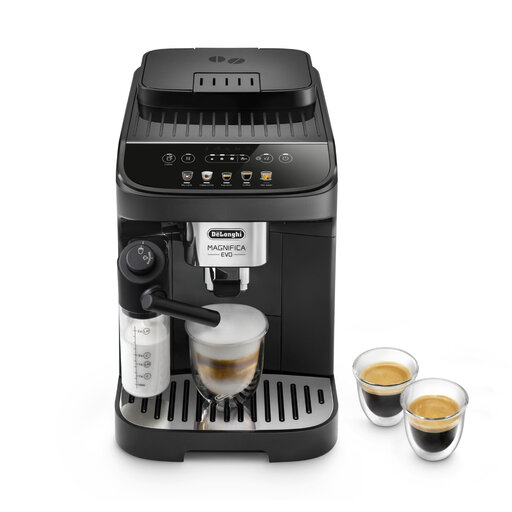 Image unavailable
For making coffee to order with an automatic bean-to-cup machine. This version is called LatteCrema; check which drinks it makes and how to clean the milk system if milky recipes are important to you.
 Image unavailable
For automatic coffee made from beans, with a milk system mentioned in the model name. It’s advertised as offering six types of coffee; check the full list of drinks and the care instructions before choosing it for milky drinks.
 Image unavailable
For making espresso with an integrated grinder. De’Longhi’s product page for the ECAM22.140.B version also says it can use pre-ground coffee, has a 1,8 L water tank and a grounds container with capacity for 14 coffees. If you use the steam wand for milk, remember that it needs to be handled and cleaned.
 Image unavailable
For making espresso from ground coffee with a semi-automatic machine. The model name also mentions milk frothing; check which drinks it can make and how to clean the milk system if you plan to use it regularly.
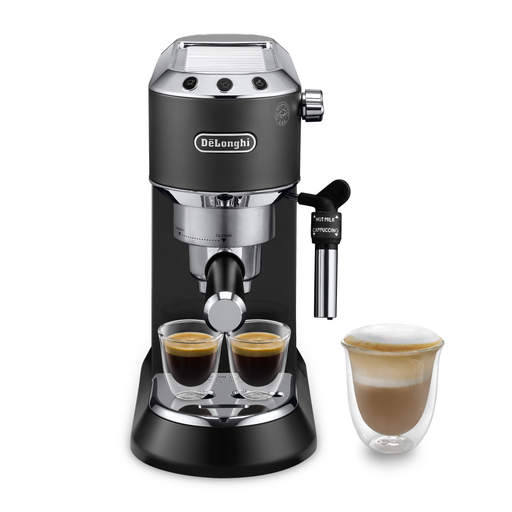 Image unavailable
For making espresso with a portafilter, giving you hands-on control over every drink. If you also want to use a steam wand or ESE pods, check which accessories are compatible and how to clean this particular version.
A filter coffee machine is a good choice if you want to brew a pot. Check how many cups it can actually make, the type of carafe and whether it keeps the coffee warm. If you’ll be serving coffees one after another, compare the water tank and trays of the machine you’re considering instead.
No. An integrated grinder doesn’t guarantee that the machine has a milk system. Check which drinks the specific model can make, whether it has a steam wand and what cleaning it requires.
Follow the manual for descaling and cleaning the machine’s parts. De’Longhi says the descaling frequency for its bean-to-cup espresso machines depends on water hardness. Trays, portafilters and milk systems also need their own cleaning steps, which vary by machine.
ADEME advises putting aluminium or plastic capsules in the recycling collection for paper and packaging; some brands also offer a collection scheme. Check local guidance and the manufacturer’s instructions for the material your capsules are made from.