Households making several coffees a day
If you often make espressos at home and want to try different beans without switching to capsules, a grinder is worth considering. You’ll also need to factor rinsing and descaling into your routine.


If you make several espressos at home each day, a machine with a grinder is a good choice if you want to choose your own beans and are happy to make room for it, put up with the grinding noise and maintain it regularly. A capsule machine is better suited to smaller spaces; a portafilter machine involves more hands-on preparation, while a filter coffee machine is for those who mainly want several cups of filter coffee rather than espressos.
If you often make espressos at home and want to try different beans without switching to capsules, a grinder is worth considering. You’ll also need to factor rinsing and descaling into your routine.
If you also want to make cappuccinos or lattes, check whether your chosen model has a steam wand or an automatic milk system. Available recipes and cleaning requirements vary by model.
UFC-Que Choisir reports that a bean-to-cup espresso machine is noisier and takes up more space than a capsule system or filter coffee machine. If you have a small kitchen or are sensitive to noise in the morning, compare the dimensions and look for a sound test carried out using a clearly stated method.
First decide whether you mainly make espressos or filter coffee. Then check that the format you choose suits your available space and the maintenance routine you’re prepared to follow.
Worth considering: if you regularly make espressos from beans and don’t want to use capsules.
What to bear in mind: according to UFC-Que Choisir, it will be noisier and take up more space than a capsule machine or filter coffee machine, as well as requiring regular maintenance.
Worth considering: if worktop space matters more to you than choosing your own beans.
Check: which capsule format the machine accepts before you decide.
Worth considering: if you want to measure out the coffee and be involved in making each espresso.
What to bear in mind: the time needed to prepare and clean the portafilter.
Worth considering: if your household mainly makes several cups of filter coffee rather than espressos.
Bear in mind: a filter coffee machine with a built-in grinder also uses beans, but it doesn’t make espresso.
| Consideration | What to check | My needs |
|---|---|---|
| Type of coffee | Decide whether you want espressos or several cups of filter coffee. If you want beans, distinguish between a bean-to-cup espresso machine and a filter coffee machine with a built-in grinder. | I mainly make espressos throughout the day, or I prefer to make filter coffee for several people. |
| Beans or capsules | Check which type of coffee the machine takes and, for capsules, which format is compatible. For a grinder, check the grind settings on the specific model. | Choosing my own beans matters to me; I don’t want to rely on a particular capsule format. |
| Maintenance | Check the manual for descaling instructions, access to the containers and brewing unit if it’s removable, and compatible consumables. | I can set aside time for rinsing and descaling, as long as I know what’s involved before I buy. |
| Space and noise | Measure the machine and allow room to fill the tanks. To compare noise levels, look for tests carried out using the same method: UFC-Que Choisir assesses factors including noise levels and vibrations. | In my kitchen, I need to be able to fill and clean the machine without moving it; grinding noise may also matter in the morning. |
| Milk-based drinks | Check whether it has a steam wand or an automatic milk system, which recipes are available on the exact model, and what rinsing is required after making a drink. | If I often make milk-based drinks, I want to know what’s involved and how to clean the machine after each use. |
| Parts and support | Use the model’s full reference number to find the manual, accessories and compatible parts; also check whether repairs are possible. | I want to be able to find the maintenance instructions and identify the right parts for the machine I choose. |
The containers and accessible parts need regular maintenance; ignoring a descaling alert can contribute to a blockage.
Before you buy, check the manual for the specific model and look up the descaling steps, how to access the brewing unit if it’s removable, and which products are compatible.
Set aside time for these tasks and check whether the model needs descaling products, cleaning tablets or a filter.
According to UFC-Que Choisir, a bean-to-cup espresso machine is noisier and takes up more space than a capsule system or filter coffee machine. Even if a machine fits on your worktop, it may still be difficult to fill if there isn’t enough room to open the lids.
Measure the space, allowing room to open, fill and remove the tanks. If noise is a key factor, compare measurements obtained using a clearly stated test method.
Both a steam wand and an automatic milk system require extra steps after making a milk-based drink.
Compare the two systems based on how often you make milk-based drinks, then check the rinsing and cleaning instructions for the model you’re considering.
A parts catalogue or support page doesn’t necessarily mean that every part is compatible with every machine.
Look up the full model reference before you buy and check the corresponding manuals, parts and accessories. Keep the reference number with your proof of purchase.
The product ranges and support resources below give you things to check for each model; they don’t apply to every machine from each brand.
De’Longhi France lists several bean-to-cup espresso machine ranges, including Dinamica and Eletta Explore.
Philips France support lets you search for manuals and advice on using and maintaining its coffee machines.
Melitta France provides manuals and a section on genuine parts for its fully automatic espresso machines.
These models are designed for making coffee from beans at home. Compare their controls, any milk functions and maintenance requirements with your habits; this list doesn’t replace the initial choice between a bean-to-cup espresso machine, capsules, a portafilter and filter coffee.
 Image unavailable
Worth considering if you make coffee from beans and also want a milk function. Check which drinks this model makes and what’s involved in cleaning the LatteGo system; the AquaClean filter is listed as not included.
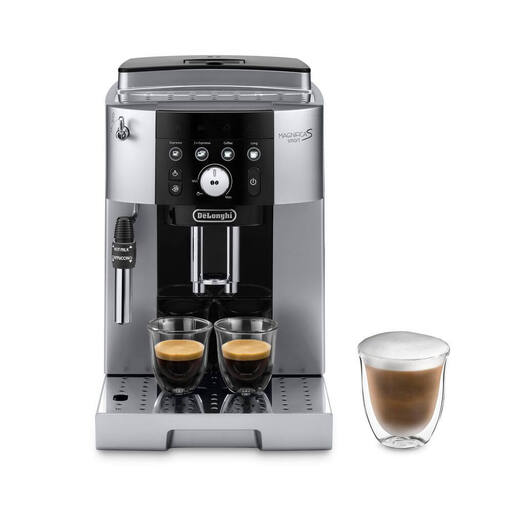 Image unavailable
Worth considering if you regularly make espressos from beans. The milk frother uses a wand that needs to be handled and cleaned after use; check which drinks this model makes, as the listed details don’t match.
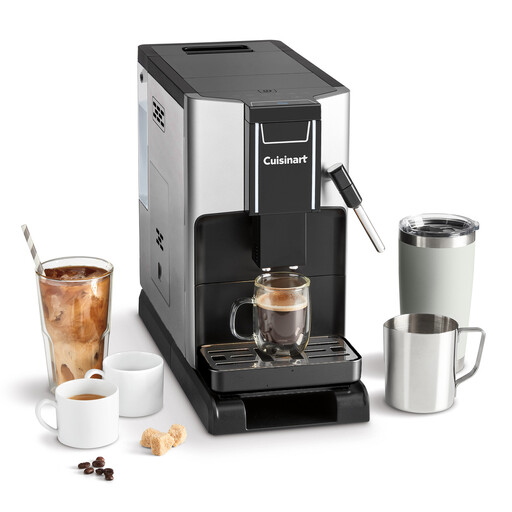 Image unavailable
This machine with a grinder is for those who want to make a variety of drinks from beans. If you froth milk, you’ll need to use the steam wand; also check the routine cleaning steps as well as the descaling requirements.
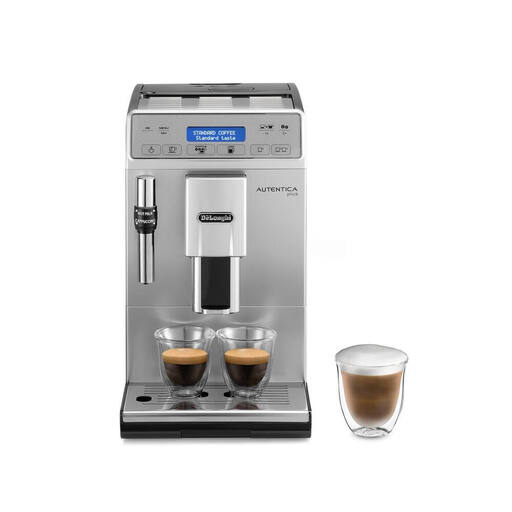 Image unavailable
Another machine with a grinder for everyday coffee made from beans. Its frothing wand means you’ll need to prepare milk manually; check which drinks this model makes, as the details given about the number of drinks vary.
 Image unavailable
This machine with a grinder may appeal to anyone who wants to make espressos from beans and adjust the preparation. The title lists a 20 bar pump and a 2.8 L tank; these figures alone don’t tell you how noisy it is or how easy it is to maintain. Check the manual for descaling and cleaning after making milk-based drinks.
A bean-to-cup espresso machine is a good choice if you want to make these coffees with your choice of beans and are happy to make room for it, put up with the grinding noise and maintain it regularly. If saving space is your priority, compare capsule machines instead and check which capsule formats they accept.
You’ll need to maintain the containers, clean the brewing unit if the model allows it, and descale the machine when prompted. For milk-based drinks, also follow the instructions for rinsing the wand or milk system; the exact steps are in the manual for each model.
Search for the full model reference on the manufacturer’s support website and check which manuals, parts and accessories are compatible. Philips lists these sections for some models, while Melitta offers genuine parts for its automatic machines; their availability doesn’t guarantee that every part will remain in stock in future.
No, it depends on the milk system fitted to the model you choose: a steam wand requires you to froth the milk manually, while some models have an automatic system. Check which drinks are listed for the specific model and how to clean it after use.