If you regularly make espresso and want to choose your own beans, an automatic bean-to-cup machine could be a good fit, provided you have the space and are happy to maintain it. If you prefer pre-measured portions and minimal effort, compare capsules or coffee pods. A portafilter machine offers a more hands-on approach, while a filter coffee machine is better suited to making longer coffee. UFC-Que Choisir points out that these systems meet different needs. You’ll also want to check the noise, cleaning requirements and milk-drink features of each model.
Who is each option for?
Households that make espresso regularly
If you want to choose your own beans and avoid capsules, consider a bean-to-cup machine. For regular use, make sure you have an accessible spot to refill the tanks and carry out maintenance. UFC-Que Choisir notes that these tasks are part of using an espresso machine with a built-in grinder.
Cappuccino and latte lovers
A steam wand and an automatic milk carafe involve different steps. Choose according to how often you make milk-based drinks, then check how the parts that come into contact with milk are removed and cleaned.
Households mindful of noise and maintenance
If you have an open-plan kitchen or make coffee early in the morning, compare the grinding, vibrations and rinsing cycles of the model you’re considering. UFC-Que Choisir includes noise levels and cleaning in its testing process for bean-to-cup machines. A marketing label is no substitute for checking these details.
What sets coffee machines apart?
Start with the drink you make most often, then consider the steps involved and the space each system needs day to day.
| Priority | What to check | Your needs |
|---|
| Type of coffee |
For espresso, compare an automatic grinder, a portafilter machine and capsules or pods. If you want longer coffee to serve in several cups, consider a filter coffee machine: UFC-Que Choisir distinguishes between these uses in its buying guides. |
I mainly make espresso, or I fill several cups with longer coffee in the morning. |
| Freedom to prepare your coffee |
Check whether the machine uses whole beans, ground coffee or a specific capsule or pod format. With a portafilter machine, consider the steps involved and how you’ll grind your coffee. |
Choosing my own beans matters more to me than having pre-measured portions; or, conversely, I’d rather keep the steps to a minimum. |
| Maintenance |
For a grinder, check the instructions for the trays, brew group and descaling. For milk-based drinks, compare cleaning a steam wand with cleaning a carafe or milk system. |
I want to know which parts I’ll need to rinse after making coffee, especially if I often froth milk. |
| Drinks and settings |
Compare the drinks people in your household actually make, then check the volume, strength and grind settings available on each model. Consider whether saved profiles will be useful for more than one person. |
People in my household like different kinds of coffee. Separate settings could be useful if we’ll actually use them. |
| Noise and space |
Check the dimensions, access to the tanks and the space needed to remove them. For a grinder, look for a noise and vibration test of the exact model; UFC-Que Choisir measures these separately. |
In my kitchen, or at the time I make coffee, noise and access to the trays can matter just as much as the features on offer. |
What should you avoid before buying?
-
Assuming ‘automatic’ means ‘maintenance-free’
A bean-to-cup machine can automate the brewing process, but you’ll still need to empty the trays, clean the parts specified by the manufacturer and descale it. UFC-Que Choisir describes these as regular tasks.
Check the manual for the model you’re considering. Find out which parts are removable, what needs rinsing and how to descale the machine.
-
Choosing lots of milk-based recipes when you mostly drink espresso
An automatic carafe adds parts that come into contact with milk and need cleaning, even if you rarely use its recipes.
If you only make cappuccinos occasionally, consider a manual steam wand too. If you make them often, focus on how to dismantle the milk system and its cleaning instructions.
Cleaning the milk system means extra steps after making milk-based drinks.
-
Assuming all bean-to-cup machines make the same amount of noise
Grinding, rinsing and vibrations all affect day-to-day use. UFC-Que Choisir’s testing process assesses noise levels and vibrations, but its results don’t apply equally to every model.
If you have an open-plan kitchen or make coffee in the morning, look for a test of the exact model and check which part of the brewing process any ‘silent’ feature applies to.
Which brand ranges should you consider?
De’Longhi
The Magnifica range includes domestic bean-to-cup machines with different milk systems, depending on the model. The Magnifica S ECAM22.140.B featured by Joybuy has a steam wand, while the Magnifica Evo ECAM290.61.B comes with LatteCrema.
- These two models let you compare a manual steam wand with an automatic milk system, depending on your habits.
- De’Longhi says descaling frequency depends, among other things, on water hardness. Check the instructions for the model you choose.
Philips
Philips offers bean-to-cup machines with a range of frothers and milk systems. Its product information distinguishes, for example, between the classic frother on the EP2224/10 and the LatteGo system on the EP5543/90.
- You can compare the settings and milk-system components model by model in Philips’ product information.
- SilentBrew and AquaClean are features listed for certain models, not noise or maintenance results that apply across the whole range.
Melitta
Melitta describes the Barista TS Smart as a machine with two bean containers, 21 specialities and space to save up to eight profiles.
- These features could suit a household where several people really do use different beans and settings.
- Melitta lists care products for its machines. Check which ones are suitable for your chosen model and milk system.
Models for different needs
These Joybuy models show three ways to make espresso at home: with an automatic grinder, a portafilter machine or capsules. Compare them with your routine. If you mainly make longer coffee to serve in several cups, consider filter coffee machines too.
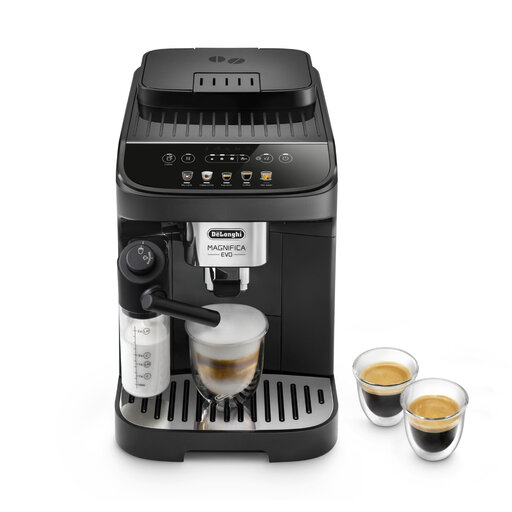 Image unavailable
De’Longhi Magnifica Evo ECAM290.61.B LatteCrema, black
This bean-to-cup machine is worth considering if you also regularly make milk-based drinks. The Joybuy product information for this model lists the LatteCrema system, a 1.8 L tank and rinsing and descaling cycles. The milk system still needs appropriate maintenance.
View on Joybuy
 Image unavailable
Philips Series 2200 EP2230/10 LatteGo, black
This bean-to-cup machine with a LatteGo system suits households looking to make espresso and milk-based drinks. Before choosing it, check the steps for cleaning the milk system and the maintenance instructions for the EP2230/10.
View on Joybuy
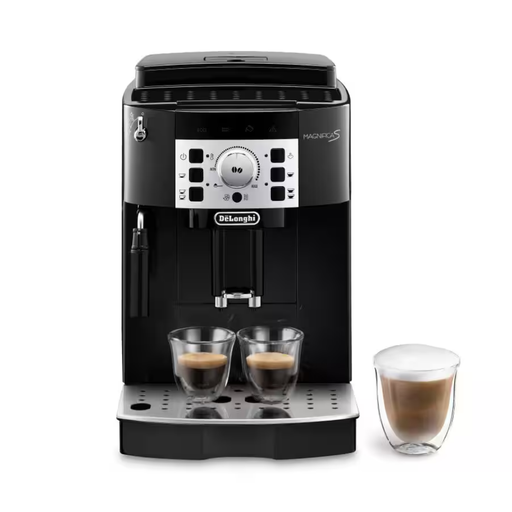 Image unavailable
De’Longhi Magnifica S ECAM22.140.B, black
Worth considering if you want an automatic grinder but prefer to froth milk by hand with a steam wand. The Joybuy product information for the ECAM22.140.B lists a 1.8 L tank and a descaling programme. You’ll also need to clean the steam wand after use.
View on Joybuy
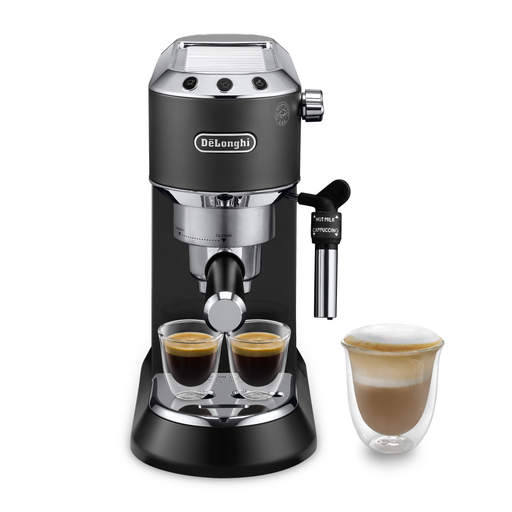 Image unavailable
De’Longhi Dedica Style EC685.BK, black
A portafilter option for anyone happy to do a few more steps than with an automatic grinder. Check which grind or pods suit your needs, as well as the tank capacity of the version on offer.
View on Joybuy
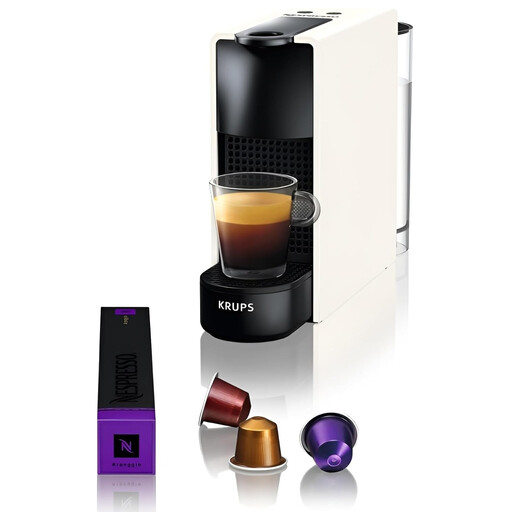 Image unavailable
KRUPS Nespresso Essenza Mini, white
Worth comparing if you prefer capsules to making coffee from whole beans. The Joybuy product listing gives a 0.6 L tank capacity. Check that the machine takes the type of capsules you want to use.
View on Joybuy
Frequently asked questions
Does a bean-to-cup machine mean you can avoid capsules?
Yes. A bean-to-cup machine uses whole beans poured into its container, so you can choose your coffee without buying capsules for a specific system. Do check which care products your model needs, especially if you use a filter or milk system.
Steam wand or automatic carafe for cappuccinos?
Choose according to how often you make cappuccinos and how much effort you’re happy to put in. You use a steam wand to froth the milk yourself, while a carafe automates some of the process. In either case, check the cleaning instructions for after making milk-based drinks.
When should you descale a bean-to-cup machine?
Follow your model’s alerts and manual rather than using a schedule that’s meant to apply to every machine. De’Longhi says the frequency depends, among other things, on water hardness. Check the settings and procedure for your model.
How should you sort coffee capsules for recycling in France?
According to ADEME, aluminium or plastic capsules should go in the recycling collection for paper and packaging. Paper capsules can be composted or put out with food waste, depending on the services available locally. Check the guidance for your area.


