What should you look for?
For a household that makes coffee regularly, decide on the format before considering the features: a pot of filter coffee and an espresso from a portafilter machine suit different preferences.
Bean-to-cup machine
Worth considering: if you often make espresso or longer coffees and want to choose your own beans.
Be prepared for: more noise and a larger footprint than capsule or filter machines, as well as regular maintenance, according to Que Choisir.
Capsules or pods
Worth considering: if speed and minimal effort are your priorities.
Be prepared for: regularly restocking with portions in a format that’s compatible with the machine.
Portafilter machine
Worth considering: if you want to fill and tamp the coffee yourself before brewing.
Be prepared for: more hands-on steps for each cup than with an automatic machine.
Filter coffee maker
Worth considering: if your household mainly serves several cups of filter coffee at once.
Be prepared for: a different kind of drink from espresso brewed under pressure.
| Criteria |
What to check |
Who this matters to |
| Drinks and automation |
The drinks the machine actually makes, the type of milk system and how to clean it after making a milk-based drink. |
If I often make cappuccinos, I want to prepare one without having to adjust lots of settings. Around 31% of consumers would prioritise their preferred drinks and making them more easily. |
| Maintenance and noise |
Descaling steps, parts to rinse and the space available for the machine. |
A machine I use every day needs to fit the time I can spend cleaning it and the noise I’m happy to put up with at home. For around 25% of consumers, minimising these inconveniences would be a priority. |
| Consumables and coffee choice |
Compatible format, availability of your chosen coffee and the maintenance supplies you’ll need. |
I make coffee often and don’t want to be tied to just one portion format. The freedom to choose coffee and avoid repeat purchases would be a priority for around 25% of consumers. |
| Brewing style |
The usable capacity of the filter coffee carafe, or the steps needed for each shot with a portafilter machine. |
I want either to serve several cups of filter coffee together or to take part in preparing every espresso. This brewing style would come first for around 19% of consumers. |
Coffee machines to compare on Joybuy
These models show some of the different ways to make coffee at home: bean-to-cup, pods, capsules and a machine that combines filter coffee and espresso. Compare each one with the drinks you usually make and the maintenance you’re happy to do.
 Image unavailable
Philips Series 2200 EP2230/10 LatteGo, glossy black
Worth considering if you want to choose your own beans and make milk-based drinks too. Check the manual for how to clean the LatteGo system and maintain the grinder.
View on Joybuy
 Image unavailable
De’Longhi Magnifica Start ECAM220.21.WW, white
A bean-to-cup machine to consider if you’re happy to froth milk by hand using a steam wand. Check the model’s manual for how to clean the wand and descale the machine.
View on Joybuy
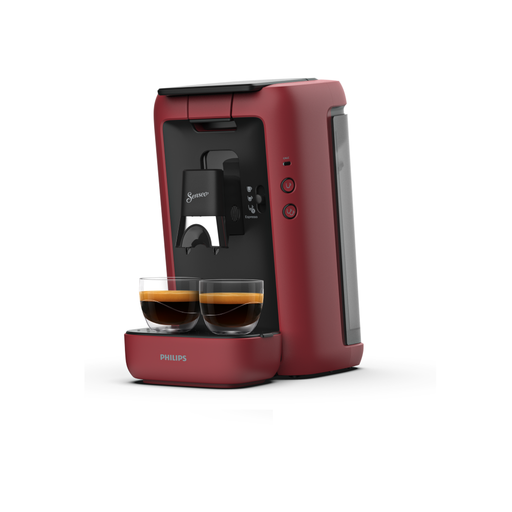 Image unavailable
Philips Senseo Maestro CSA260/91, deep red
Worth considering if you prefer making coffee with pods rather than adjusting the grind. Check that your chosen pods are compatible and follow the model’s descaling instructions.
View on Joybuy
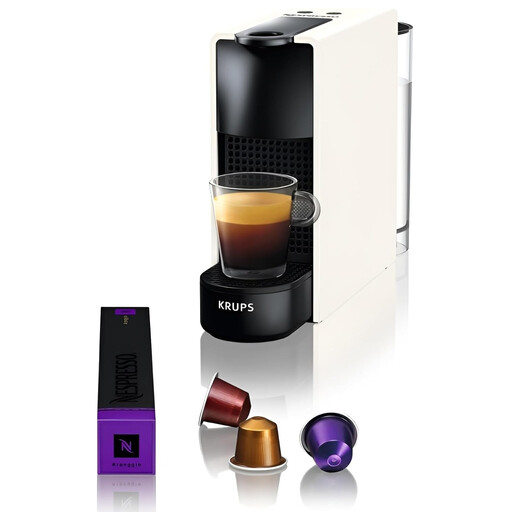 Image unavailable
Krups Nespresso Essenza Mini, 0.6 L, 1,200 W, white
Worth looking at if you want to make coffee with capsules. Its water tank is listed as 0.6 L; check the exact compatible capsule format and descaling instructions before choosing.
View on Joybuy
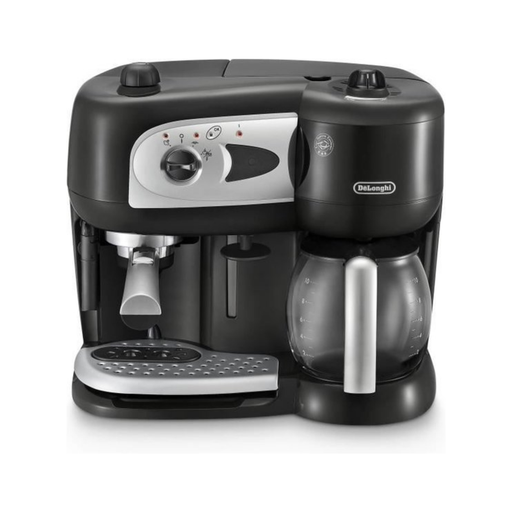 Image unavailable
De’Longhi Combo BCO261B.1, black and white
Worth considering if your household switches between filter coffee by the pot and espresso from a portafilter. Making espresso and frothing milk both involve some hands-on steps, so check the manual for cleaning instructions.
View on Joybuy
Frequently asked questions
Does a bean-to-cup machine need more maintenance than a capsule machine?
Yes, particularly because you need to empty the coffee grounds and clean the parts involved in making coffee. Que Choisir recommends rinsing the containers and, where the model allows, the brew unit. Both types of machine also need descaling according to their respective instructions.
What should I check if I regularly make cappuccinos?
First, check how the machine prepares the milk and how to clean its system. A steam wand, milk jug and automatic milk system all involve different steps, so follow the rinsing instructions for the model you choose.
Where should I dispose of coffee capsules in France?
ADEME advises putting aluminium or plastic capsules in the recycling bin, bag or container for paper and packaging. For paper capsules, it recommends home composting or using a local food waste collection service, where available.
Is a filter coffee maker suitable for serving several people?
Yes, if your household mainly wants to share several cups of filter coffee rather than make espresso. Check the usable capacity, type of carafe and required filter size. Melitta offers models for smaller quantities as well as machines with glass or thermal carafes.


