If you want to switch between coffees from one cup to the next, particularly between caffeinated and decaffeinated, start by comparing capsule systems that work with the coffees you like. For a range of drinks at the touch of a button, look closely at the specific features of a bean-to-cup machine. A filter coffee machine is better suited to making a shared pot, while a manual espresso machine is for those happy to measure and tamp the coffee themselves. Whatever you choose, check the maintenance requirements, consumables and space needed before you buy.
Which households are these options suited to?
Households that switch between caffeinated and decaffeinated coffee
If coffee preferences vary from person to person or throughout the day, capsules let you choose one drink at a time. With a bean-to-cup machine, check the specific model’s instructions for using a different coffee without replacing the entire contents of the bean hopper.
Fans of made-to-order milk drinks
If cappuccinos and other milk-based drinks are part of your routine, compare the model’s milk system or steam wand, then check what needs cleaning after use. De’Longhi ranges include different configurations, and they don’t all require the same level of attention.
Households that share several cups
If everyone mainly drinks the same coffee, it’s worth considering a machine that makes a pot. Moulinex, for example, offers a 1.25 L Morning filter coffee machine. This format meets a different need from personalised drinks made one cup at a time.
How do the different formats compare?
Start with the need that comes up most often in your household, then check the machine’s features and the steps you’ll need to repeat every day.
Bean-to-cup machine
Worth considering: for espresso made to order and, depending on the model, milk drinks with a largely automated process.
Bear in mind: cleaning and descaling are still necessary; switching to decaffeinated coffee depends on the model’s features.
Capsules or pods
Worth considering: when everyone wants to choose their coffee for each cup, provided the compatible system offers the drinks you want.
Bear in mind: you’ll need to buy consumables for the specific system and maintain the machine.
Manual espresso machine with a separate grinder
Worth considering: if you want to choose your grind and get hands-on with measuring, tamping and extracting the coffee.
Bear in mind: there are more steps for every cup, and you’ll need space for and have to clean the separate grinder.
Filter coffee machine
Worth considering: when your priority is serving several cups of the same coffee from a carafe.
Bear in mind: switching coffees or making an individual milk drink means using a different method or another piece of equipment.
| What matters |
What to check |
Who is it for? |
| Switching coffee |
Which capsule range the machine accepts; for a bean-to-cup machine, whether it has a ground coffee compartment or a way to switch beans. |
If you want to switch to decaf after a regular coffee without disrupting your routine, being able to change coffees easily becomes a priority: around 36% of consumers would put this need first. |
| Making milk drinks |
The recipes available on the model, its steam wand or milk system, and how to clean it after use. |
If cappuccinos or lattes are a regular treat, I want to know how many steps are involved in making each cup; around 29% of consumers would prioritise milk drinks. |
| Serving several cups |
Usable capacity, serving method and the space needed for the carafe. |
If you’re sharing the same coffee at breakfast or with guests, making a batch matters more than individual recipes; this would be the main priority for around 21% of consumers. |
| Managing maintenance |
Descaling process and cleaning the parts used; compatible consumables. |
If the jobs involved after each use affect my decision, I want a routine I can stick to; around 14% of consumers would put maintenance and consumables first. |
What should you avoid when buying?
-
Assuming a bean-to-cup machine can automatically switch to decaf
The way you use a second coffee varies from machine to machine. A single bean hopper doesn’t, on its own, tell you how to make a cup of decaf.
Check the product details and manual for a ground coffee hatch, a second hopper or a bean-switching feature, and find out how to use it.
-
Comparing machines only by the number of drinks advertised
A list of recipes doesn’t tell you how many steps are involved in adding milk, switching coffees or cleaning the machine.
Think about which drinks you’ll actually make at home, then compare the milk system and maintenance instructions for the exact model.
-
Assuming capsules or pods are maintenance-free
Nespresso recommends descaling its machines regularly; Philips also sets out a descaling process followed by rinsing for SENSEO®. The procedures aren’t interchangeable.
Before buying, read the instructions for the machine you’ve chosen, including the rinsing steps.
You’ll also need to allow for a suitable descaling product and the time it takes to run the cycle.
-
Choosing a carafe if you want to personalise every cup
A filter coffee machine makes several cups of the same coffee, but the carafe alone won’t let you switch between coffees or make individual milk-based drinks.
Choose this format if sharing a pot is your main priority. If preferences change often, look instead at options for making coffee one cup at a time.
Depending on the model, you may need suitable filters, ground coffee and time to clean the carafe.
Brands and ranges to consider
De’Longhi
In France, the brand offers bean-to-cup and manual espresso machines, with features that vary by model.
- Some models combine a range of drinks with a milk system or user profiles.
- Check how to make decaf and what maintenance is involved. De’Longhi says descaling frequency depends, in part, on water hardness.
Nespresso
The Original range featured by Nespresso France includes decaffeinated coffees and coffees designed for milk-based recipes.
- Choose your coffee one capsule at a time, using a compatible system.
- Check which capsule range the machine accepts. For example, Nespresso says that the Citiz Platinum mentioned here is compatible with Original only. Descaling is still necessary.
Philips / SENSEO®
Philips’ French support site covers SENSEO® and espresso machines, with separate instructions for each range.
- Usage and maintenance instructions are available for each machine range.
- Don’t use SENSEO® instructions for a Philips espresso machine: follow the guidance for the model you choose.
Moulinex
The Morning filter coffee machine is an example of a carafe-style machine, with a capacity of 1.25 L according to Moulinex.
- This format lets you make the same coffee for several cups.
- It won’t, on its own, let you switch between coffees or make individual milk-based drinks; the carafe and machine also need cleaning.
Sage
Sage offers espresso machines for households interested in adjusting settings and getting hands-on with preparation.
- The range includes different manual and automatic configurations to compare, depending on the model.
- Check whether a grinder is included, which tools you’ll need, how much space the machine takes up and how long preparation and cleaning will take.
Machines to explore on Joybuy
These models give you a chance to compare bean-to-cup machines for coffee made to order, as well as a Vertuo capsule machine for making one cup at a time. Compare their specific features against your household’s habits, and bear in mind that these models don’t represent manual or filter coffee machines.
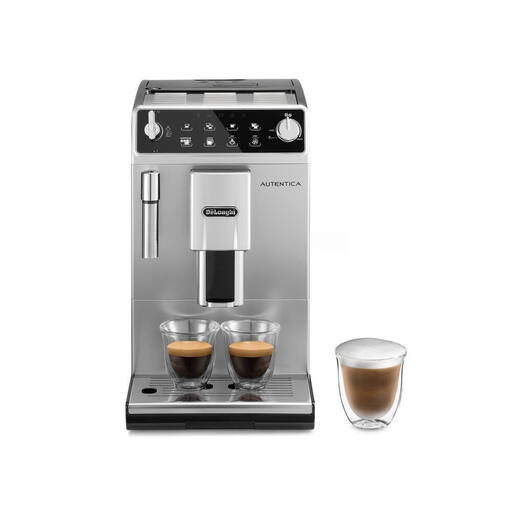 Image unavailable
De’Longhi Autentica ETAM29.510.SB with grinder
Worth considering if you want espresso made to order with an integrated grinder. If decaf or milk-based drinks are part of your routine, check the manual for the relevant preparation methods and cleaning requirements.
View on Joybuy
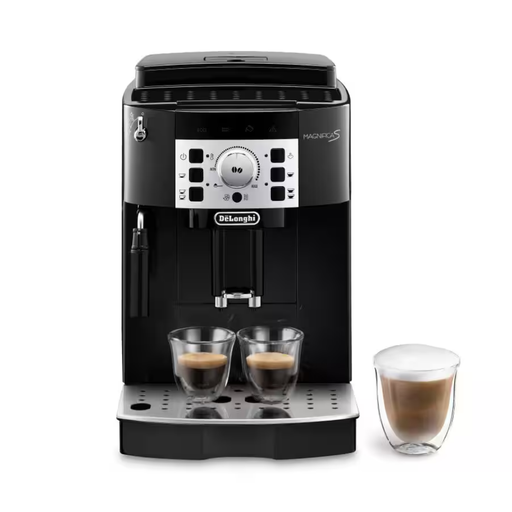 Image unavailable
De’Longhi Magnifica S ECAM22.140.B with grinder
Another model to compare for espresso made to order with an integrated grinder. If you want to switch coffees or froth milk, check the steps required for this variant and the maintenance involved.
View on Joybuy
 Image unavailable
HiBREW H16 with grinder and milk system
Worth considering if made-to-order milk drinks are important to you: the model name advertises six types of coffee. Check the exact recipes, how to switch to decaf and the cleaning instructions for the milk system.
View on Joybuy
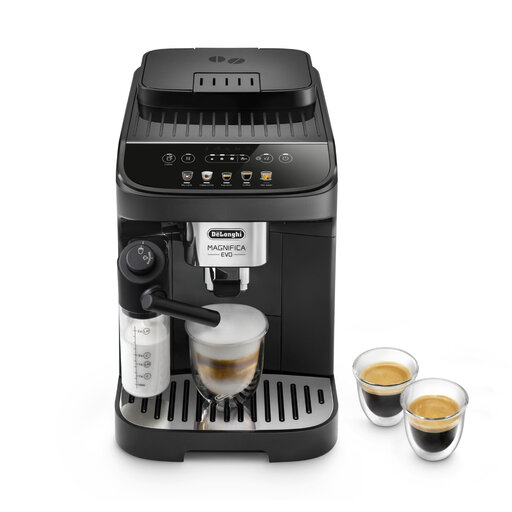 Image unavailable
De’Longhi Magnifica Evo ECAM290.61.B LatteCrema
Worth considering for milk-based drinks made with an integrated milk system. Check the recipes available on this variant, which parts need cleaning after making milk drinks and how to prepare decaf if your household drinks it regularly.
View on Joybuy
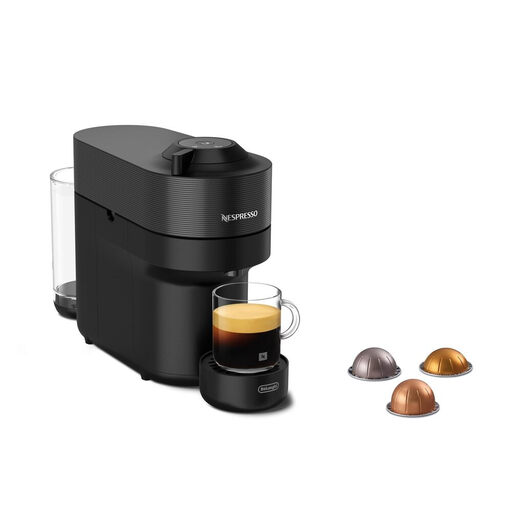 Image unavailable
Nespresso Vertuo Pop ENV90.B, 0,6 L
Compare this if you’d rather choose your coffee one capsule at a time than make a pot. This model uses Vertuo capsules, so check which decaffeinated coffees are compatible with the system and read the model’s maintenance instructions. Don’t apply guidance that’s specific to Original.
View on Joybuy
Frequently asked questions
Which machine should I choose if my household regularly drinks decaf?
A capsule system can make it easier to switch coffees between cups, as long as the machine accepts the decaffeinated coffees you want. Nespresso offers decaf in its Original range, but that doesn’t confirm compatibility with a Vertuo machine. For a bean-to-cup machine, check the specific model’s instructions for using a different coffee.
How often should you descale a capsule machine?
Nespresso recommends descaling its machines every three months or after around 300 capsules, and more often if you live in a hard water area. Follow the procedure in the manual for your chosen model; don’t assume the same schedule applies to other brands or formats.
Does descaling a bean-to-cup machine take a long time?
It depends on the model. De’Longhi says the process takes around 45 minutes for its Magnifica S ECAM 22.110. Check the manual for the model you’re considering rather than assuming the same time applies to all bean-to-cup machines or other Magnifica S variants.
Where should you dispose of coffee capsules in France?
According to ADEME, aluminium or plastic capsules should go in the recycling bin, bag or container for paper and packaging. Check what your capsules are made from and follow the recycling instructions for your home.


