For a quick cup, capsules or pods mean fewer steps. If you want to choose your coffee and regularly make espressos, a portafilter or grinder offers a different routine. A portafilter requires more hands-on preparation, while a grinder automates the process using whole beans. If you usually serve several cups at once, a filter coffee machine is better suited to the job, although it won’t make the same kind of drink as an espresso machine.
Which households are these machines suited to?
Households that usually make one cup at a time
If you want your coffee ready with minimal effort, capsules and pods are worth considering. Do check which format the machine takes and how much storage space you’ll need for the consumables. Que Choisir highlights ease of use and practical limitations as key differences between these systems.
Regular coffee drinkers who want to choose their beans
A grinder lets you make coffee from beans chosen by your household, with the machine grinding them as part of the process. Automation doesn’t remove the need to clean the coffee grounds container and other parts specified in the manual, so maintenance is just as important as the drinks on offer.
Households that serve several coffees at once
If you want to fill a jug at breakfast or serve several people in a row, check how much filter coffee the machine can actually make and how it keeps it warm. This option is designed for serving a group rather than making individual espressos.
What sets the different types apart?
First, decide whether you want an individual espresso, a long coffee or a jug to share. The consumables each machine takes, the steps involved and the maintenance required will help you choose one that fits your household’s routine.
| What matters |
What to check |
Who is it for? |
| A quick cup |
Check which capsule format the machine takes and measure the space available on your worktop. |
When I make coffee on my own before heading out, I prefer fewer steps to manual settings. Around 25% of consumers put this need for speed when making an individual cup first. |
| Long coffee without manual preparation |
Check which soft pod format the machine takes and, if needed, whether the model can make two cups at once. |
I want an easy-to-make long coffee, sometimes for two people, without measuring or tamping ground coffee. This is the top priority for around 13% of consumers. |
| Making espresso by hand |
Allow space for the portafilter and check the steps involved in measuring, preparing and rinsing it. |
Choosing my ground coffee and being hands-on with the preparation matter more to me than reducing the number of steps. Around 19% of consumers prioritise this level of manual control. |
| Choosing your beans |
For a grinder, check how to clean the brewing unit and grounds container, as well as the machine’s footprint. |
If I make coffee regularly, I want to choose my beans and let the machine take care of grinding them. Choosing beans is the main priority for around 31% of consumers. |
| A jug to share |
Compare the amount of coffee the machine makes with the number of cups you’ll serve, and check how it keeps the coffee warm. |
Several people in my household drink coffee at the same time, so a jug suits us better than making individual cups one after another. Around 12% of consumers prioritise serving coffee this way. |
Things to bear in mind
-
Assuming a recyclable capsule will automatically be recycled
Sorting waste needs to become part of your household’s routine. In France, ADEME says aluminium and plastic capsules can go in the recycling bin, bag or collection point for paper and packaging.
Before choosing a capsule system, check what the capsules you’re considering are made of and which recycling rules apply where you live. If you plan to use a collection scheme offered by a brand, find a convenient drop-off point.
-
Underestimating cleaning and descaling
Automatic preparation doesn’t mean you can skip cleaning the parts that come into contact with water or coffee. If the machine has a milk system, that means extra parts to clean, too.
Check the model’s manual for the required rinsing, cleaning and descaling, then choose a routine your household can keep up with.
-
Choosing capacity without counting how many coffees you serve at once
A machine designed for a single cup won’t suit the same needs as a jug. On the other hand, making a full jug may not be useful if everyone drinks coffee at a different time.
Count the cups you serve during your busiest period and check how much coffee the model can make, rather than relying on the water tank’s capacity alone.
Brands to know
Nespresso
A range of capsule machines for households that want to make coffee one portion at a time.
- Nespresso provides collection points in France for the brand’s used capsules.
- Compatibility depends on the exact system. Nespresso says the Vertuo Up takes Nespresso Vertuo capsules only.
Philips / SENSEO
Pod machines, some of which make one or two cups; the range also includes models that combine pods with filter coffee.
- Philips presents the SENSEO Switch 2-in-1 as an option that can also make a jug of filter coffee.
- Check the pod format and the capacity of the specific model. The Switch’s features aren’t available on every SENSEO machine.
De’Longhi
Bean-to-cup machines with features that vary by model.
- De’Longhi lists the Magnifica S ECAM22.140.B as having a 1,8 L water tank and a grounds container that holds 14 pucks.
- Check the capacity and whether a milk-drink function is included on each model, as well as the maintenance it requires.
Melitta
Filter coffee machines for different quantities, with models that come with standard or thermal jugs.
- Melitta lists the Easy Therm as having a maximum capacity of 8 cups.
- Capacity and jug type vary by model, so check what suits the number of people you’ll be serving.
Machines for different needs
These machines cover five ways to make coffee at home: soft pods, bean grinding, capsules, a portafilter and filter coffee. Start by choosing the type of drink and preparation method that suits you, then check the specifications of the variant you’re considering.
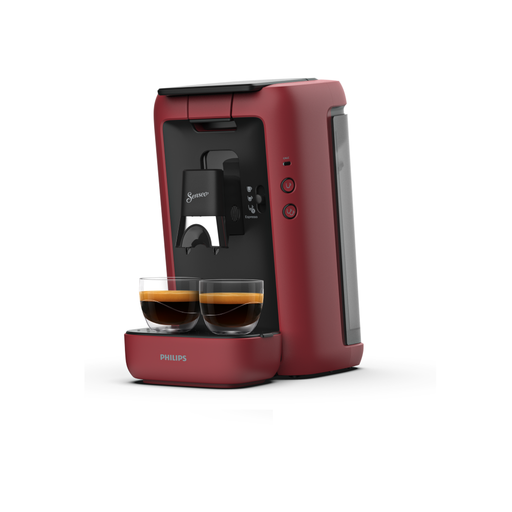 Image unavailable
Philips SENSEO Maestro CSA260/91, intense red
Worth considering if you’re looking for a soft pod machine that’s simple to use, and want to check whether it suits your needs when two people have coffee together.
Check which pod format you’ll be using and the brewing capacity listed for this variant.
View on Joybuy
 Image unavailable
Philips 2200 Series EP2230/10 LatteGo, glossy black
An option to consider if you want to use whole beans and prefer the machine to grind and measure the coffee for you.
This variant is labelled LatteGo. Before making it part of your routine, check how to clean the milk system and other removable parts.
View on Joybuy
 Image unavailable
KRUPS Nespresso Essenza Mini, 0,6 L, 1 200 W, white
Worth considering if you mostly make individual drinks and want to keep preparation to a minimum.
The name of this variant lists a 0,6 L water tank and 1 200 W power. Check which capsule system it takes before choosing your consumables.
View on Joybuy
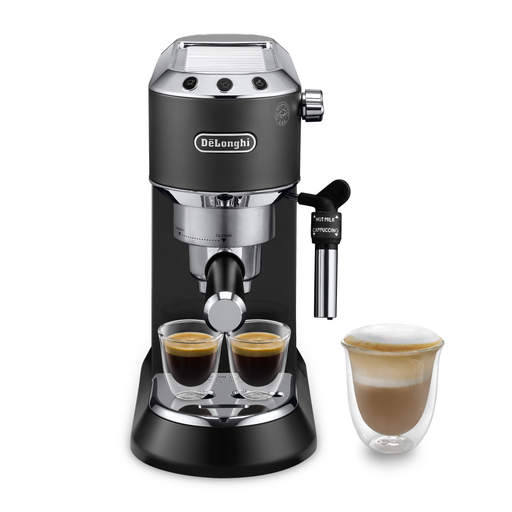 Image unavailable
De’Longhi Dedica Style EC685.BK, 15 bar, black
Worth considering if you want to be hands-on when making espresso with a portafilter and don’t mind cleaning it after use.
The name of this variant lists 15 bar. To plan when you’ll need to refill it, check the exact capacity of the model’s water tank.
View on Joybuy
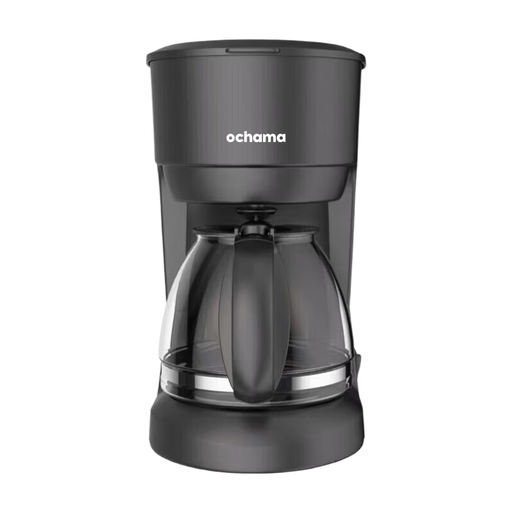 Image unavailable
ochama filter coffee machine, 600 W, 750 ml water tank
An option if you prefer filter coffee to individual espressos and want to keep it warm after brewing.
The product name lists a 750 ml water tank and a 30-minute keep-warm function. Check separately how much coffee the jug can serve: the tank capacity alone won’t tell you how many cups you’ll get.
View on Joybuy
Frequently asked questions
How often should you descale a coffee machine?
Que Choisir recommends descaling every two to three months on average, adjusting for water hardness and how often you use the machine. Follow your model’s manual, too, for the descaling programme and products to use.
Where should you put used coffee capsules in France?
According to ADEME, aluminium and plastic capsules can go in the recycling bin, bag or collection point for paper and packaging. Check what your capsules are made of and follow local guidance; some brands also offer dedicated collection schemes.
Is a bean grinder suitable if I don’t drink much coffee?
It could be a good fit if choosing your beans and automatic preparation matter to you, but you’ll still need to maintain the machine even if you only make a few drinks. If your main priority is an occasional cup with minimal effort, compare this routine with using a capsule or pod machine first.
What should you check about getting a coffee machine repaired?
Check the repair options and availability of spare parts for the model you’re considering. Nespresso says that, for its own service, a repair may not be available if the necessary parts are no longer in stock. This information doesn’t describe the repair services offered by other brands.


