Busy households short on space
You want coffee that’s quick to make, with minimal fuss, and a machine that fits on your worktop.


If you make coffee at home regularly, start by thinking about the steps you’re happy to take every day. Capsules are quick and compact, while a portafilter gives you more scope to prepare your coffee by hand. A bean-to-cup machine is worth considering if choosing your beans and keeping the cost per cup down matter enough to justify a larger appliance and regular maintenance. For soft pods, check that you’re happy with the compatible format and can buy them easily.
You want coffee that’s quick to make, with minimal fuss, and a machine that fits on your worktop.
You make enough coffee for the cost of consumables and the freedom to choose your coffee to influence your decision.
You’re happy to do a little more and clean up afterwards so you can choose your coffee and take a hands-on role in making it.
Que Choisir identifies four types of domestic espresso machine. Your choice will mainly depend on the space you have, how many coffees you make, the consumables involved and how much maintenance you’re prepared to do.
Worth considering: if you want to make coffee quickly with minimal effort and have limited space.
Bear in mind: you’ll need to use a specific capsule format and buy consumables regularly.
Worth considering: if you want pre-portioned coffee and can easily find suitable pods.
Check: the format the machine accepts and the running costs of the model you choose.
Worth considering: if measuring and making your own coffee is part of the appeal.
Bear in mind: you’ll need to do more, allow time to learn and clean the portafilter.
Worth considering: if you make coffee regularly and want to choose your own beans while keeping an eye on the cost per cup.
Bear in mind: the higher upfront cost, the space it takes up and the need for regular maintenance.
| Factor | What to check before buying | Who is it for? |
|---|---|---|
| Speed and space | Measure the space available and check the exact format of the capsules the machine accepts. | If every coffee needs to be ready quickly, with minimal effort in a small kitchen, simplicity comes first; around 31% of consumers would prioritise this. |
| Running costs and choice of coffee | Compare how many coffees you make with the cost of the beans you’re considering and the maintenance required for the grinder. | If I’m making more coffee as the weeks go by, I want to choose my own beans rather than rely on pre-portioned coffee; around 31% of consumers would put this freedom and running costs first. |
| Hands-on preparation | Check which coffee and accessories the machine accepts, as well as the space needed to use and clean the portafilter. | Making my own coffee matters more to me than saving a few steps; almost 23% of consumers would make this hands-on approach their priority. |
| Soft pods | Check which pod format is compatible, where you can buy the pods and how to maintain the machine. | I’d rather stick with pre-portioned coffee using soft pods that are easy to buy; around 15% of consumers would prioritise this format. |
Que Choisir points out that many brands accept only one type of capsule. Two capsules looking similar doesn’t necessarily mean they’re compatible.
Check which format the machine uses, then find out where you can buy those capsules and what using them involves.
Que Choisir notes that these machines have a high upfront cost, but that the cost per cup is lower than for a pod espresso machine in its guide’s comparison. Whether one is right for your household depends on how much coffee you actually make and which beans you choose.
Think about how much coffee you usually drink and check the rinsing, cleaning and descaling required for the model.
Remember to set aside time for maintenance, too.
ADEME recommends limiting individual packaging where possible. The end-of-life options for a capsule also depend on its material and the collection services available.
First, choose a coffee-making method that suits your daily routine, then check the recycling instructions for your consumables.
Don’t assume that a repairability or durability rating is available for the coffee machine you’re considering.
Instead, check what spare parts are available, what after-sales support is offered and whether the model can be repaired.
These machines showcase four ways to make your everyday coffee: capsules, soft pods, a portafilter and a bean-to-cup machine. Compare the coffee format and maintenance involved before choosing a model.
 Image unavailable
A bean-to-cup option for households that want to choose their own beans and make coffee regularly. Check how much space it needs and what maintenance is involved before buying.
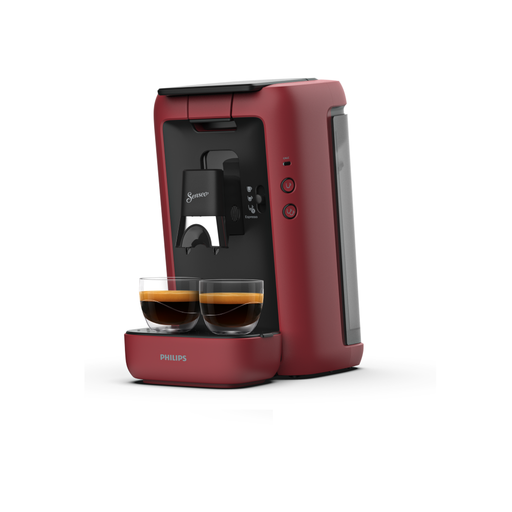 Image unavailable
For making pre-portioned coffee with soft pods. Check that it accepts SENSEO® pods and that they’re easy for you to buy.
 Image unavailable
A bean-to-cup machine for coffee drinkers who prefer to buy whole beans for regular use. Before choosing, consider how much space it takes up and check the cleaning and descaling instructions.
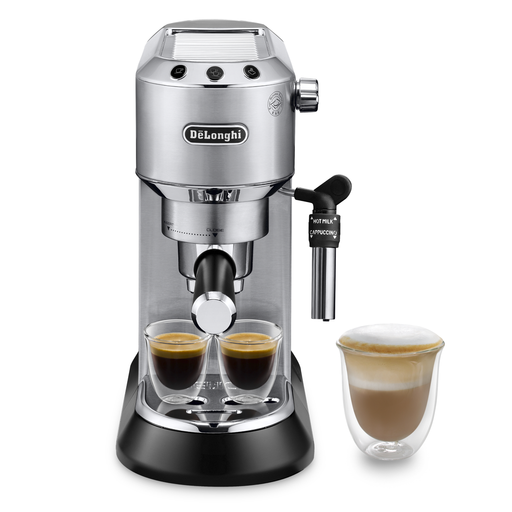 Image unavailable
For coffee drinkers who want to get hands-on with a portafilter. Allow for the time needed to use and clean it, and check the reservoir capacity with the seller before buying.
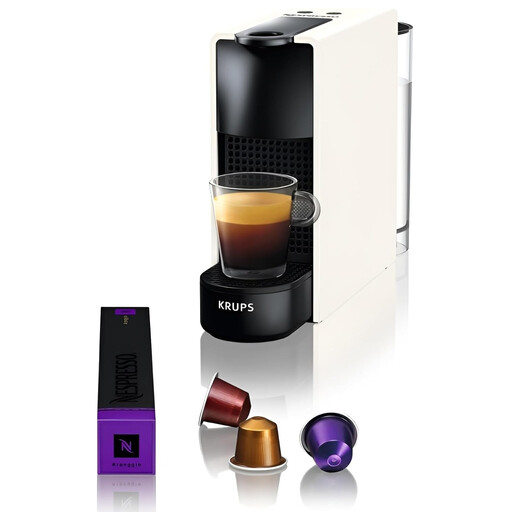 Image unavailable
For making coffee with capsules and minimal effort. Check that it’s compatible with Nespresso Original capsules and that you can easily buy them before choosing this machine.
It depends on the machine, how often you use it and how hard your water is. De’Longhi highlights water hardness in particular for its bean-to-cup espresso machines. Follow any alerts and the instructions in your model’s manual.
ADEME says that aluminium and plastic capsules can go in the sorting bin, bag or container for paper and packaging. Check your local authority’s guidance and, if you use a specific collection scheme, which capsules it accepts.
Yes. Rinsing, cleaning and descaling are all part of using one, as Que Choisir points out. Alerts or programmes on some models can help you keep on top of these tasks, but they don’t replace the steps set out in the manual.
Yes, if the machine is out of warranty, the fault meets the scheme’s conditions and you use a QualiRépar-approved repairer. ecosystem says the discount is 15 € for a filter or capsule coffee machine and 25 € for a fully automatic coffee machine. Check that your machine is eligible and confirm the applicable amount before arranging a repair.